PDF of this Page | Online Resources |
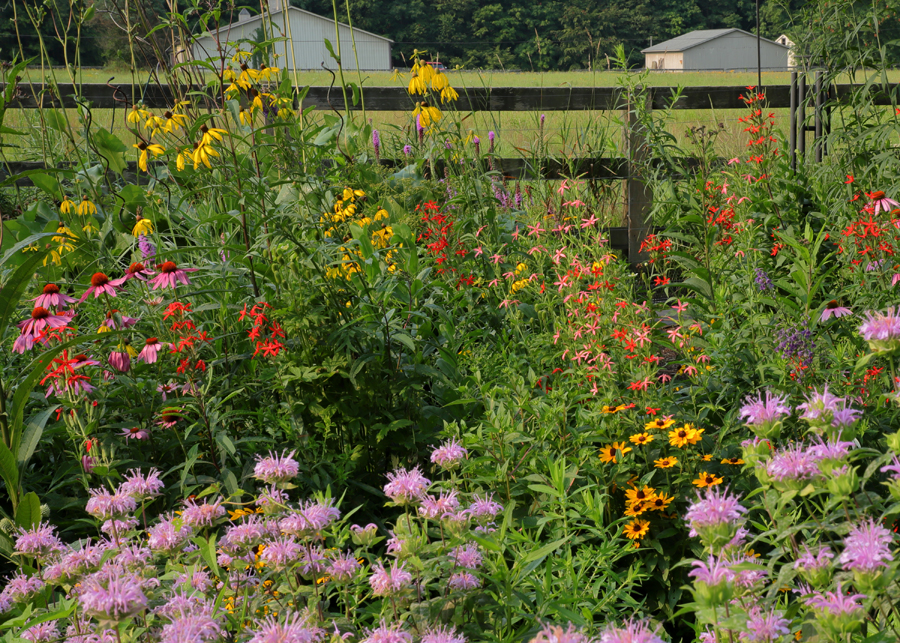
An Evolving Landscape and Backyard Conversion at Catchfly Commons
Native Plant Gardens…
- Have many styles ranging from very formal to natural meadow
- Combine the right plants in the right place and the right plants for the intent of the garden
- Take time to mature
- Evolve over time on their own and through your management
- Involve some trial and error (all gardeners have killed their share of plants)
Intention, Goals, Style, and Scope
- What are your intentions for the garden?
- What motivates you to start a native plant garden?
- What do you want to experience?
- What about your garden would give you satisfaction and enjoyment?
- What goals do you have for the garden?
- What do you want to provide ecologically (pollen & nectar, host plants, habitat features)?
- What about your yard do you want the garden to enhance? …to help fix?
- What style of garden do you want?
- Formal, semi-designed, semi-wild, wild?
- What features would make it a special place for you?
- How will the garden mesh with the existing conditions, the neighborhood, or HOA/zoning regulations?
- What is a reasonable scope for the garden project?
- How much time and energy can you put into creating and managing the garden?
- What is your budget for plants, mulch, soil, hardscape, etc.?
- Can the garden be done well in a year or does it need multi-year phases?
Garden Conditions and Other Factors
Consider how garden conditions change over the course of the day (e.g. sun at different times) and seasons (e.g. wet spring and dry summer, light/shade due to tree foliage). Conditions can be different within the garden itself too.
- Sun (daily and seasonally)
- Amount of sun
- Full Sun: 6+ hours
- Partial Sun: 4-6 hours
- Partial Shade: 2-4 hours
- Light Shade: < 2 hours or filtered sun
- Shade: No direct sun
- o What type of sun (morning, intense midday, afternoon)?
- Amount of sun
- Soil type
- Soil pH can be estimated by looking up the value for your area or measured by taking a soil sample. pH is a number used to indicate how acidic or alkaline the soil is… numbers lower than 7 are acidic and above 7 are alkaline.
- Soil composition (clay, sandy, rocky, average topsoil, rich in organic matter)
- Moisture level and drainage
- Is the ground moisture typically dry, medium, wet, or submerged?
- How long does the ground stay wet after rain?
- How does moisture change through the year (e.g. soggy spring and dry summer)?
- How significant is the presence of deer, rabbits, and pets?
Design Features
- What existing features in the garden location need to be incorporated, changed, or removed?
- What hardscape elements do you wish to include (edging, path, art, bench, bird bath, water feature, rocks, logs)? Hardscape provides functionality, personalization, and habitat.
Plant Selection
- Choose plants that fit the garden conditions and fit your intentions
- Consider:
- “Keystone plants,” native plants that are hosts and/or provide nectar for many species
- Combination of flowering plants, grasses, and trees/shrubs
- Bloom time to enhance color combinations and to have spring to fall flowers
- Aesthetics of color and foliage combinations
- Height and width of plants
- Plant “sociability”—keep aggressive plants with aggressive plants, don’t mix aggressive plants with slow growers
Design Layout
- Layout the overall garden design, keeping your intentions and goals in mind
- Options include creating a sketch or mocking-up the garden with a hose for the outline and other items as placeholders for plants and features
- Start with features that define and structure the space (edges, focal points, trees/shrubs, and hardscape)
- Decide what plants go where depending on the style you want
- Decide on a planting pattern. Some common options include:
- Intermix different individual plants as in a natural setting
- Group the same plants together into one or two areas of the garden
- Repeat groups of at least 3-5 of the same plant across the garden
- Choose combinations of plant colors, foliage, bloom time, size, and sociability
- Consider having shorter plants in front and taller ones in back
- Decide on a planting pattern. Some common options include:
Resources
- Plant selection
- Keystone Plants of Eastern Temperate Forests (National Wildlife Federation)
- Plant Sociability Rankings (Prairie Up)
- Native Plant Lists by growing conditions in the wild (Ohio Department of Natural Resources)
- Plant by Numbers… garden designs and suggested plants for various pollinators (OSU Bee Lab)
- Creating and designing a native garden
- Backyard Conversion (Catchfly Commons)
- Design a Native Plant Landscape (Homegrown National Park)
- Create Your Garden Plan (Wild Ones)
- How to Make a Pollinator Garden (Xerces Society)
- Native Garden Planner… an online design tool

