Four years ago, we were thrilled to find both Cecropia Moth and Polyphemus Moth caterpillars in our yard. Unfortunately, the Polyphemus caterpillar died from parasites (eaten from inside out) and we lost track of the Cecropia caterpillar before its final instar. Since then, I am always checking for these species of caterpillars to show again… with no luck.

However, this month I found one of their cousins during a nighttime blacklight search—an Imperial Moth caterpillar!
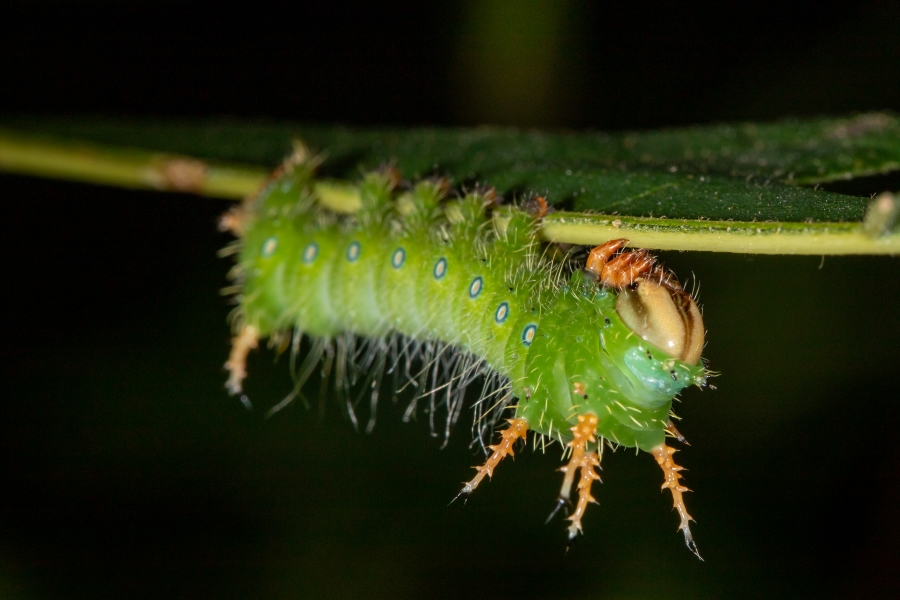
Cecropia, Polyphemus, and Imperial moths are part of the Saturniidae family (giant silkworm and royal moths). In Gardening for Moths: A Regional Guide, McCormac and Gottfried lists a number of Saturniidae family members as Ohio natives. Based on iNaturalist observations, here are nine that seem to be present in our area (central Ohio):
- Royal Silkworm Moths
- Imperial (Eacles imperialis)
- Regal (Citheronia regalis)
- Honey Locust (Syssphinx bicolor)
- Rosy Maple (Dryocampa rubicunda)
- Giant Silkworm Moths
- Io (Automeris io)
- Polyphemus (Antheraea polyphemus)
- Luna (Actias luna)
- Promethea (Callosamia promethea)
- Cecropia (Hyalophora cecropia)
These moths are amazing both as caterpillars and adults. Saturniid moths spend most of their time as caterpillars and the caterpillars of some species become quite large (e.g. Hickory Horned Devil can be the size of a hot dog). Saturniid adults also tend to be large and to be “furry” with splendid colors. According to McCormac and Gottfried, this furriness may provide acoustic camouflage from bats by absorbing their ultrasonic signals. (1) Adults do not have mouth parts and thus do not feed… they survive only one to two weeks. Reproduction is the sole function of adulthood. (2)
Below are the host plants of Saturnniids in our area with a few species notes from McCormac and Gottfried. Links in the species name go to the corresponding page on the Butterflies and Moths of North America website. Highlighted host plants indicate ones present in Catchfly Commons. I am encouraged that we have most of their host plants present… now if we can just spot them if they visit!
Royal Silkworm Moths
Imperial Moth (Eacles imperialis)
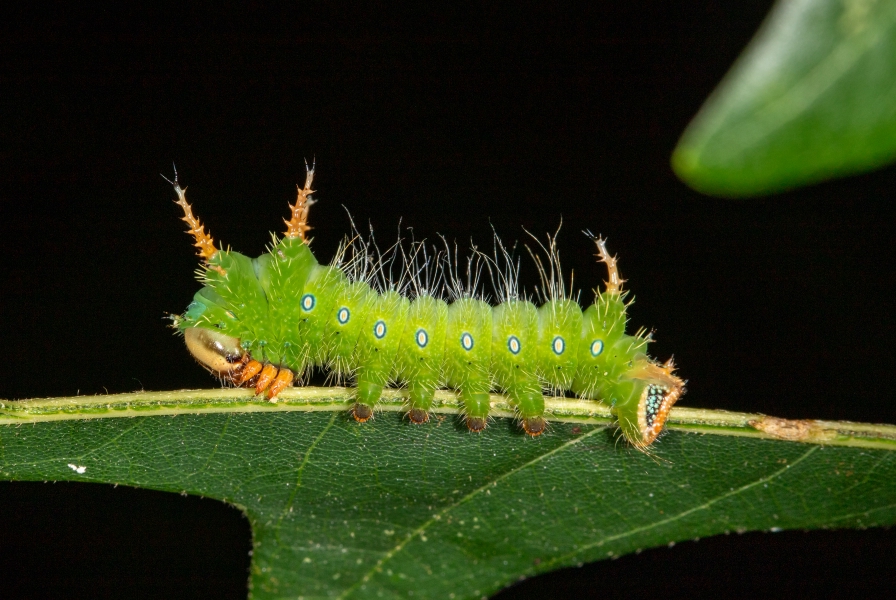
Imperial Moth Caterpillar on overcup oak
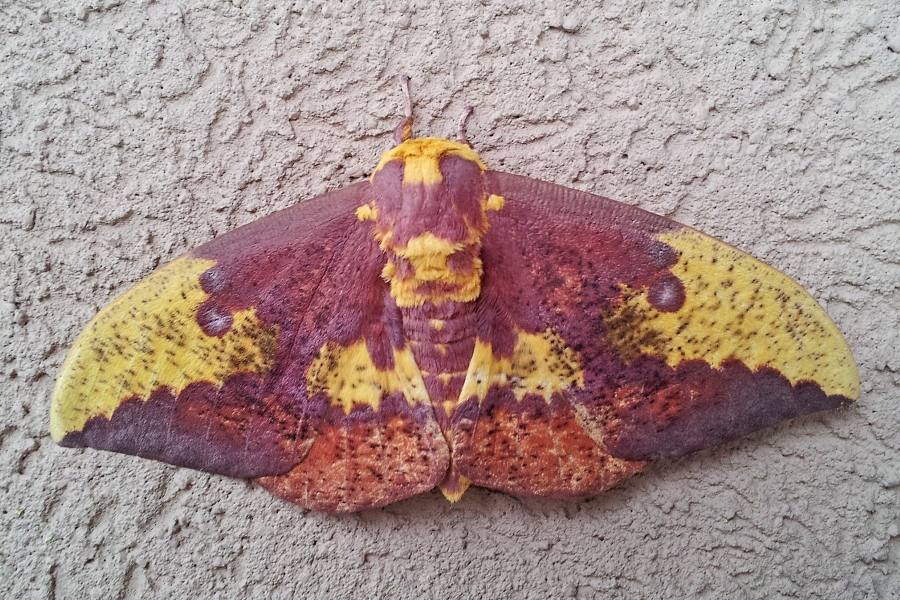
Vicki DeLoach
Host plants: American basswood, birch, elm, hickory, honey locust, maple, oak, sassafras, American sweetgum, American sycamore, walnut, eastern red cedar, and pine. (3)
Regal Moth (Citheronia regalis)
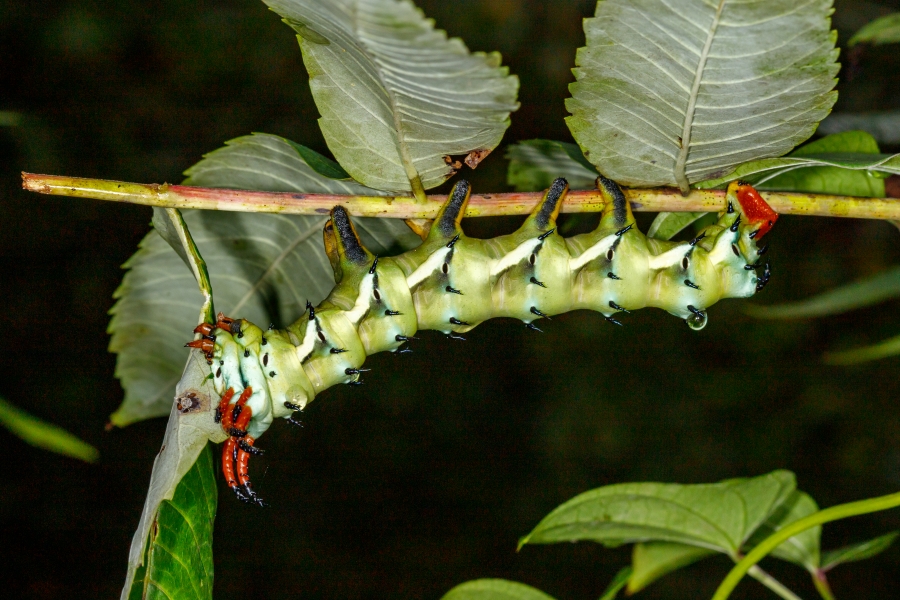
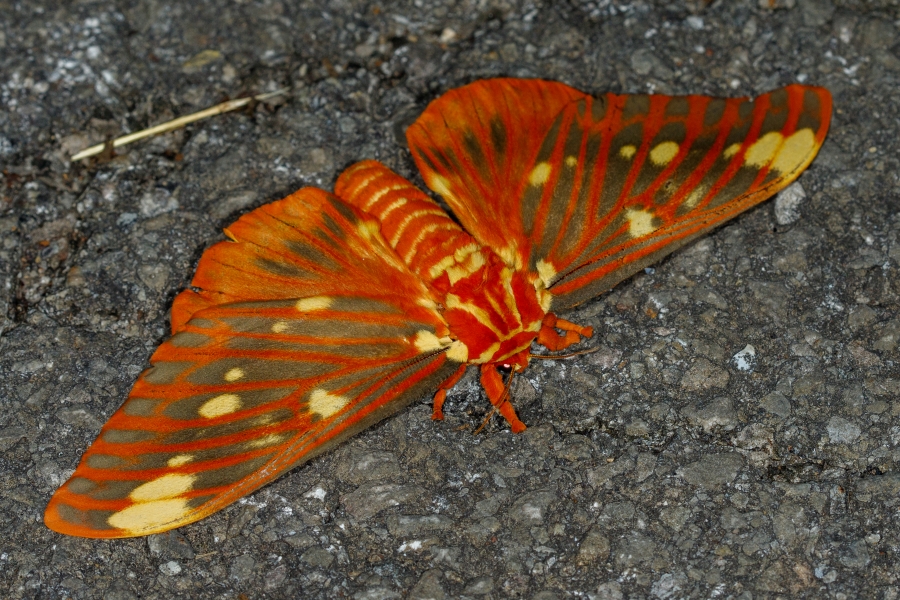
Regal Moth caterpillars are called Hickory Horned Devils. The name is apt for their appearance and the final instar is a whopper! They pupate underground. The wingspan of adults can be up to six inches or more.
Host plants: American sycamore, ash, black walnut, cherry, common persimmon, hickory, sumac, and sweetgum. (4)
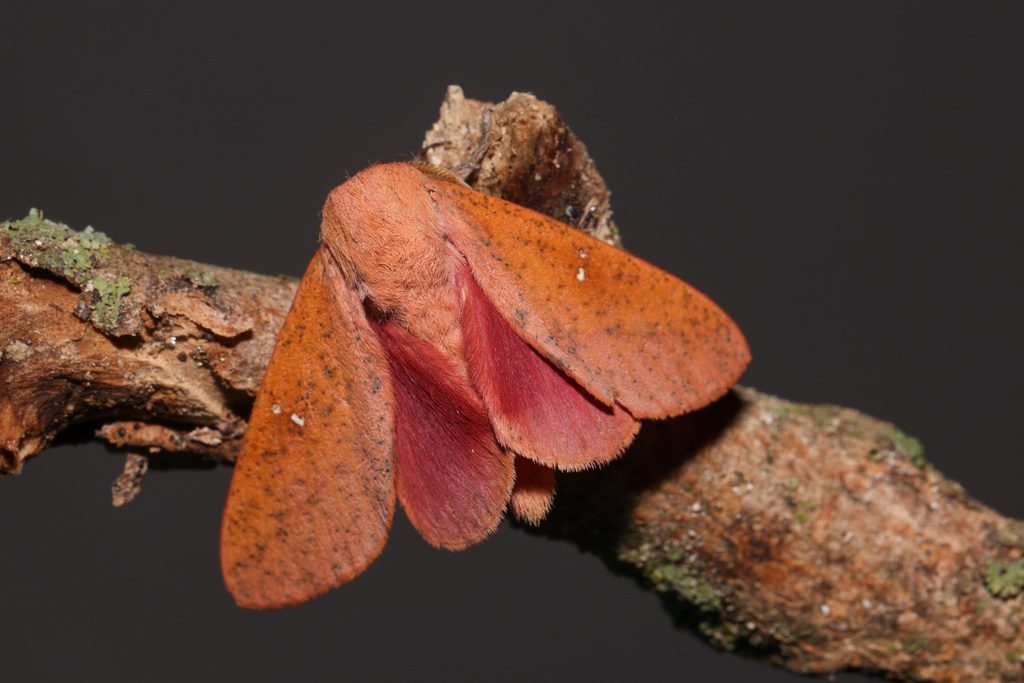
Honey Locust Moth (Syssphinx bicolor)

karlabaker
karenrscott
Host plants: honey locust and Kentucky coffee tree. McCormac and Gottfried note that because of the popularity of these trees, Honey Locust moths can be seen in urban and suburban areas. (5)
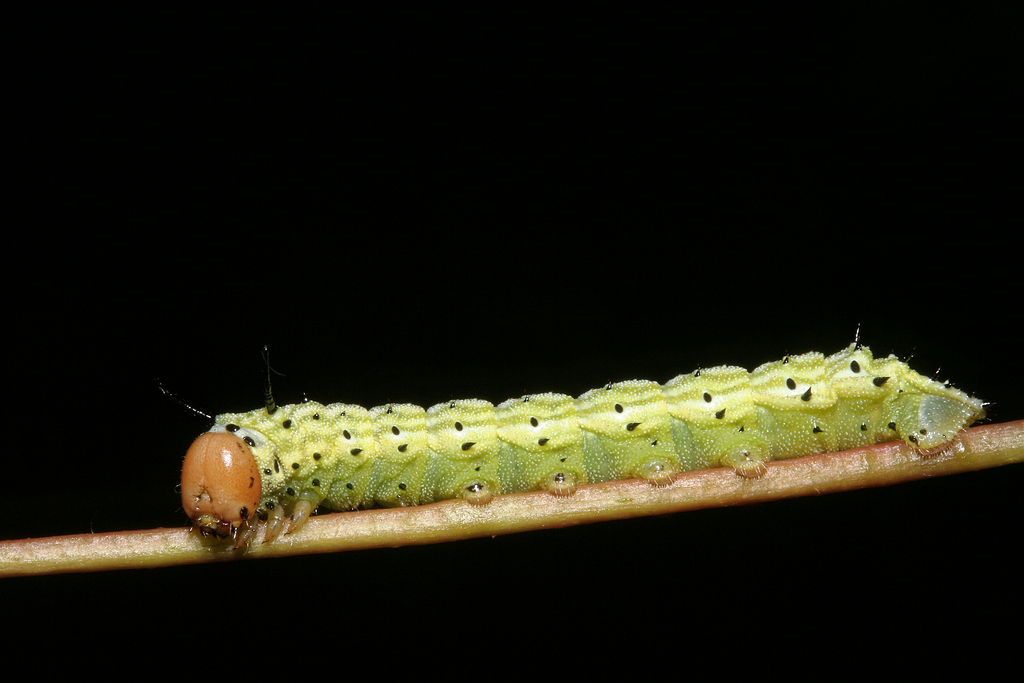
Rosy Maple Moth (Dryocampa rubicunda)
Christian Back
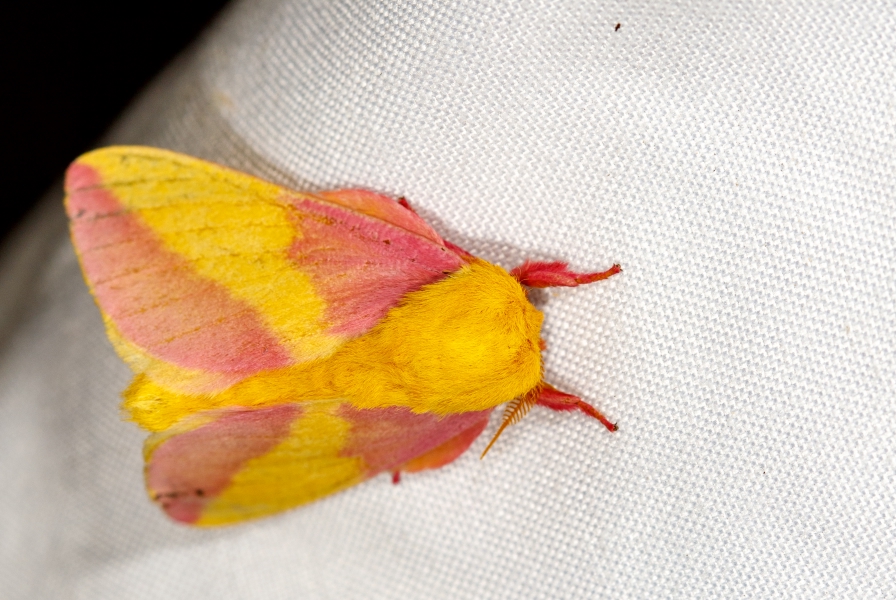
Rosy Maple pupa overwinter underground. Adults are on wing from May through July and can be found hanging amid the helicopter seeds of maples.
Host plants: maple, American beech, oak, and American sycamore. (6)
Giant Silkworm Moths
Io Moth (Automeris io)
Males are yellow and females are brownish. When threatened, they open their wings to flash their eyespots and startle predators. Caterpillars tend to stay together through their first three instars. They form “a loose, papery cocoon in leaf litter and overwinter as pupa.” (7)
Host plants: aspen, poplar, birch, blackberry, cherry, clover, corn, elm, hackberry, honey locust, maple, oak, rose, sassafras, and willow. (7)
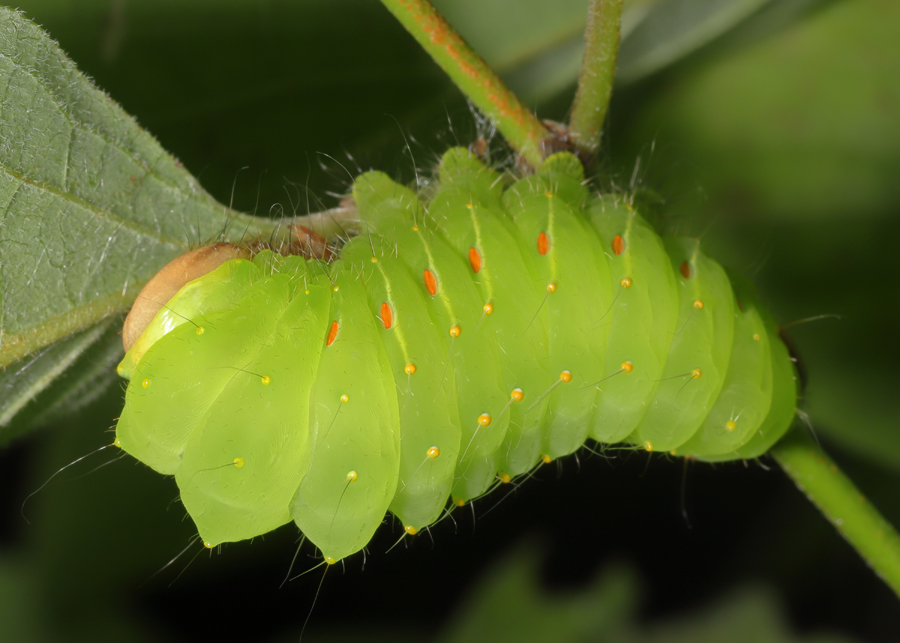
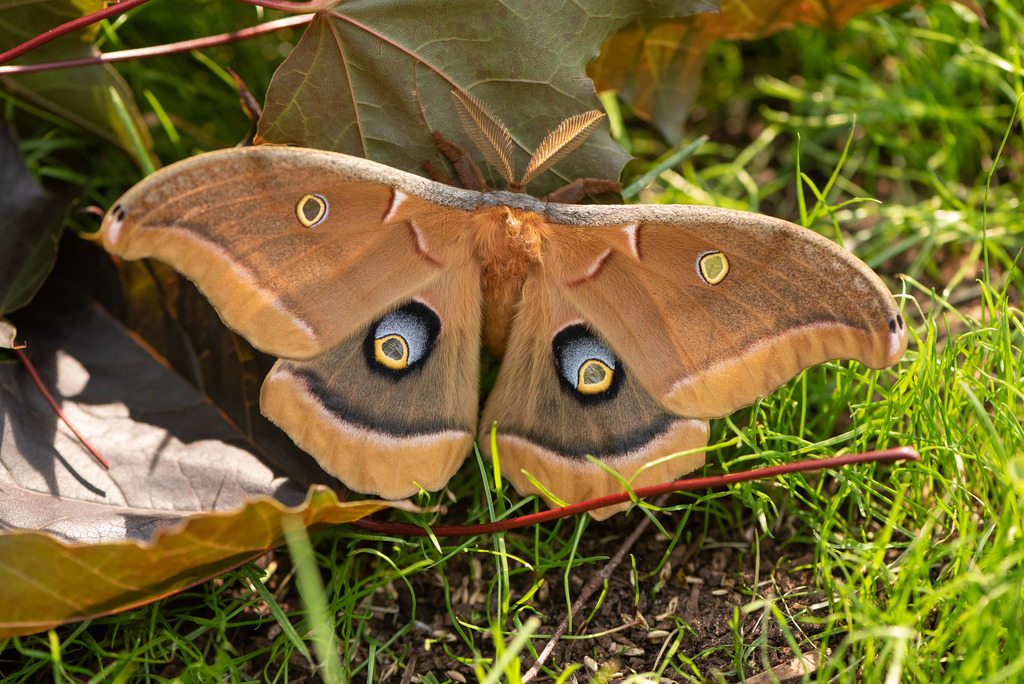
Polyphemus Moth (Antheraea polyphemus)
David Kaposi
Like the Io moth, Polyphemus moths have eyespots that they flash when threatened. This moth overwinters in a waterproof cocoon that can be found in their host trees and on the ground.
Host plants: apple, ash, birch, dogwood, elm, grape, hazelnut, hickory, maple, oak, pine, rose, and willow. (8)
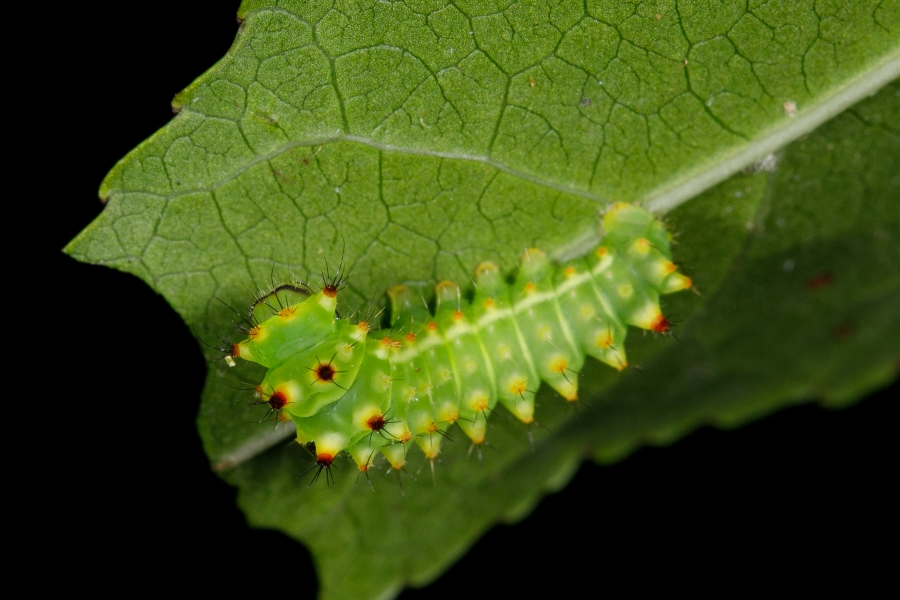
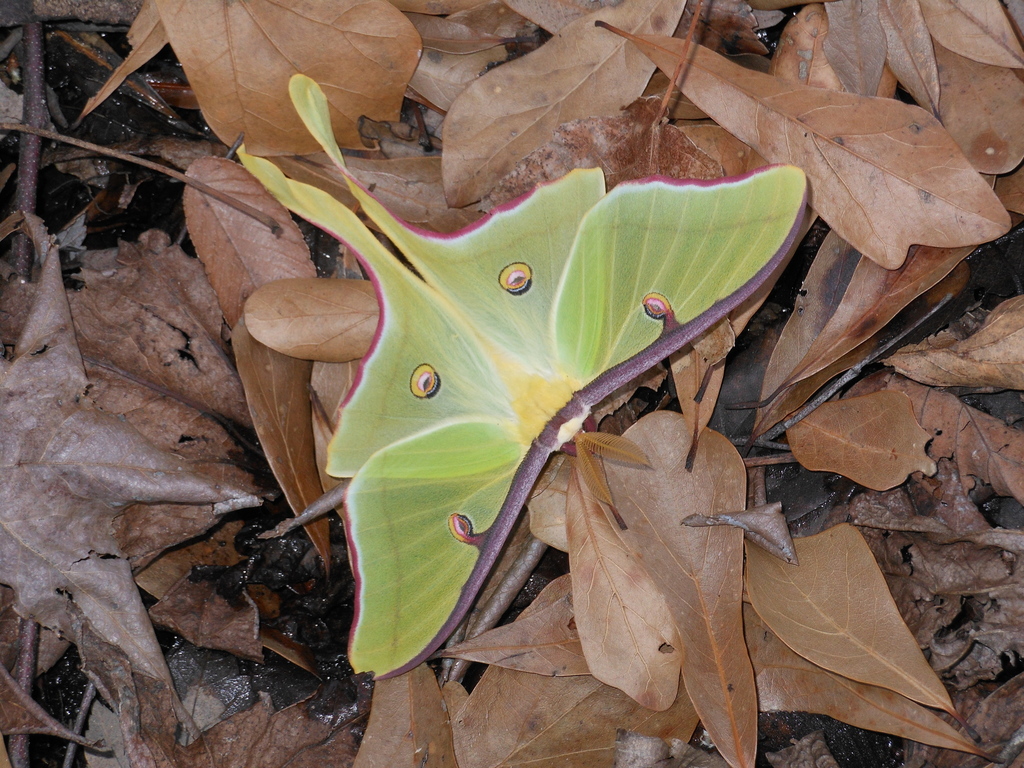
Luna Moth (Actias luna)
Bob O’Kennon
Luna moths have very recognizable long tails on their hind wings. The long tails are believed to create “an acoustical diversion” that causes bats to attack the tail rather than the body of the moth. Males can sense the pheromones of females from miles away and females can lay 200 to 400 eggs on a host plant.
Host plants: alder, American beech, birch, black gum, cherry, common persimmon, hickory, maple, northern spicebush, sumac, American sweetgum, tuliptree, and walnut. (9)
Promethea Moth (Callosamia promethea)
McCormac and Gottfried suggest the easiest way to know the presence of Promethea Moths in an area is to look for their “slender baglike” cocoons of “dead leaves silked together” dangling from low branches. (10) Females are reddish brown and males are nearly black. Males will fly during the late afternoon and early evening.
Host plants: American basswood, ash, birch, buttonbush, cherry, maple, sassafras, American sweetgum, and tuliptree. (10)
Cecropia Moth (Hyalophora cecropia)
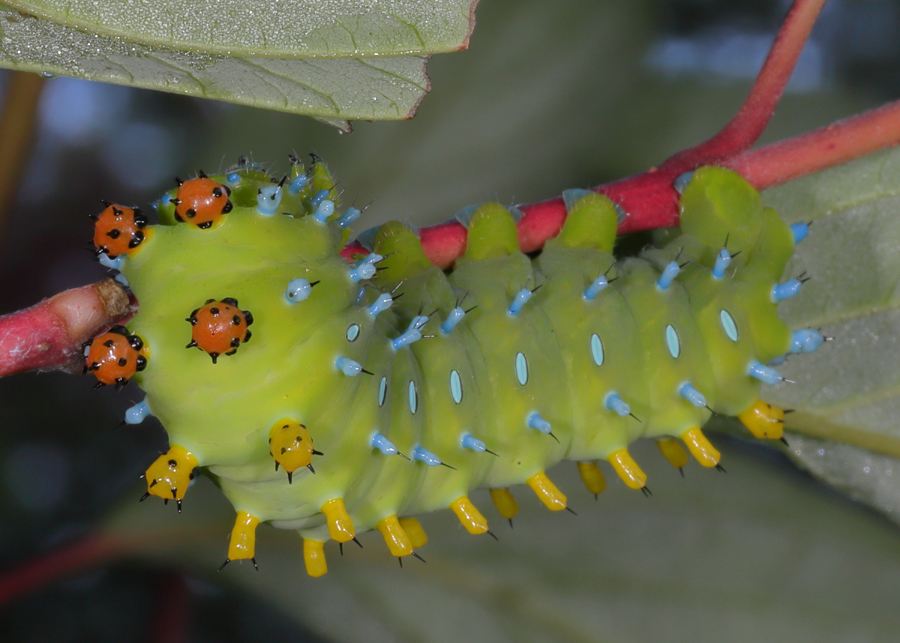

David Yeany
The Cecropia moth is the largest of the regional moth species with a wingspan of six inches or more, “nearly the size of a small bat.” (11)
Host plants: ash, cherry, poplar, and willow but they may also use American beech, birch, dogwood, maple, oak, and sassafras.
Predators
Saturniids are hunted by birds and bats. As caterpillars, they are susceptible to being parasitized by tachinid flies and wasps… a long ugly way to go as one is gradually consumed.
Other Resources
The Ohio Department of Natural Resources’ Moths of Ohio Field Guide.
References
(1) McCormac, Jim, and Chelsea Gottfried. 2023. Gardening for Moths: A Regional Guide. Athens, Ohio: Ohio University Press, 174.
(2) McCormac and Gottfried, 175.
(3) McCormac and Gottfried, 176.
(4) McCormac and Gottfried, 176-77.
(5) McCormac and Gottfried, 177.
(6) McCormac and Gottfried, 178.
(7) McCormac and Gottfried, 179.
(8) McCormac and Gottfried, 180-81.
(9) McCormac and Gottfried, 181-82.
(10) McCormac and Gottfried, 182-83.
(11) McCormac and Gottfried, 184.
Photos by Randy Litchfield unless otherwise noted
© Randy Litchfield, some rights reserved (CC-BY-NC)
 Catchfly Commons