
We are starting to see a good number of fireflies in the yard now. It is so enchanting to see the lights in the night flicker and dance! We also frequently see them during the day. Even without the lights, I feel a friendly vibe from their meandering. We like to think that their presence and numbers here is an indication of good habitat for biodiversity. I am just starting my journey of learning about them.
About Fireflies
Fireflies go through four stages in their complete metamorphosis: egg, larva, pupa, and adult. The complete life cycle can be from two months to two or more years. Most of their life cycle is in the larval stage. Larvae are predators of snails, slugs, and worms. (1)
Flashing is a part of firefly courtship. Males flash particular patterns while flying. Females tend to watch from perches on vegetation. Once interested, the female flashes a response pattern and a flashing dialog with the male ensues. This can last for more than an hour. (1)
Fireflies are most active during warm humid weather. Each species is active at different times of the year AND at different times of day. “Some fireflies begin courting at dusk, and their courtship may last for just 20 minutes. Other species become active only when it is fully dark and may continue courtship for a few hours.” (1)
Firefly Species
Fireflies are really beetles in the family Lampyridae. “Fireflies thus fall into three main groups depending on their courtship style: daytime dark fireflies, which are active during the day and do not produce light; glow-worm fireflies, whose flightless females glow to attract mostly non-luminescent males; and flashing fireflies (a.k.a. lightningbugs) (1)
According to Firefly.org there are 2400 species of fireflies in the world and around 120 species in the US. They have a helpful overview of the various types of fireflies.
I frequently see references to 24 firefly species in Ohio. The “Firefly Species Checklist of the USA and Canada” on Firefly Atlas shows 31 species when the search is limited to Ohio. However, when I search iNaturalist observations of Lampyridae in Ohio it appears that only a handful of species are recorded.
The Xerces Society recommends these guides for exploring firefly species:
- Fireflies, Glow-worms, and Lightning Bugs by Lynn Faust
- Silent Sparks by Sara Lewis (2)
Firefly Observations at Catchfly Commons
Daytime
I started observing fireflies during the day when they were either in flight or on vegetation. Daytime observation obviously has its limitations. Those commonly in flight during the day are probably diurnal species and not those flashing at night. The other night-time mating species are trying not to be seen during the day.
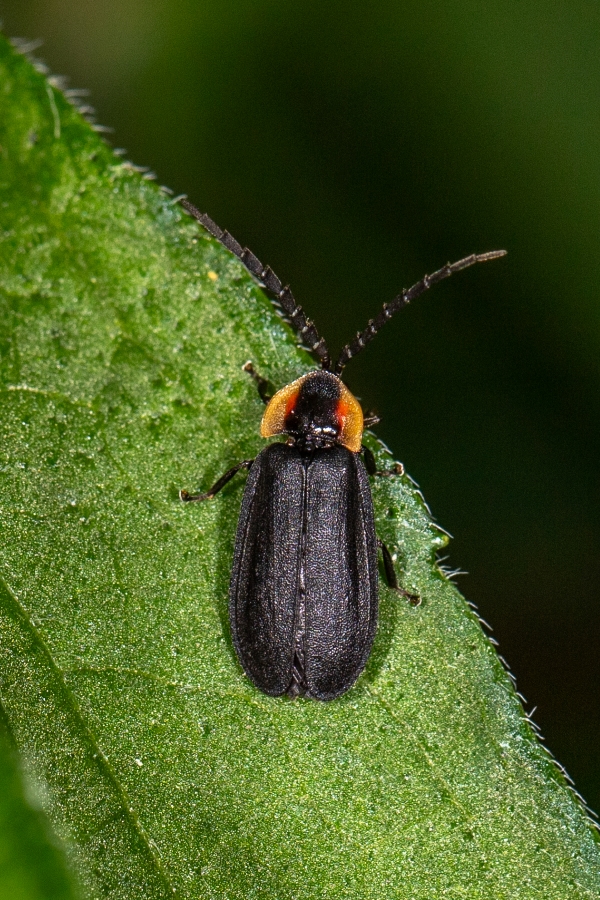
Thus far I have identified three fireflies through daytime photography—with some disappointment. One (Lucidota atra) does not have bioluminescence as an adult and a second is in a genus (Photuris) that preys on other fireflies!
Black Firefly (Lucidota atra)
The black firefly (Lucidota atra) is a day-time species with no bioluminescence in adults. Finding mates is done through sensing pheromones. However, the larvae are bioluminescent. Their activity looks to peak in June. (3)
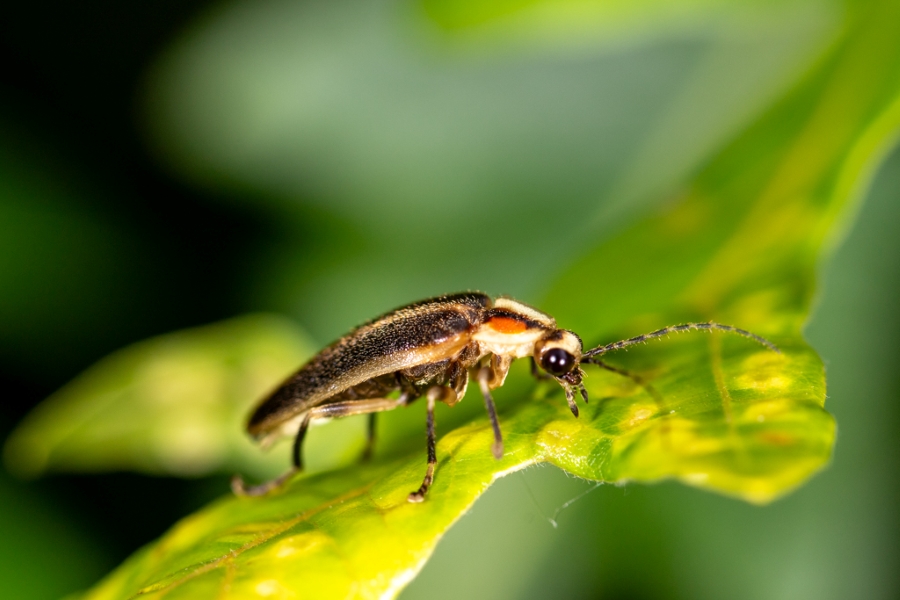
Genus Photuris
Identification of a species withing this genus cannot be done by photographs alone. They are often references as the “femme fatale lightning bugs of North America.” This is because adults “engage in aggressive mimicry, imitating the light signals of other firefly species’ females to attract mates – but Photuris use it to attract, kill and eat the unsuspecting males of those other species.” (4)
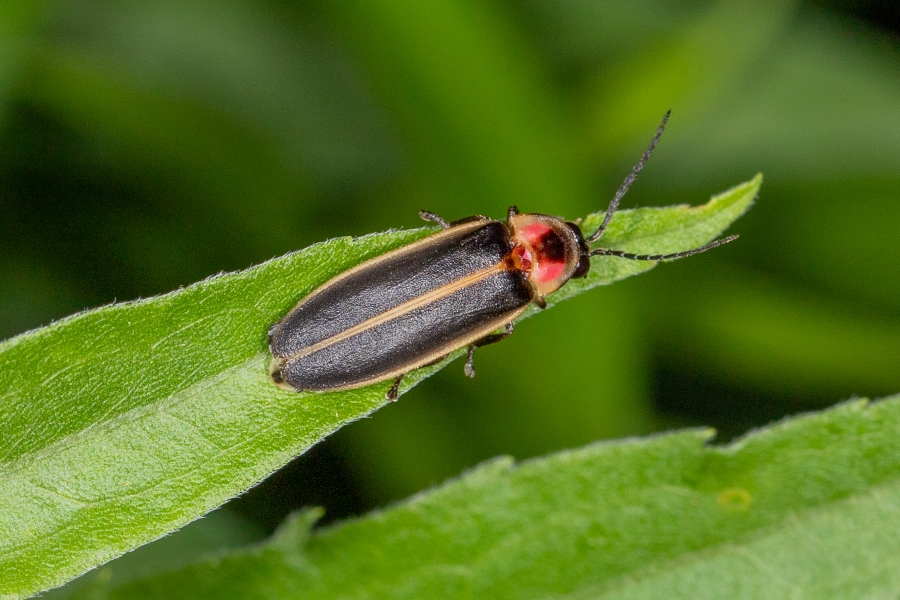
Common Eastern Firefly (Photinus pyralis)
The common eastern firefly (Photinus pyralis) is the most common species in North America. They are active around twilight and fly low. “Due to the characteristic flight of the males, this species is also often called the big dipper firefly; the trajectory appears to follow a J-shape, lighting on the upswing” (5)
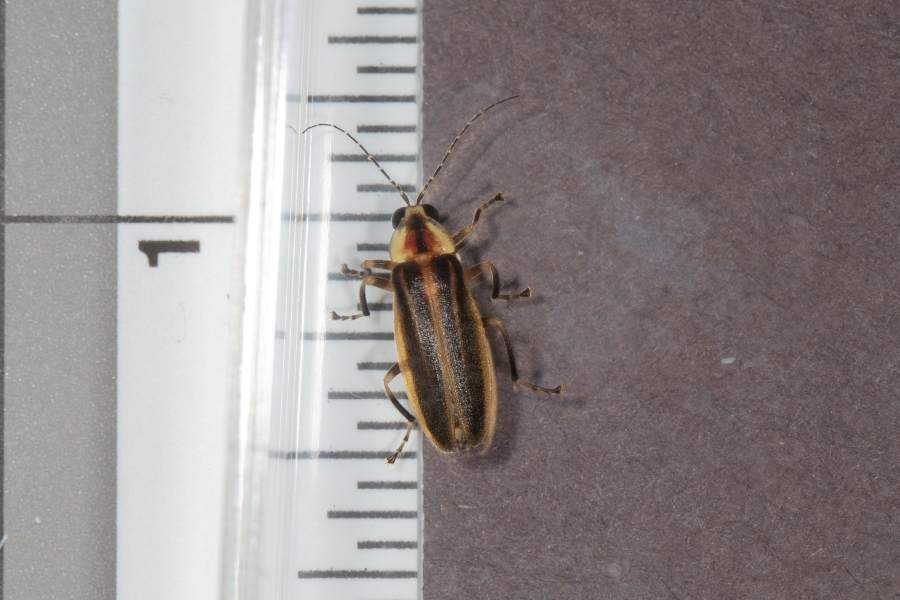
Nighttime
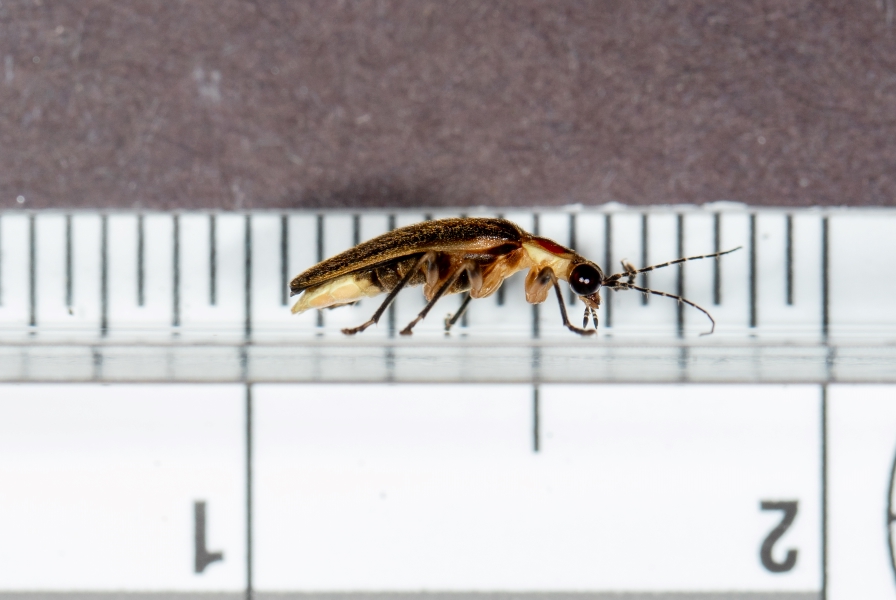
One way of identifying fireflies at night is to capture them on the fly and then photograph them. Here are a couple of mug shots of a captured firefly (released later) in the Photuris genus.
A second way of identifying fireflies, particularly in the Photinus genus, is through their flashing pattern. I am nowhere close to being ready for that! “A Guide to Lightningbug Linguistics” by Sara Lewis is a good blog post explaining that process with a species flashing chart.
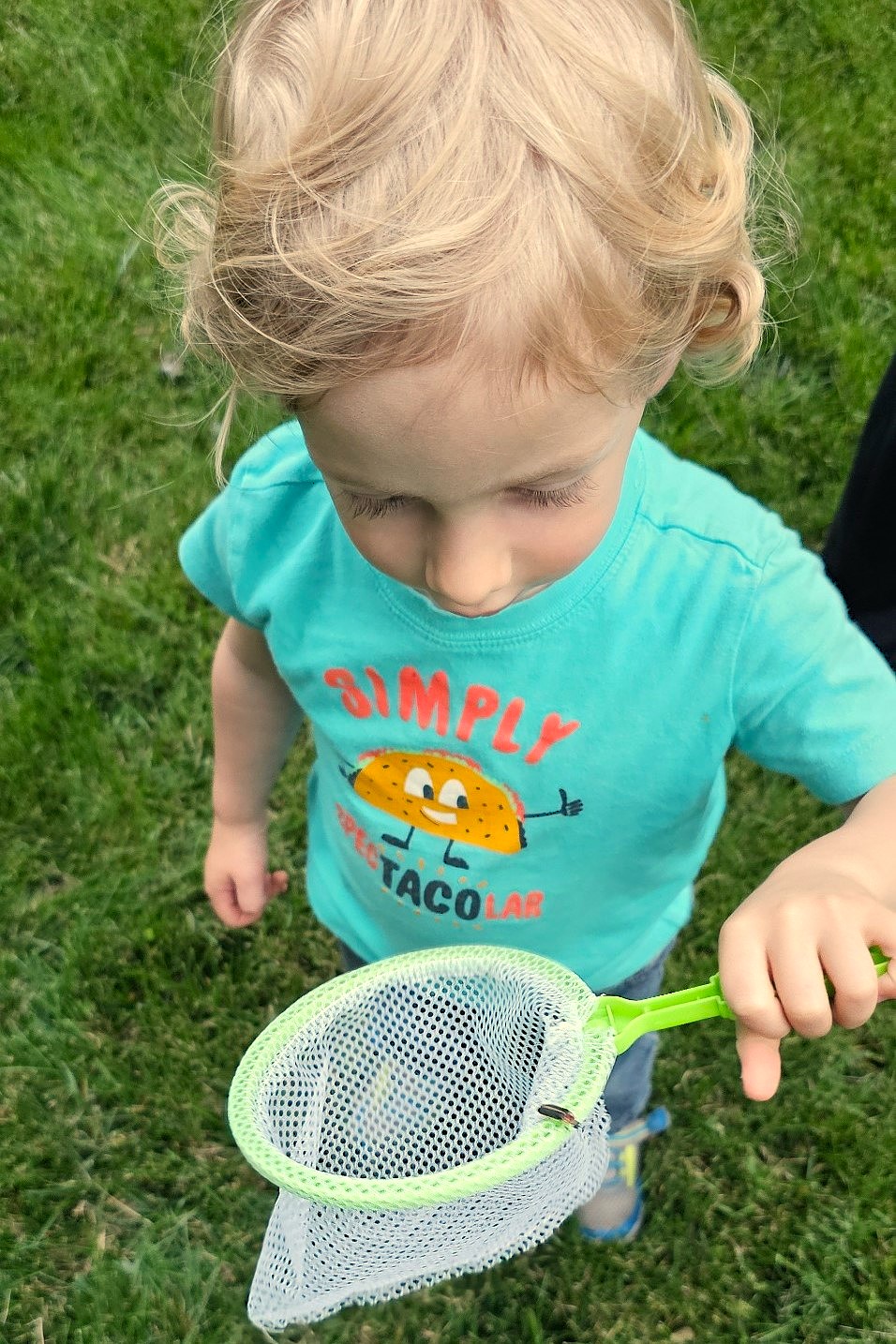
Of course, night observation is a good time for all ages to have fun exploring!


Habitat to Support Fireflies
Like many other insects, fireflies are threatened by habitat degradation and loss, light pollution, and pesticide use. (5) Their long periods as larvae make them very vulnerable to pesticides.
It seems that there is uncertainty about what adult fireflies eat. Since larvae eat soft invertebrates, there are no native host plants. An important need for fireflies is moisture for eggs and larvae. Here are some priorities for providing firefly habitat quoted from Firefly.org:
- Provide habitat for females – Mating habitat (diverse canopy heights). Places for her to lay eggs.
- Provide habitat for larvae – Plants that builds soil/leaf litter, places to find food (snails, worms, slugs, soft-bodied insects), trap moisture in the soil.
- Operational cover for flashing adults – Woody plants with broad leaves for males and females to hide and flash from. Tall grasses whose blades provide narrow hiding places and long stems to take a flight from. (6)
Additional Resources
- “Twinkle Twinkle Little Firefly,” The Humane Gardener, Nancy Lawson
- “Go native! Native plants benefit birds, bees, and butterflies,” Friends of the Lower Olentangy Watershed
- “Where Are the Lightning Bugs? Soon Friends!”, Buckeye Yard and Garden Online
References
(1) “Firefly Life History,” Firefly Atlas, https://www.fireflyatlas.org/learn/firefly-life-history, accessed 6/7/2024.
(2) “Firefly Threats and Conservation Efforts,” Xerces Society, https://xerces.org/endangered-species/fireflies/threats-and-conservation-efforts, accessed 6/7/2024.
(3) “Black Firefly (Lucidota atra),” iNaturalist, https://www.inaturalist.org/taxa/224157-Lucidota-atra, accessed 6/7/2024.
(4) “Genus Photuris,” iNaturalist, https://www.inaturalist.org/taxa/47883-Photuris, accessed 6/7/2024.
(5) “Common Eastern Firefly (Photinus pyralis),” iNaturalist, https://www.inaturalist.org/taxa/129350-Photinus-pyralis, accessed 6/7/2024.
(6) “Plants for Fireflies,” Firefly.org, https://www.firefly.org/plants-for-fireflies, accessed 6/7/2024.
Photos by Randy Litchfield unless otherwise noted
© Randy Litchfield, some rights reserved (CC-BY-NC)
 Catchfly Commons
What a wonderful newsletter! I learned so much!
Thanks!! Glad it was helpful!
Thank you for the great information and your efforts to support good habitats.