Like everyone else, we’re excited about the coming of spring! Terri recently posted about the early shoots of perennials and the season of spring wildflowers emerging. Bluebirds and other birds are busy and spring peepers are raising their voices. Seeing everything greening up feels so good! Then we see them… weeds and invasive plants!
Early Spring Weeds
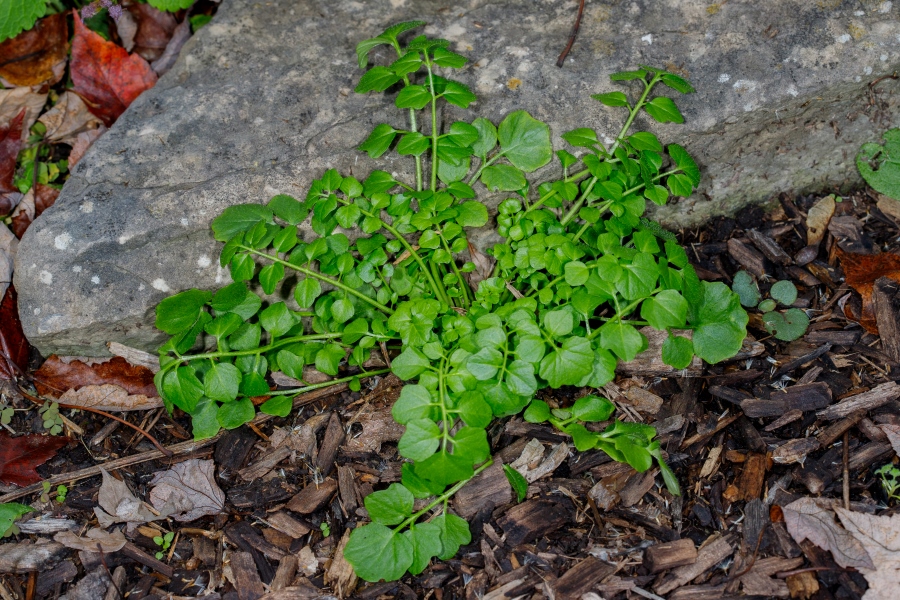
Several weeds are really asserting themselves now: hairy bittercress, purple dead nettle, and henbit. We try to control them by pulling, preferably before they go to bloom and certainly before setting seed.
Terri wrote a post about hairy bittercress not too long ago. It is already blooming and needs immediate attention. It is a prolific self-seeder and its pods explode to scatter seeds across a big area.
Purple dead nettle (Lamium purpureum) and henbit (Lamium amplexicaule) look very much alike. Here is a good article from Buckeye Yard & Garden Online about telling the difference between these. Ground ivy (Glechoma hederacea) also looks similar to purple dead nettle and henbit. Ground ivy is difficult to control. Here is a helpful article from Penn State about all three of these.
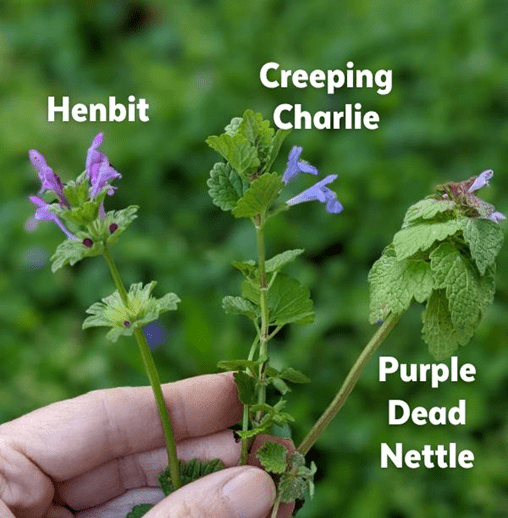
by Jan Berry – March 15, 2022
https://unrulygardening.com/henbit-vs-purple-dead-nettle
Early Invasive Plants
An invasive plant is defined as “…[A] species that is non-native (or alien) to the ecosystem under consideration… whose introduction causes or is likely to cause economic or environmental harm or harm to human health.” Often these plants are a threat because of their fast growth rate and rapid spread.(1) By definition, native plants are never “invasive” but given the right circumstances they may be aggressive enough to dominate an area.
There are a number of plants designated as invasive in Ohio. The Ohio Invasive Plants Council (OIPC) monitors and designates plants as invasive. They also provide education and help inform state policies. Here is their list of assessed invasive species. For this post, I will highlight just three from that list: garlic mustard, honeysuckles, and callery pear.
Garlic Mustard
Garlic mustard (Alliaria petiolate) needs management before it goes to seed because it is very prolific. Garlic mustard is most likely to show up in understory and shady areas. It emerges early enough to shade and out compete other plants. According to the Nature Conservancy, “…garlic mustard’s roots release chemicals that alter the important underground network of fungi that connect nutrients between native plants, inhibiting the growth of important species like trees.”(2) Their article on garlic mustard is a helpful read.
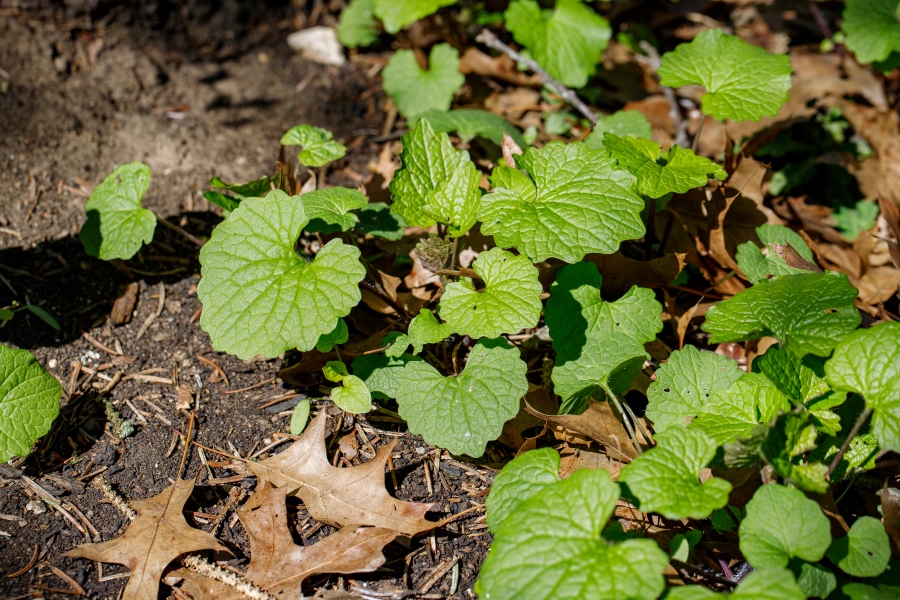
Traditionally, garlic mustard control is done by pulling it before seeds set and getting as much of the tap root as possible. Pulling plants with seeds will spread the seed around. Do not leave pulled plants out nor compost them. Bag them and put in them out with your trash.(2) A recent Cornell University study suggests that leaving garlic mustard is a better option than pulling. Areas where plants were pulled came back stronger and undisturbed plants died out over time (years).(3) This advice seems geared to garlic mustard colonies in wooded areas where teams of people pulling the plants may do environmental damage in the process.
Honeysuckle
I am commenting on honeysuckle now because honeysuckle leaves come out before most other shrubs, so this can help you identify plants for removal. I am often surprised in the spring to find honeysuckle I missed in summer.
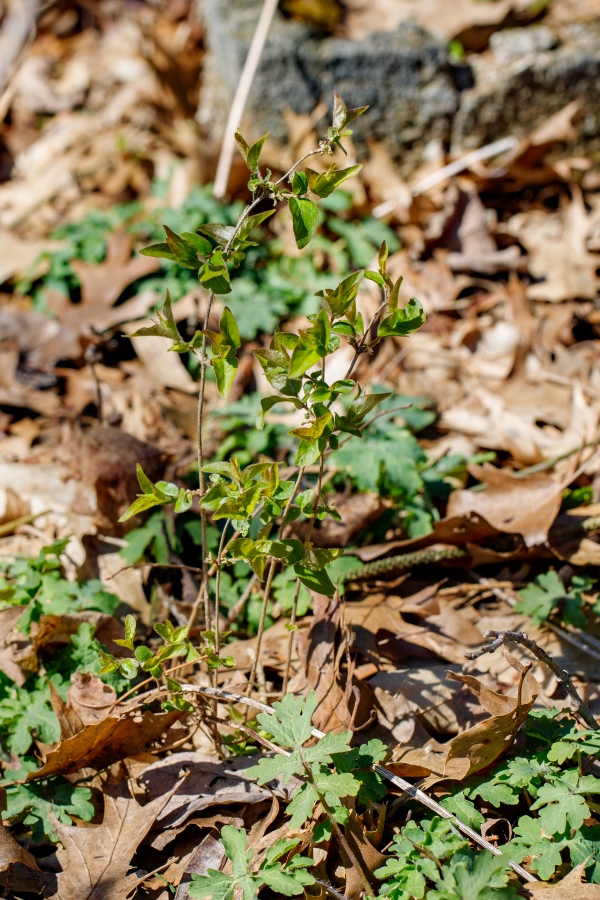
Several species of honeysuckle are invasive: Amur (Lonicera maackii), Morrow’s (Lonicera morrowii), Bells (Lonicera x bella), Standish (Lonicera standishii), and Tartarian (Lonicera tatarica).
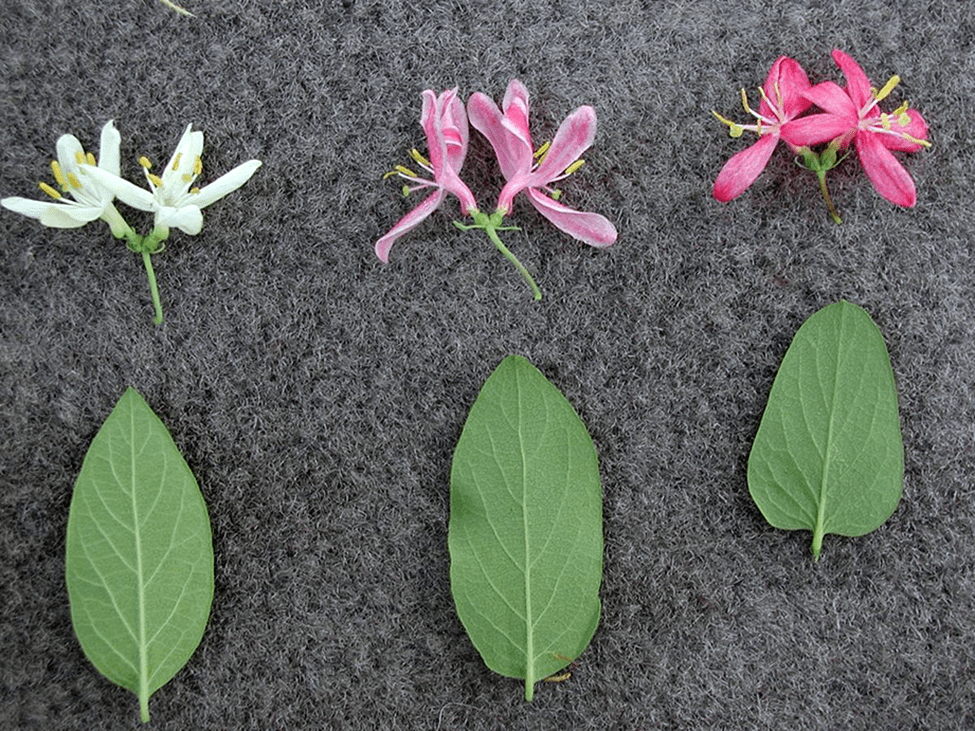
From “Exotic Honeysuckles”, University of Minnesota Extension,
https://extension.umn.edu/identify-invasive-species/exotic-honeysuckles
This group is sometimes collectively called “bush” honeysuckle, which is unfortunate because there is a native honeysuckle called dwarf bush honeysuckle (Diervilla lonicera). Japanese honeysuckle (Lonicera japonica) is a vine form of invasive honeysuckle.
Management of invasive honeysuckle is an ongoing task because birds eat berries from various areas and then spread seeds through their droppings. We are mainly dealing with seedlings, which are much easier to remove by pulling or digging than more established shrubs. Larger shrubs often need to be cut to a stump and have an herbicide applied. Recently we saw this non-chemical approach to killing honeysuckle and are going to give it a try.
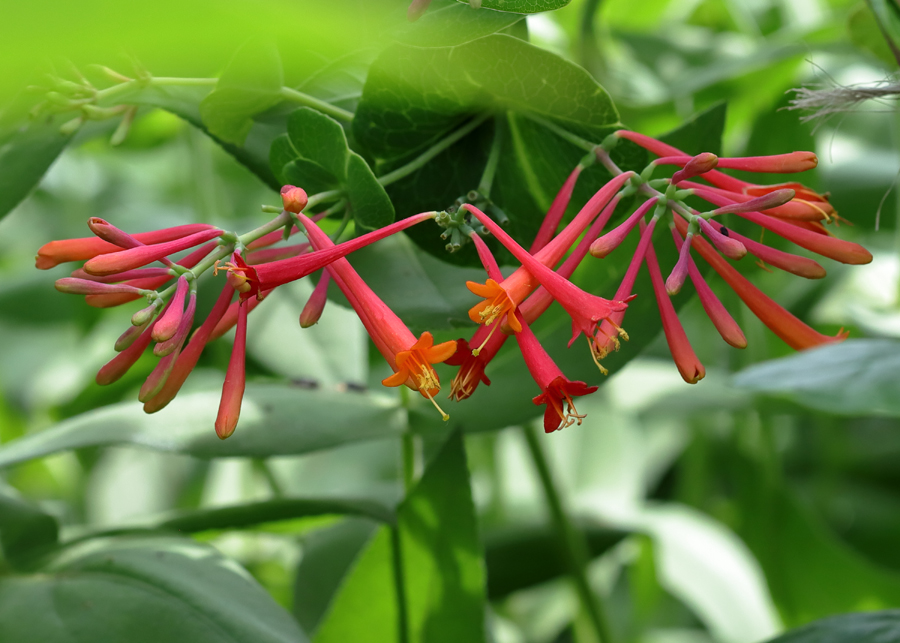
Not all honeysuckles are bad! We have two native honeysuckles at Catchfly Commons: dwarf bush honeysuckle (Diervilla lonicera) and coral honeysuckle (Lonicera sempervirens).

Callery Pear
Callery pear (Pyrus calleryana) is a spring blooming ornamental tree common in neighborhood landscapes. They have become a big problem. In yards and larger landscapes, they do not seem invasive. However, they are increasingly taking over areas and are a common scene along roadsides. When they bloom in the spring it is easy to see how big of a problem they have become. The sale of callery pear is now banned in Ohio. We are increasingly having to remove volunteer seedlings from our landscape.
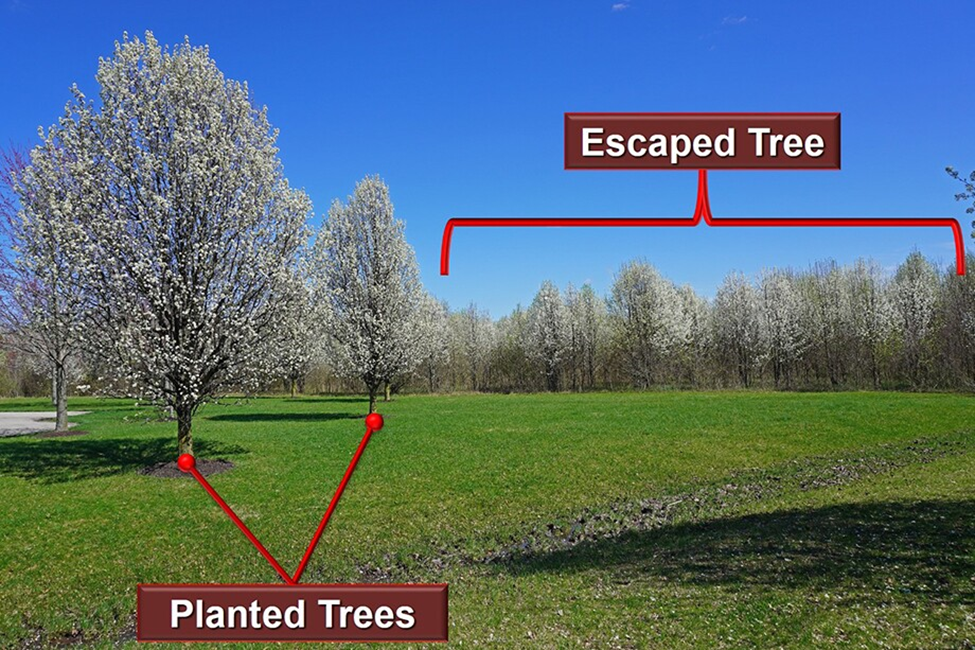
https://www.news5cleveland.com/news/state/callery-pear-the-smelly-jekyll-and-hyde-tree-will-be-banned-in-ohio-come-2023
If you have callery pear trees, please seriously consider removing and replacing them. I know this is a big commitment. We did this several years ago and replaced them with serviceberry (Amelanchier arborea). Other alternatives include wild plum (Prunus americana), eastern redbud (Cercis canadensis), flowering dogwood (Cornus florida), blackhaw viburnum (Viburnum prunifolium), and chokecherry (Prunus virginiana).
References
(1) “Invasive Plants Definitions,” Ohio Invasive Plants Council, https://www.oipc.info/definitions.html, accessed 3.22.2024.
(2) “Garlic Mustard: Invasive, Destructive, Edible,” The Nature Conservancy, https://www.nature.org/en-us/about-us/where-we-work/united-states/indiana/stories-in-indiana/garlic-mustard/, accessed 3.21.24.
(3) “When it comes to garlic mustard, doing less is more,” by Paul Hetzler, Adirondack Alamanack, https://www.adirondackalmanack.com/2021/05/when-it-comes-to-garlic-mustard-doing-less-is-more.html, accessed 3.24.24.
Photos by Randy Litchfield unless otherwise noted
© Randy Litchfield, some rights reserved (CC-BY-NC)
 Catchfly Commons
Randy, Thanks for the update on weeds accompanied with beautiful and very helpful photos.
I’ve done some weeding, but I’m looking for warmer weather, so I can increase my time outdoors.
Take care,
Nancy
Great article!