Now that the leaves are down from most trees and shrubs, it is a good time to get into the landscape for a bit of appreciation and assessment. Without foliage and the colors of the growing season, beauty emerges from the form, flow, texture, and earth tones present in the landscape. You can see the structures and textures of trees, shrubs, stalks of perennials, and grasses. The colors of berries, shrub stems, evergreens, and yard art draw interest rather than blooms.
Late fall and winter seasons allow you to assess the health of trees and shrubs, the four-season conditions plants experience, and the structure of your garden design. The following are a few areas to consider in this season’s appreciation and assessment.
Winter Interest
Plants provide late fall and winter interest for various reasons:
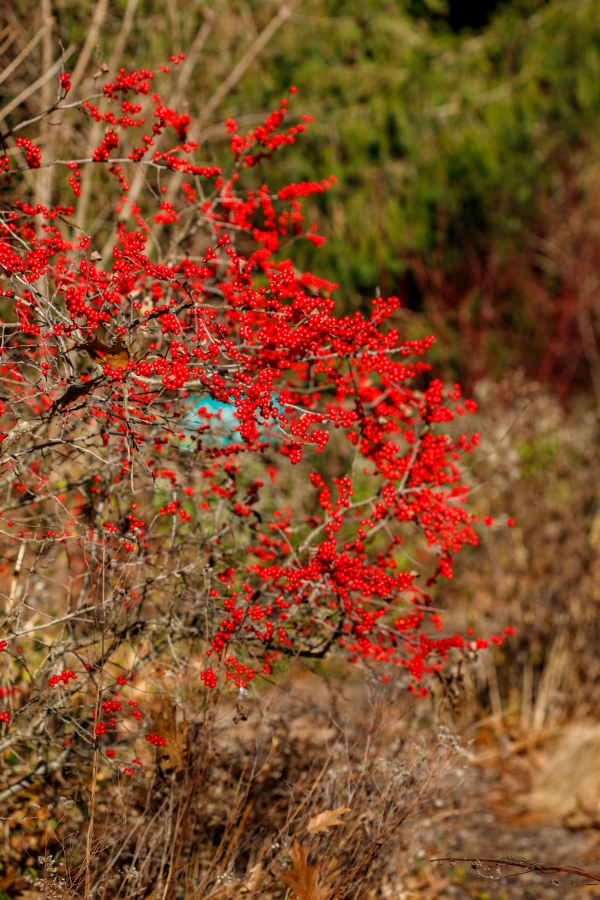
- Berries. Shrubs with fall berries include viburnum, sumac, spicebush, and winterberry. Viburnum berries tend to be darker and not as eye-catching as the red berries of spicebush, red chokeberry, and winterberry. Since creatures eat these berries, how long they last into fall and winter depends on how palatable they are.
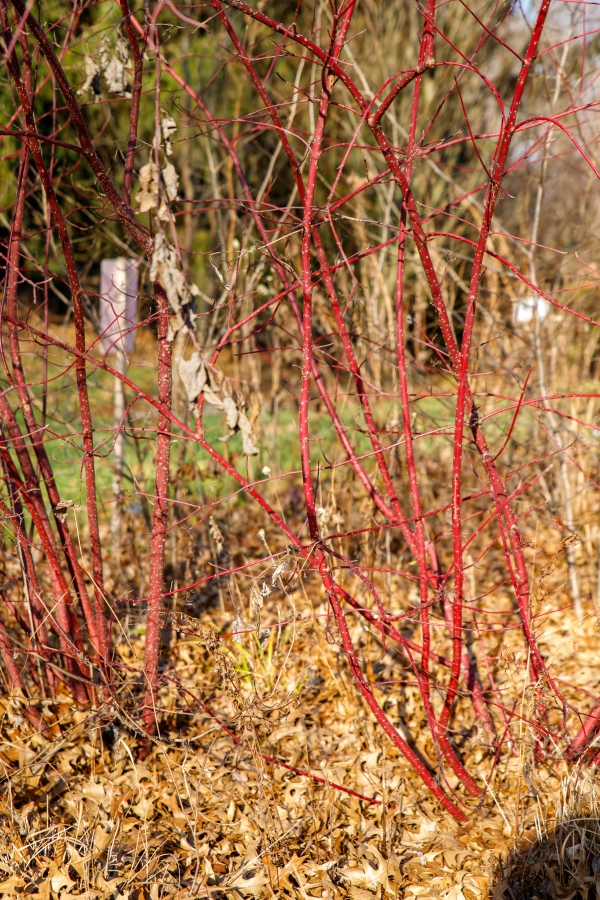
- Stem Color. The younger stems on some shrubs have nice color. Red-twig dogwood is a good native example. As the name implies, they have a red bark that is evident in winter. Pruning away older stems helps maintain the shrub’s color.
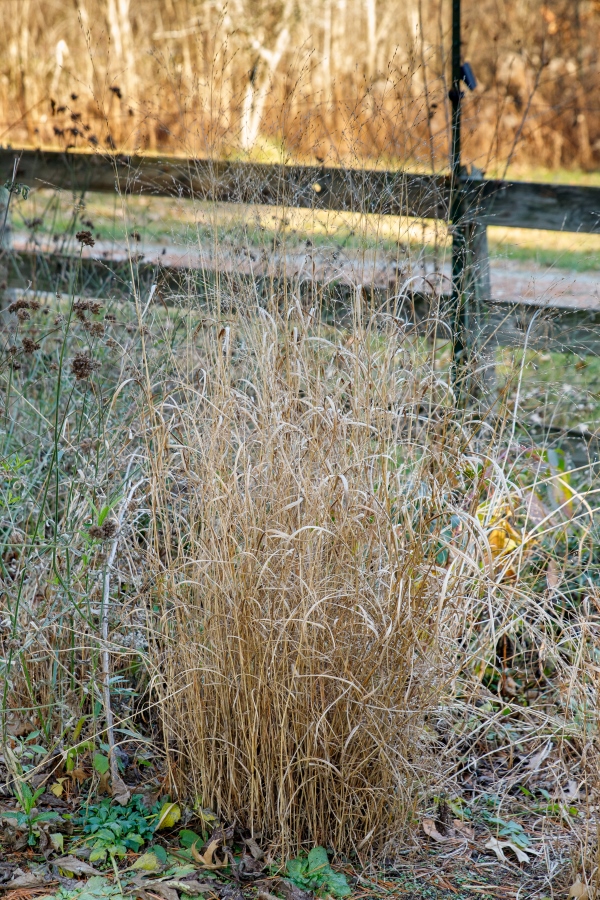
- Grasses. The form of grasses can catch the eye. Some grasses, like Indian Grass and Switch Grass, remind me of harvest sheaves. Grasses also provide motion in the wind and can reflect dazzling light when frost and snow is on them.
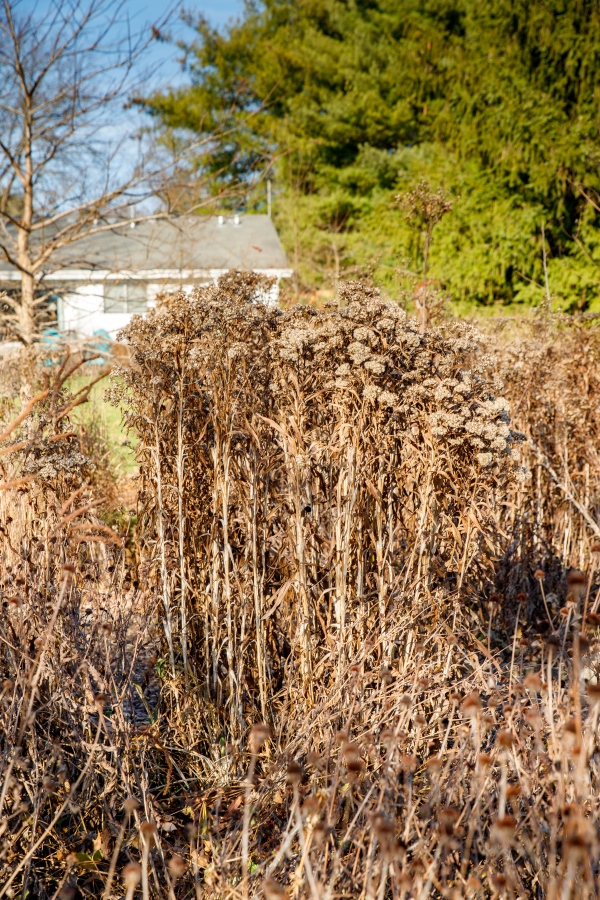
- Standing Perennial Stalks. The remnants and stalks of perennial flowers can be beautiful. One of my favorite examples of this for is Riddell’s Goldenrod.
- Evergreens. Evergreen trees and shrubs obviously provide green color throughout the year, but they also provide shape and backdrops to other features that enhance interest.
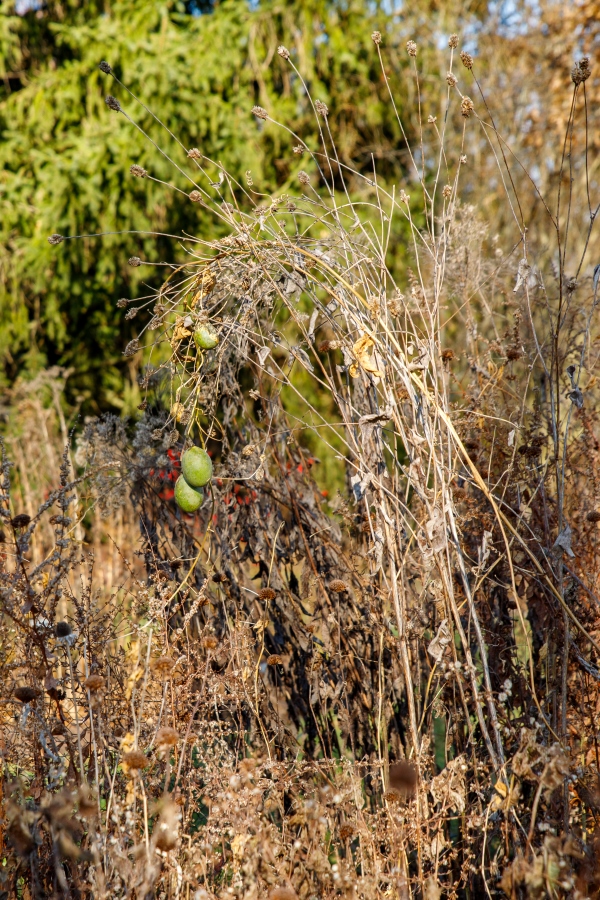

What winter interest is present in your landscape? What can be expanded or added? What can make these features stand out even more?
Structure and Layers in Landscape Design
When making a plan for a landscape, it is natural to think horizontally—what plants go where because of growing conditions. For reasons of aesthetics and eco-function, we need to think vertically as well. Without foliage and growing season color, the vertical structure of your design is more evident. As you wander around your landscape, consider the:
- Height of plants from the front to the back of beds and from one side to another.
- Variation in heights that create layering and interest.
- Lines of sight that create focal points and a sense of depth.
- Screening that provides backdrops for specimen plants and that creates different areas (“rooms”) to experience.
Differing vertical layers also create their own mini habitats for insects, birds, and other creatures. Diversity in vertical structure and height enhances the eco-function of a landscape.
Planting Conditions
Look at your various beds in late fall and winter to see how wet and exposed to frigid winds they are. It is easy to overlook these conditions when selecting plants and their placement because we tend to think of spring and summer conditions. Accumulated snow and poorer drainage in winter can create wet conditions that some plant roots cannot tolerate. Some plants may lose their shelter from winds, which may exacerbate the cold, create physical damage, or dry out plants.
Tree Health
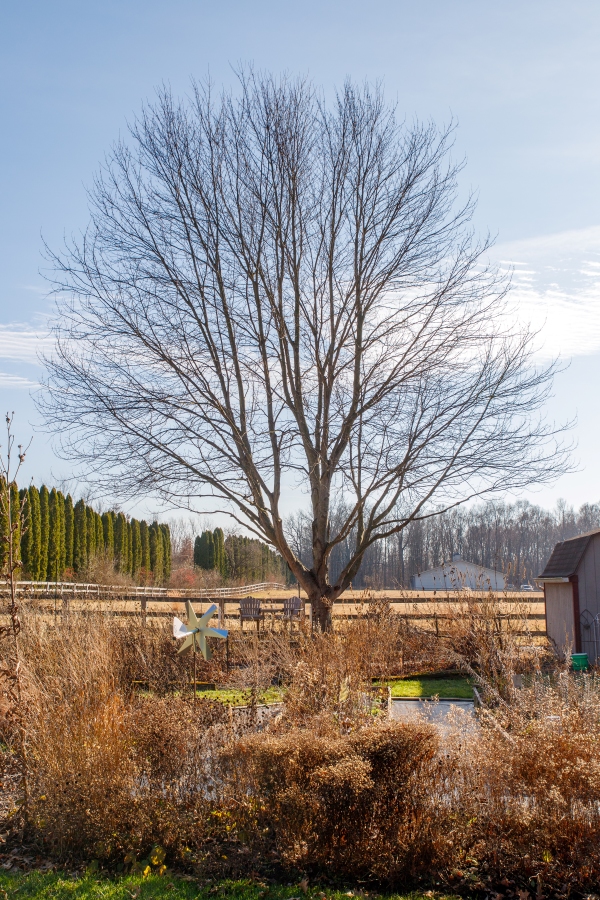
Foliage provides a lot of information about what is happening with a tree. So can a bare tree! Look for damaged and dead limbs. Also assess the overall limb structure of the tree for weak forks, limbs rubbing each other, limb density that can lead to wind damage when the tree is leafed out, and low hanging limbs that are in the way.
There are a couple of reasons pruning should not be done until winter. Pruning during dormancy is easier on the tree because cuts are less prone to weep sap. Also, winter temperatures make it less likely that pests and diseases are active and able to do harm via an open cut. This is especially true now for oak trees because of oak wilt disease.
Consult a certified arborist focused on tree health and not a company that just cuts and removes trees. It’s worth the expense to care for your trees if you can afford it—trees are investments and take a long time to replace.
Habitat
Search for signs of creatures and how they may be using the landscape. This includes those insects in diapause. Look for places that creatures are using for shelter and for signs of what food types are being eaten (like berries disappearing, empty shells, or chomped stems). Finding trails indicates the routes and habits of creatures as small as mice and as large as deer. Take note of spots where water is available. Consider what is abundant, what needs enhancement, and what is missing to help creatures survive and thrive.
Having spent time appreciating and assessing your landscape will resource your planning while we await spring!
Photos by Randy Litchfield unless otherwise noted
© Randy Litchfield, some rights reserved (CC-BY-NC)
 Catchfly Commons
Love the winterberry! Family favorite plant!