Wasps are beneficial insects!! Yes, they are creatures we want in our landscapes. Certainly, there are good reasons to be careful about being stung by wasps and hornets. As in our appreciation of bees, we need to move past our fears and understand wasp behavior and their contributions. Wasps are pollinators and help control other insects. I have also come to appreciate their beauty when photographing them in the garden. This blog follows up on my desire to learn and share a bit about pollinators other than bees, butterflies, and moths.
I am not an entomologist, so I relied heavily on Heather Holm’s book Wasps: Their Biology, Diversity, and Role as Beneficial Insects and Pollinators of Native Plants for this blog. At the end of this blog, there is an embedded video of a presentation on wasps by Heather Holm.
What is a Wasp?
According to Heather Holm, a wasp is “an insect that is neither a bee nor an ant that has a narrow (constricted) waist and a sting.” (Holm, p. 10) Wasps are the “evolutionary ancestors” of bees. Bees evolved to have hairy bodies and to dependent on pollen and nectar for food (vegetarian). Wasps have much less hair and are carnivorous, “feeding their offspring insects and spiders.” (Holm, p. 10)
Ecosystem Services
Holm explains that “landscape complexity and plant diversity influence the availability of food, prey, and the ecosystem services provided by wasps.” (Holm, p. 63) Since wasps are carnivores, a primary contribution is control of other insects. Holm offers two examples of beneficial wasp predation: invasive brown marmorated sting bugs and wood boring beetles like emerald ash borer. (Holm, p. 63)
A second contribution of wasps is plant pollination. Wasps make up a significant portion of flower-visiting insects. When plants offer nectar that is accessible to wasps, the variety and number of wasp visitations may be more than that of bees. Plant pollination by wasps is incidental and less efficient compared to a bee’s visitation. Wasps visit flowers looking for nectar and prey rather than pollen and wasps have much less body hair to trap pollen than bees. Just a side note, butterflies are not efficient pollinators either since their long legs and proboscis limits contact with pollen. Nothing beats a bee! (Holm, p. 63)
A Very General Overview
Aggression. The aggressive behavior often associated with wasps is typical of wasp species that are social in nature. Social wasps include yellow jackets (ground nesting), paper wasps (above ground nesting), and baldfaced hornets (above ground nesting). Social wasp nests have many adults cooperating to rear offspring. They guard their nests fiercely and can painfully sting multiple times. As is the case with native bees, most wasps are solitary and do not defend a nest colony. They wish to get on with the business of survival and save their sting venom for prey unless directly threatened. (Holm, p. 11)
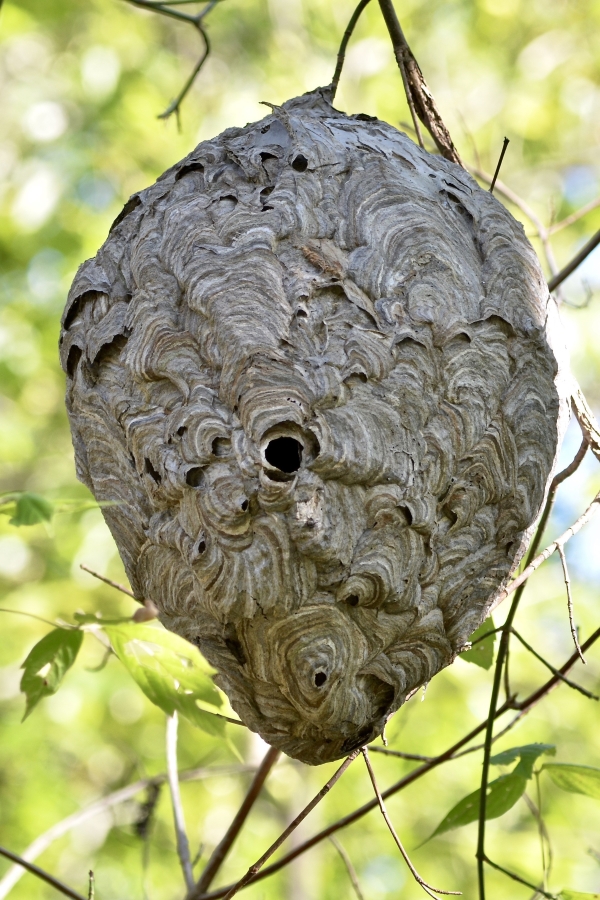
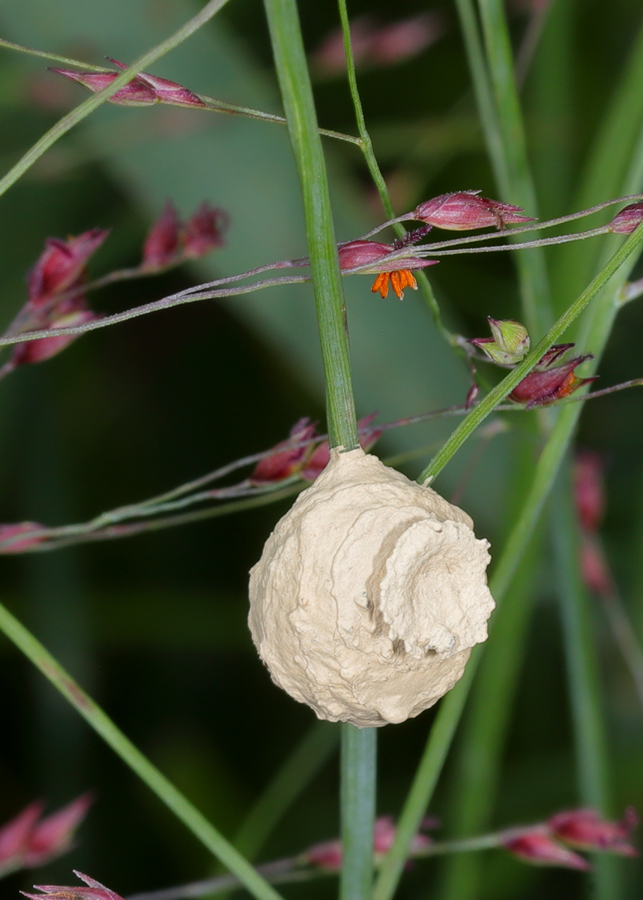
Nests. Whether above or below ground, social wasp nests are constructed of paper cells. (Holm, p. 30) Solitary wasps may nest in cavities (like solitary bees) or structures made of mud (as do dauber and potter wasps). Some solitary wasps are parasitic and have no nest because they lay eggs in a host.
https://www.flickr.com/photos/dgovoni/37149316893
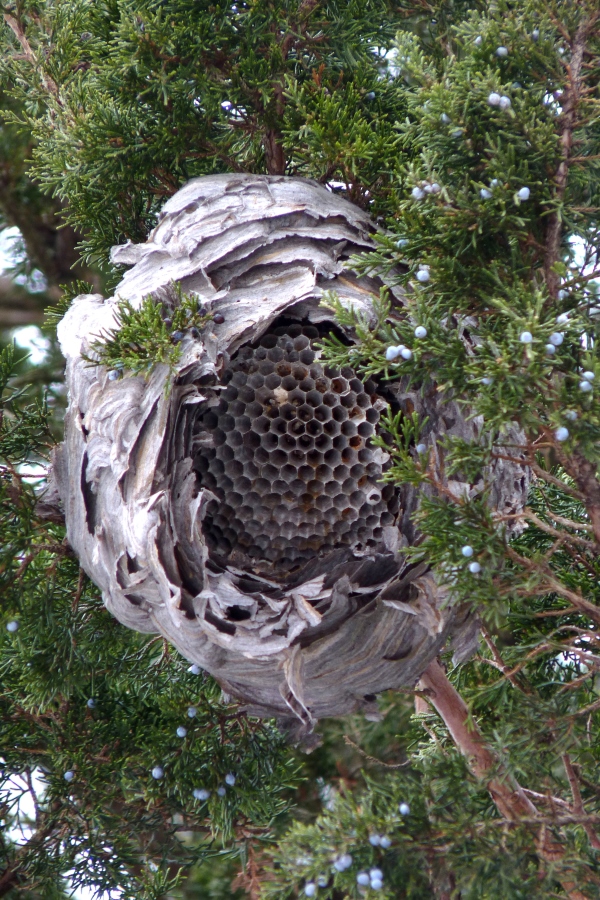
(interior exposed)
https://www.flickr.com/photos/dendroica/15775357574

https://www.flickr.com/photos/primeval/51128025611/in/photostream/

https://www.flickr.com/photos/urtica/34205755855
Diet. When a wasp egg is laid, the adult provisions the nest cell with prey that has been put in a kind of suspended state by venom when stung. During larval phases, the prey is consumed. (Holm, p. 36) As adult wasps, females hunt for prey while males neither hunt nor provision nests. (Holm, p. 54) The types of insect and spider prey vary across wasp species. Non-prey food sources include flower nectar, sap, honeydew (excrement of plant-feeding insects like aphids), pollen, and fruit. (Holm, pp. 54-56)
Life Cycle. “Wasps, like butterflies or bees, undergo complete metamorphosis with four distinct stages: egg, larva, pupa, and adult.” (Holm, p. 36) Solitary wasps spin a cocoon and enter a prepupal state between larva and pupa.
Enemies. Wasps have enemies that prey on them: predatory flies (robber flies), parasitic flies, parasitic wasps, and beetles. (Holm, pp. 40-41)
Overwintering. Most solitary wasp species diapause overwinter in a prepupal state within the nest. The nests of social wasps are annual, so the only surviving members of nest are reproductive female adults that find shelter and hibernate over winter. (Holm, p. 39) These patterns are like solitary and social bees, so the fall garden practices recommended in Helping Pollinators Overwinter (Part II) aid wasps overwinter too.
Human Interaction –SAFETY
Despite being beneficial in the landscape, human safety around wasps is important. Multiple stings and possible allergic reactions to them are serious concerns. Social wasp nests in areas close to frequent human activity may need to be removed. If that is the case, do research on safe methods and get professional advice. Wasps do not use the same nest year to year, so avoiding the area around a nest for a season is an option. Even so, wasps may return to a favorable area to make a new nest. Be aware so you can keep a safe distance from social nests.
Yellow Jackets. Since yellow jacket nests are in the ground, it is easy to not recognize them until you have disturbed the nest while weeding, line trimming, or digging. Watch for a flow of yellow jackets flying in and out of a spot on the ground. The opening may be hidden by vegetation. Skunks and raccoons help with control of yellow jackets since they dig up their nests for food. They will leave a good sized hole and remnants of the hive cells on the ground.
Paper Wasps. These nests typically hang in a single layer on visible on some kind of overhang or within the shelter of an object. (Holm, pp. 30-31)
Baldfaced Hornets. Hornets nests can be large and hang in branches and building structures.
Gallery
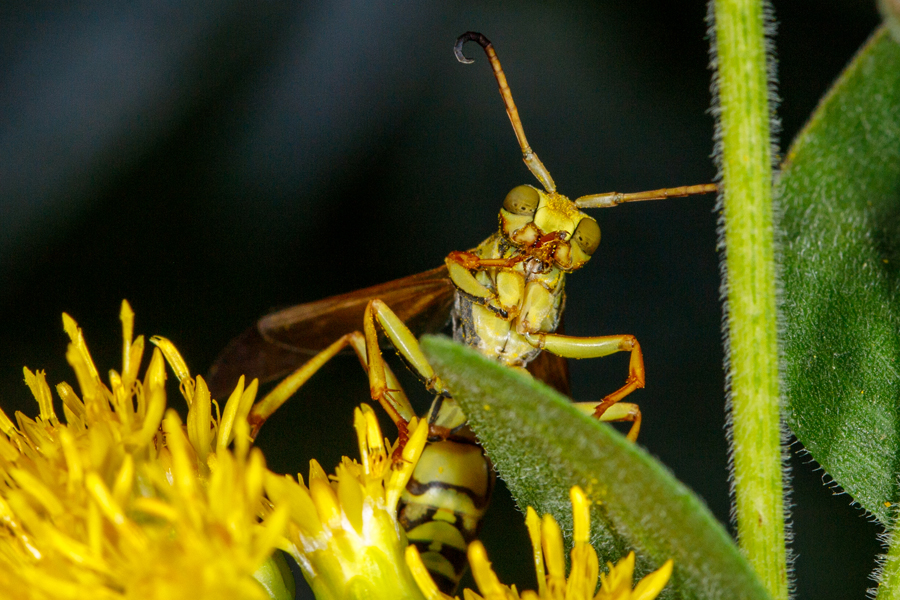
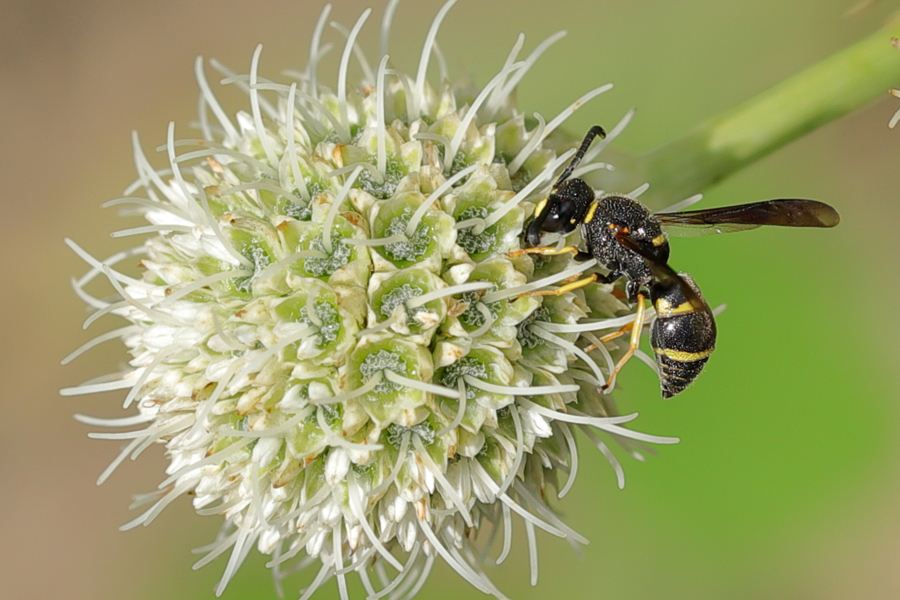
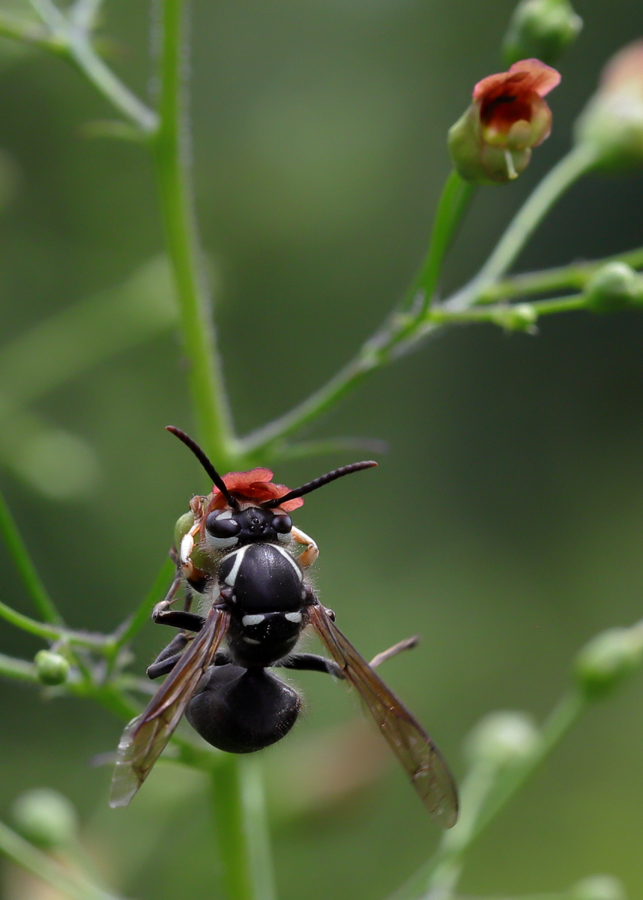
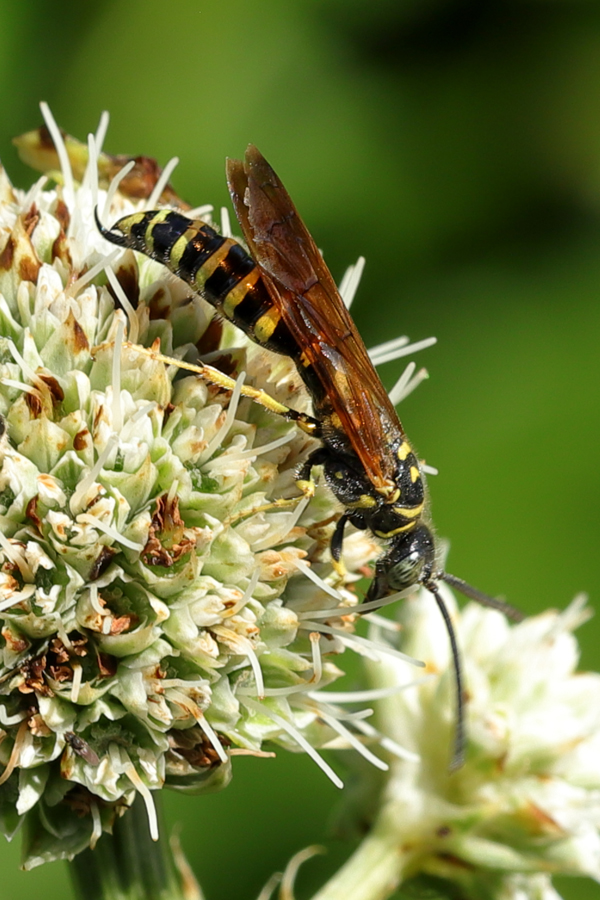
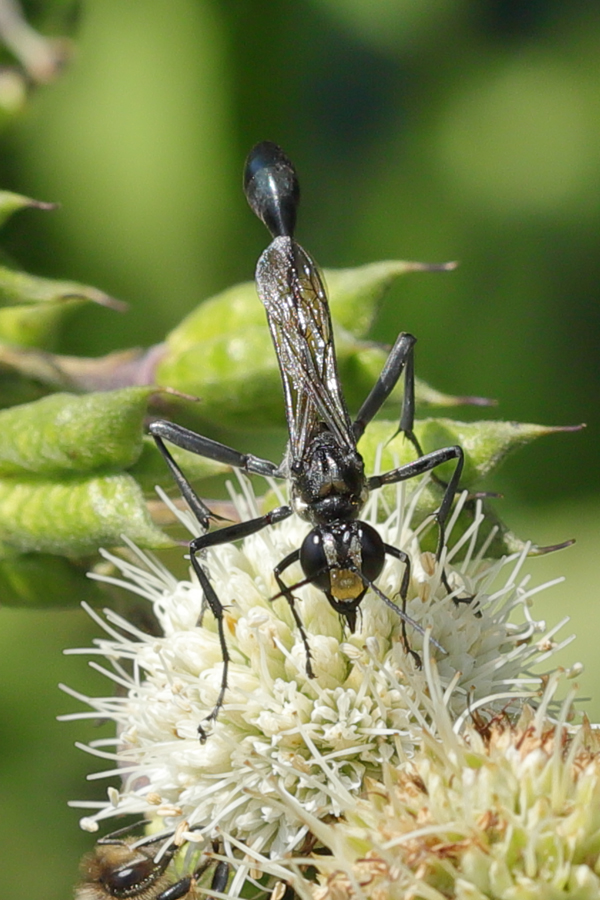
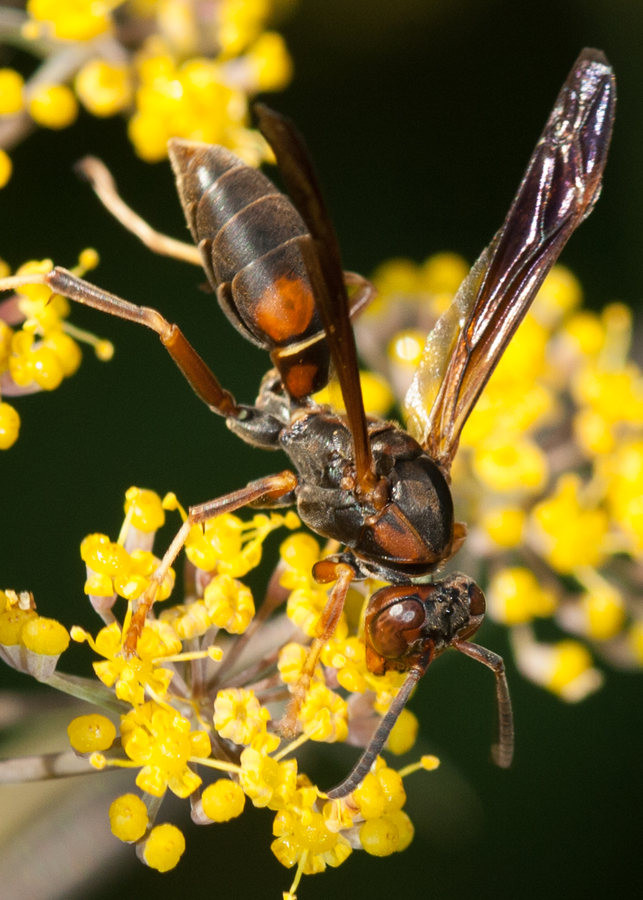
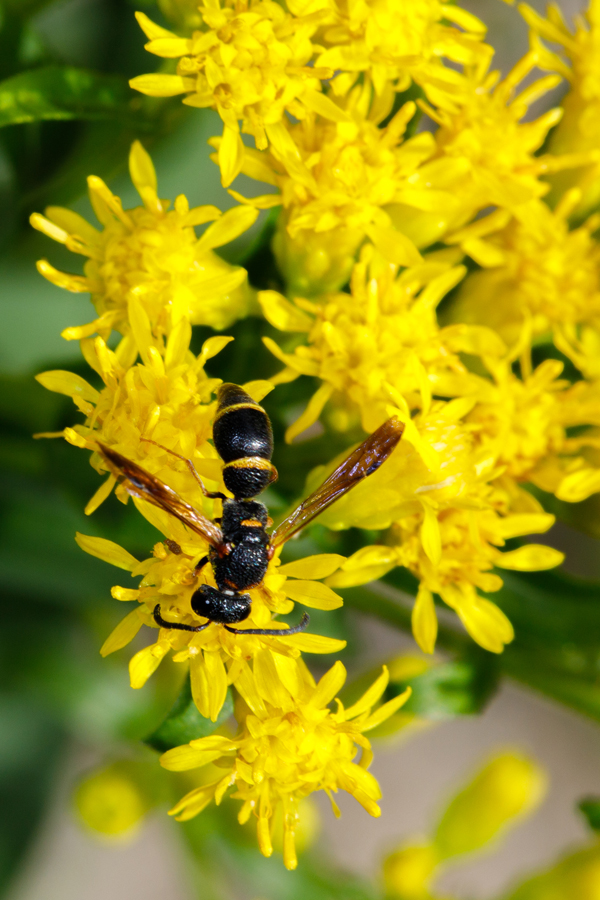
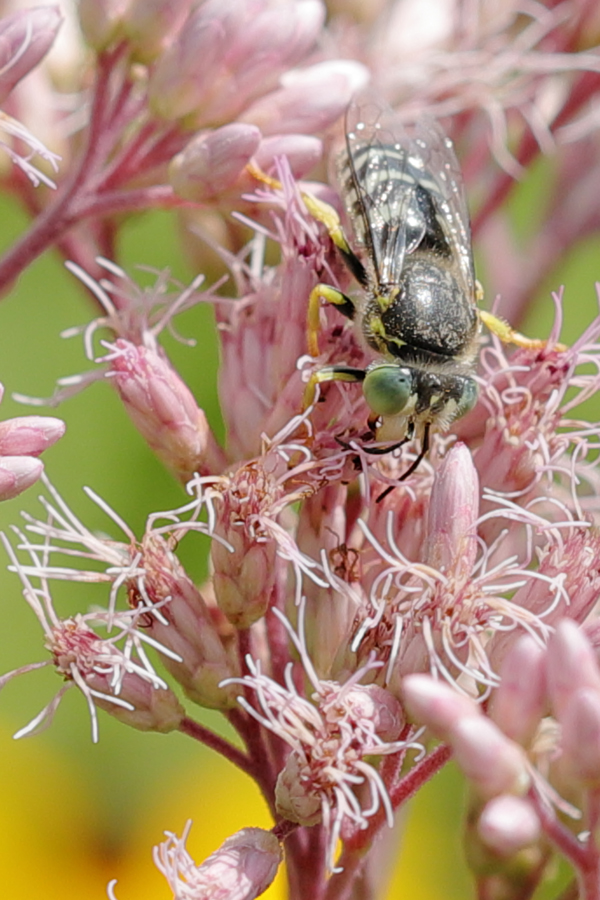
I have had little issue with being close enough to wasps (including social wasps when not at their nests) for good macrophotography.
Landscape Gallery
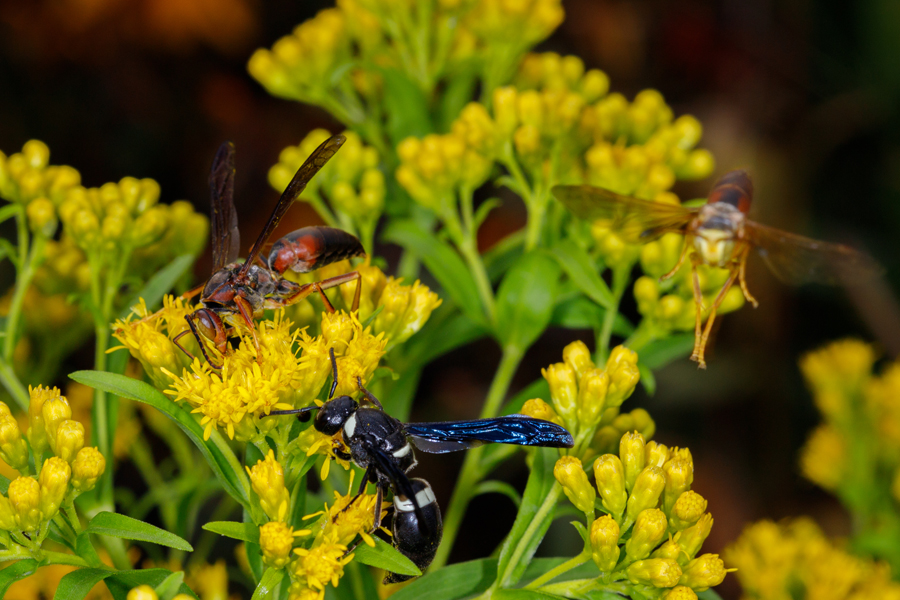
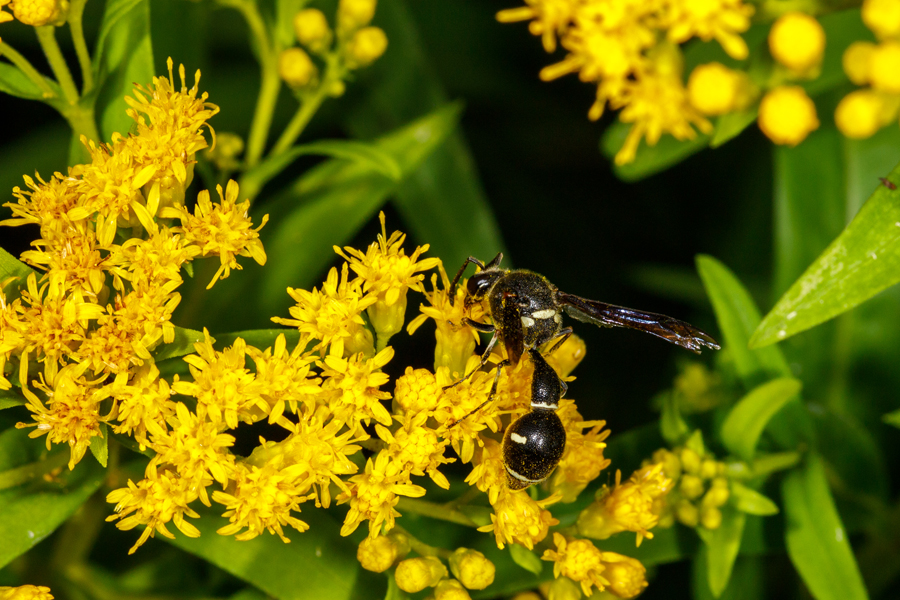
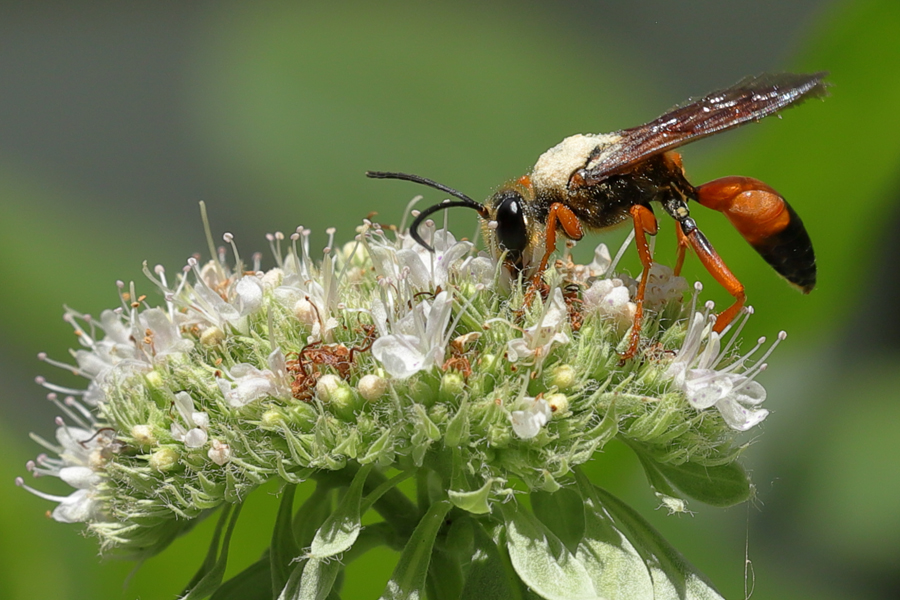
(note pollen on back hair)
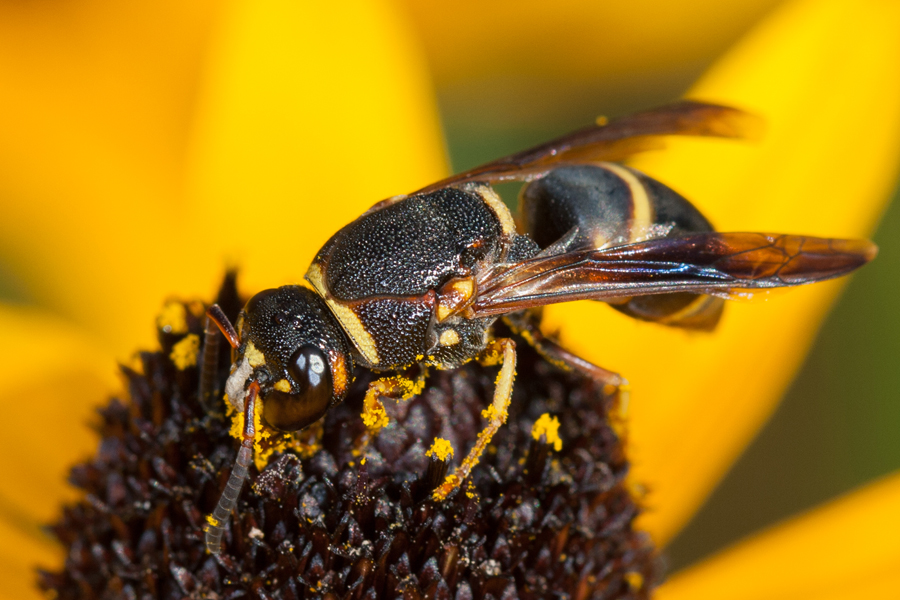
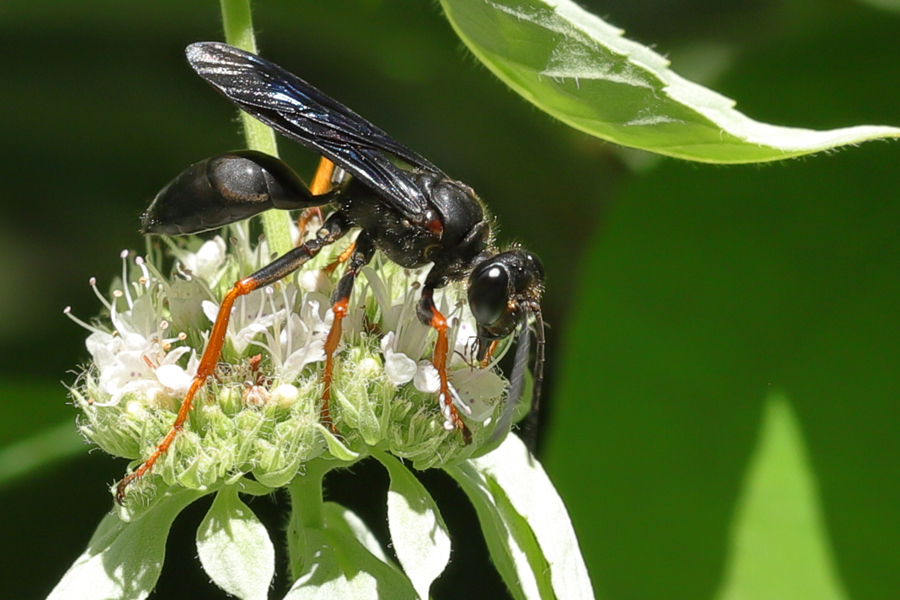

Portrait Gallery
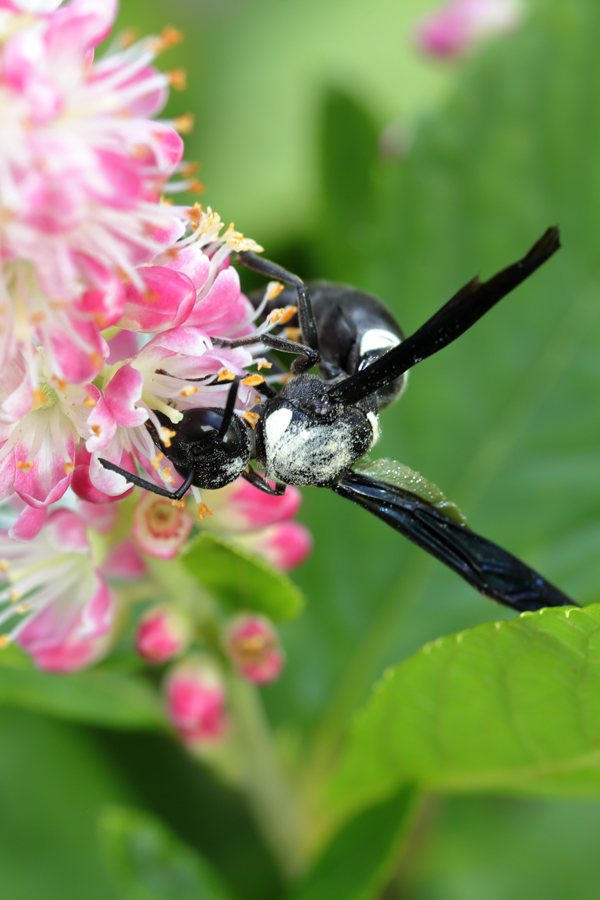
(note pollen on back hairs)

Heather Holm Presentation on Wasps
References
Holm Heather. 2021. Wasps: Their Biology Diversity and Role As Beneficial Insects and Pollinators of Native Plants First ed. Minnetonka MN: Pollination Press.
Photos by Randy Litchfield unless otherwise noted
© Randy Litchfield, some rights reserved (CC-BY-NC)
 Catchfly Commons