Ensuring our landscapes have host plants, nectar, and other aspects of native habitat during growing seasons is very important for biodiversity. The increased awareness of this is making a positive impact on how people garden. Unfortunately, this progress can be undermined if we do not also help insects and other creatures survive fall and winter. What good is it if butterflies, moths, and bees reproduce and thrive in summer but languish over winter? The continuity of a species’ life-cycle may be broken.
This post is Part I of Helping Pollinators Overwinter. In it, I would like to explore how various pollinators make it through winter. I hope this will not only provide background for understanding good fall garden practices but also foster an appreciation for the insects overwintering in our landscapes. Next week in Part II of Helping Pollinators Overwinter, I will look at recommended fall garden practices.
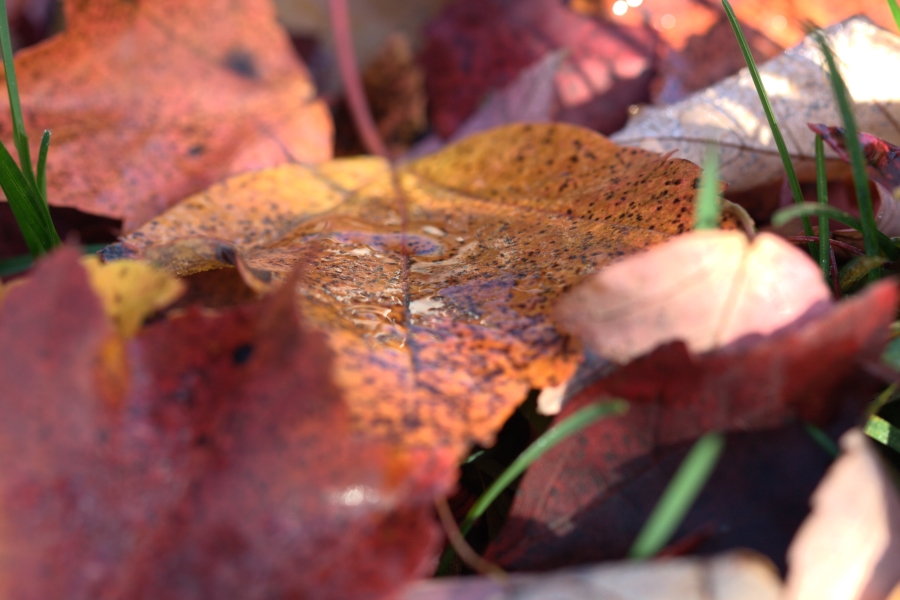
Winter Survival Strategies
Migration. Some butterflies and moths migrate as adults to winter locations where they can survive. Monarchs are well known for their migration but other butterflies such as the Red Admiral, Painted Lady, Common Buckeye and American Snout do as well. Since moths mostly fly at night, their migration habits are not as well known.
Dormancy. There are two main forms of dormancy in insects: “quiescence” and “diapause.” Quiescence is a short period of dormancy that can come and go depending on conditions… somewhat like hibernation. In contrast, diapause occurs at one genetically predetermined point in development (egg, larva, prepupa, pupa, or adult) of a species. It is regulated by hormones. Ashley Dean and Erin Hodgson note, “Like quiescence, diapause is a response to environmental cues, but it is triggered in advance of the adverse conditions occurring to allow time for profound physiological changes to occur.” (1) In Ohio, the signal to initiate the onset of diapause is triggered by the proportions of night to daylight. (2) An example of such physiological change is when the Wooly Bear Caterpillar (Isabella Tiger Moth) which produces a glycerol “antifreeze” allowing it to take temperatures to -17 degrees F. (3) “Diapause typically lasts for months but can occur for weeks or greater than a year, depending on the species.” (1)
Over Wintering Bees
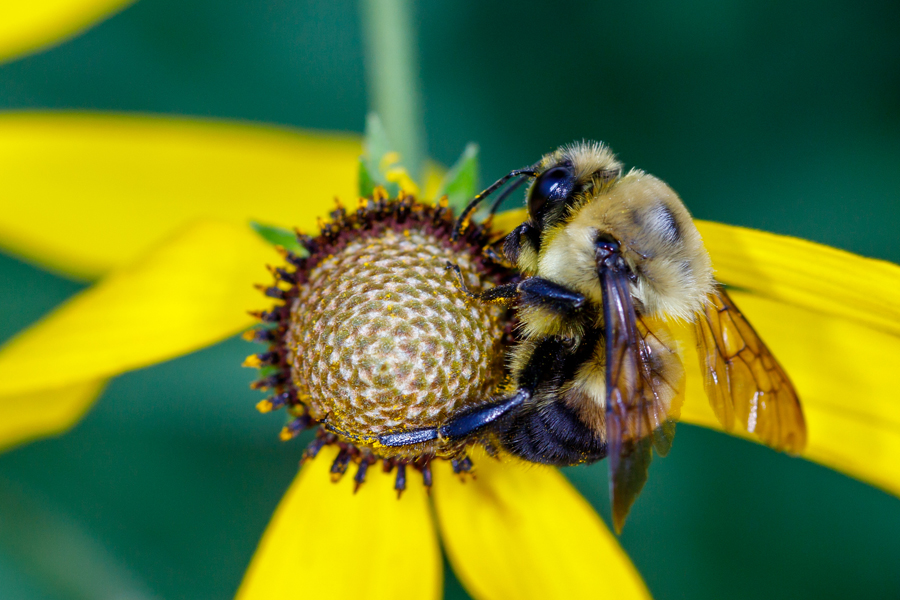
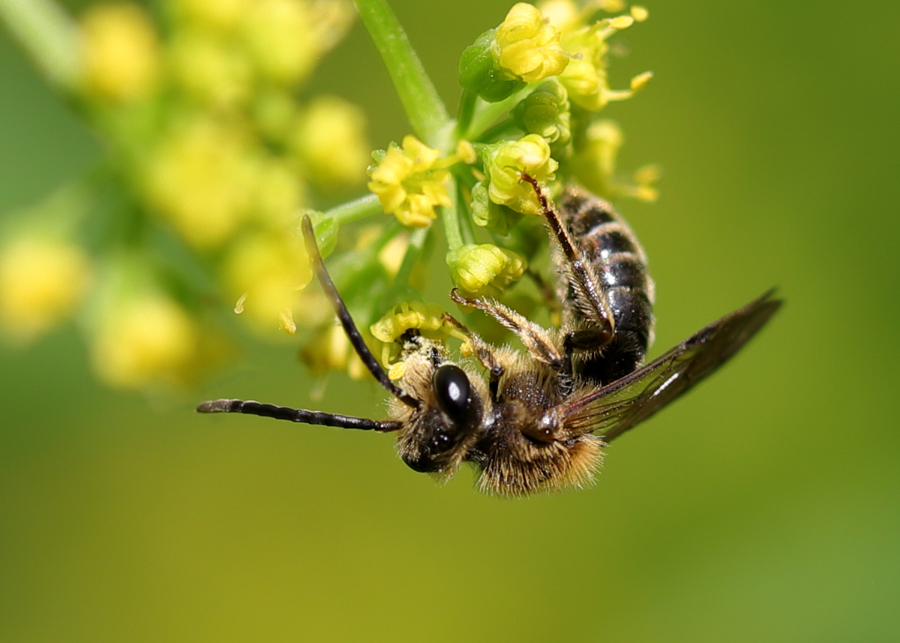
(ground nesting)
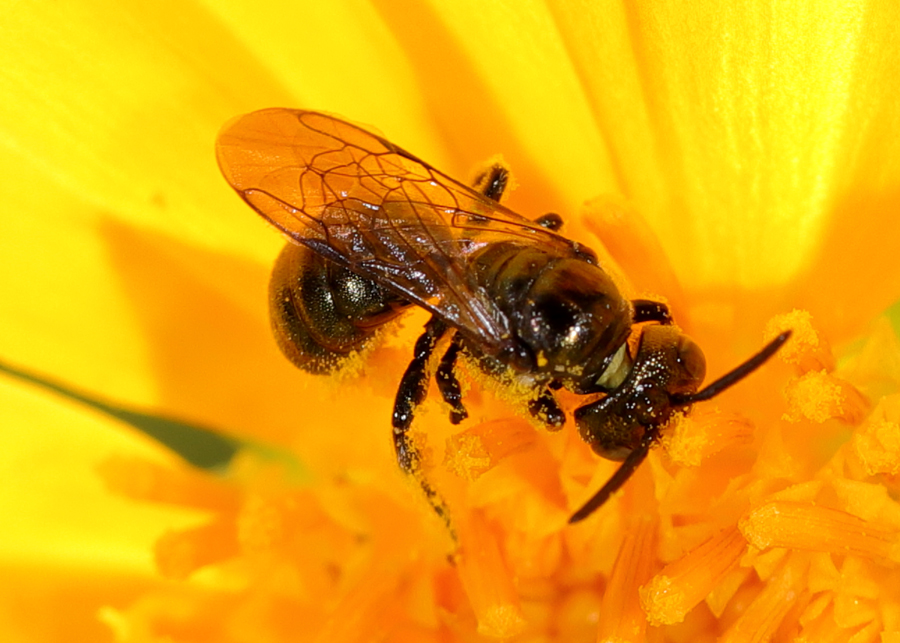
(cavity nesting)
Native bees do not overwinter in hives like non-native honey bees whose hives can maintain a survivable temperature in cold weather. Additionally, social bumble bees and other species of native bees that are solitary overwinter differently from each other.
Bumble Bees. Denise Ellsworth of Ohio State University Extension explains, “Bumble bees are social bees that live together in a colony. Each colony is active for only one year, with new colonies started each spring by a new queen bumble bee.” (4) The eggs of new queens are laid toward the end of summer. They later leave the nest to mate with males from other colonies. The mated males die within weeks of this mating. (5) The old queen and other members of the existing colony all die in winter. (4) The new queen feeds to get enough resources to overwinter then finds a place to burrow into the ground for dormancy until the following spring.

Year to year continuity of bumble bees depends on the winter survival of new queens. According to the Xerces Society, “The overwintering phase is arguably the most vulnerable step of the bumble bee life cycle, as she must survive in order to begin a successive colony the following spring.” (5)
Minimizing ground disturbances helps bumble bee queens survive winter. Leaving cavities such as rodent burrows, bunch grasses, and spaces at the bottom of plants helps the queen create a new nest in the spring. (5)
Solitary Bees. I found the following from Margarita López-Uribe of Penn State Extension to be a helpful and succinct explanation of how the overwintering of native solitary bees differs from bumble bees. “[Solitary native bees] overwinter inside their natal nest [located in a hole in the ground, cavity, or hollow stem]. Unlike the social species, where mated females actively feed on flowers in the fall to use those reserves for overwintering, solitary bees that have annual cycles overwinter in their nests before emerging. For these species, eggs hatch into the larval stage that can feed on the pollen and nectar provisioned by their mother before they turn into diapausing prepupae or adults in preparation for the winter. Bee species that emerge in the spring overwinter as diapausing adults (e.g., mason bees, mining bees, and cellophane bees). In contrast, species that emerge in the summer overwinter as prepupa (a.k.a. diapausing larvae) and complete their metamorphosis to the adult stage during the spring or early summer (e.g., squash bees).” (6)
Several species of solitary bees nest in the ground: Mining Bees (Andrena spp.), Polyester Bees (Colletes spp.), Shiny Green Bees (Augochlora pura, Augochlorella aurata, Augochloropsis spp., and Agapostemon spp.), Dull Green Sweat Bees (Lasioglossum (Dialictus) spp.), and Squash Bees (Peponapis pruinosa). (7)
Other species of solitary bees nest in above ground cavities: Leafcutter Bees (Megachile spp.), Mason Bees (Osmia spp.), Large Carpenter Bees (Xylocopa virginica), Small Carpenter Bees (Ceratina spp.), and Masked Bees (Hylaeus spp.) (7)
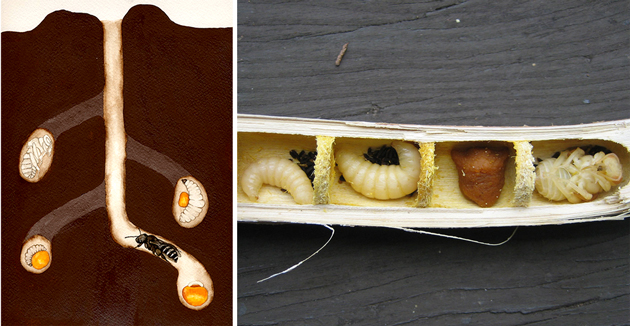
Photo (right, Katharina Ullman) showing cavity nesting bees in a hollow stem.
“5 Ways To Increase Nesting Habitat For Native Bees,” Xerces Society,
https://www.xerces.org/blog/5-ways-to-increase-nesting-habitat-for-bees
Minimizing ground disturbances in garden clean up helps ground nesting bees. Leaving stems and other cavities in which bees have nested helps cavity nesting bees.
Over Wintering Butterflies and Moths
Species of butterflies and moths over winter in a variety of stages. A few species (e.g. the Banded Hairstreak Butterfly and Buck Moth) survive winter as eggs. The various species of swallowtail in Ohio diapause overwinter as a chrysalis attached to a tree or perennial stem. (8) Silk moths take a similar strategy in cocoons near their host plants. (9) Some Fritillary and Skipper butterflies diapause as caterpillars after tucking into some form of shelter like bark, curled grass leaf, or plant debris. (8) Some species of butterflies and moths migrate as adults to more advantageous locations. Other species overwinter as adults in piles of branches, rocks, logs, loose bark and unheated buildings. (9)
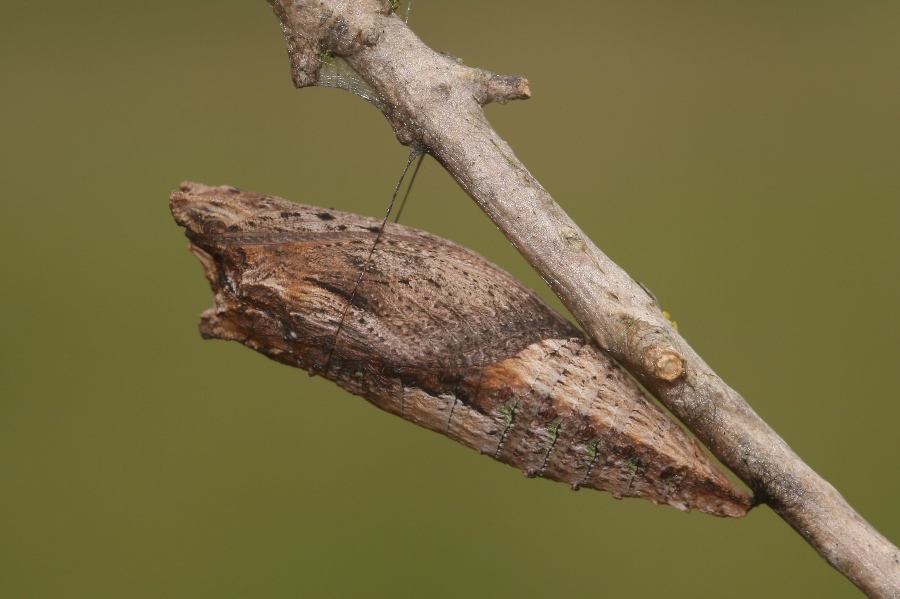
Dean Morley, Flickr, https://www.flickr.com/photos/33465428@N02/3613419337, accessed 10.6.2023
The following list of how some common butterflies in Ohio overwinter is based on species descriptions from the Butterflies and Moths of North America website (www.butterfliesandmoths.org). I did not find such information about overwintering of specific moth species readily accessible.
As Adults
- American Lady
- Mourning Cloak
- Question Mark
- Eastern Comma
Migrate as Adults
- Red Admiral
- Painted Lady
- Monarch
- Common Buckeye
- American Snout
As Caterpillars
- Viceroy
- Hackberry Emperor
- Red-spotted Purple
- Pearl Crescent
- Great Spangled Fritillary
- Meadow Fritillary
- Common Wood-Nymph
- Eastern Tailed-Blue
- Clouded Sulfur
- Common Checkered-Skipper
As Chrysalis
- Gray Hairstreak
- American Copper
- Black Swallowtail
- Tiger Swallowtail
- Spicebush Swallowtail
- Pipevine Swallowtail
- Eastern Giant Swallowtail
- Cabbage White
- Silver spotted skipper
- Pecks skipper
The many ways that butterflies and moths diapause over winter, means we need to give care to how we prune trees and shrubs, cut back perennials, manage leaves and plant debris, and allow for crevices.
Summing Up and Looking Ahead to Practices
Since the dormancy of above pollinators varies a lot. They are dormant in different ways and in different stages. The location of nests and shelters are also varied. This means as we garden in fall and winter that we need to give care to ground disturbances, leaving stems, allowing for crevices, careful pruning, and leaving plant debris. We will consider how to give such care in Helping Pollinators Overwinter Part II.
I have only focused on native bees, butterflies, and moths. Similar attention should be given to other insect pollinators like flies, wasps, and ants (hopefully I will return to the topic). Fortunately, the recommended practices in the next post will apply to most insects and creatures.
I should also mention that another way to think about some of these themes year-round is “soft landings.” Check out the work of Heather Holm and specifically her web page “Soft Landings.”
(1) Ashley Dean and Erin Hodgson “Cold Hardiness of Insects and the Impact of Fluctuating Temperatures,” Encyclopedia Article, Iowa State University Extension and Outreach, accessed 9.26.2023, https://crops.extension.iastate.edu/encyclopedia/cold-hardiness-insects-and-impact-fluctuating-temperatures.
(2) Curtis E. Young, “Insect Word of the Week: Diapause,” Buckeye Yard and Garden Online, 1.21.2021, https://bygl.osu.edu/node/1914, accessed 9.26.2023.
(3) Moya Mowbray, “How Insects Survive the Winter,” Schlitz Audubon Nature Center, November 16, 2020, https://www.schlitzaudubon.org/2020/11/16/how-insects-survive-the-winter-diapause, accessed 9.26.2023.
(4) Denise Ellsworth, “Bumble Bees in Ohio: Natural History and Identification of Common Species,” Ohioline Ohio State University Extension, 12.26.2018, https://ohioline.osu.edu/factsheet/ent-84, accessed 9.22.2023
(5) “Bumble Bees: Nesting and Overwintering,” Xerces Society, https://xerces.org/bumblebeenests, accessed 9.22.2023.
(6) Margarita López-Uribe, “Where Do Bee Pollinators Go During the Winter?,” Penn State Extension, https://extension.psu.edu/where-do-bee-pollinators-go-during-the-winter, accessed 10.3.2023.
(7) MaLisa R. Spring and Mary M. Gardiner, “How to Identify and Enhance Ohio’s Wild Bees in Your Landscape,” Ohioline Ohio State University Extension, 1.22.2019, https://ohioline.osu.edu/factsheet/ent-85, accessed 10.3.2023.
(8) “Butterflies in Winter,” Butterfly Ridge, 1.28, 2016, https://www.butterfly-ridge.com/butterfly-basics/2016/1/28/butterflies-in-winter, accessed 9.25.2023.
(9) Cindy Maravich, “Gardens Never Sleep,” Columbus Metro Park Blog, 9.18.2020, https://www.metroparks.net/blog/gardens-never-sleep, accessed 9.26.2023.
 Catchfly Commons