- Act I: Establishing a Prairie Garden at back of the yard 2003-2006
- Act II: Converting the side yard–“West Wing”
- Act III: Pulling it all together in a master plan–“West Side Story”
Act III: Pulling it all together in a master plan–“West Side Story”
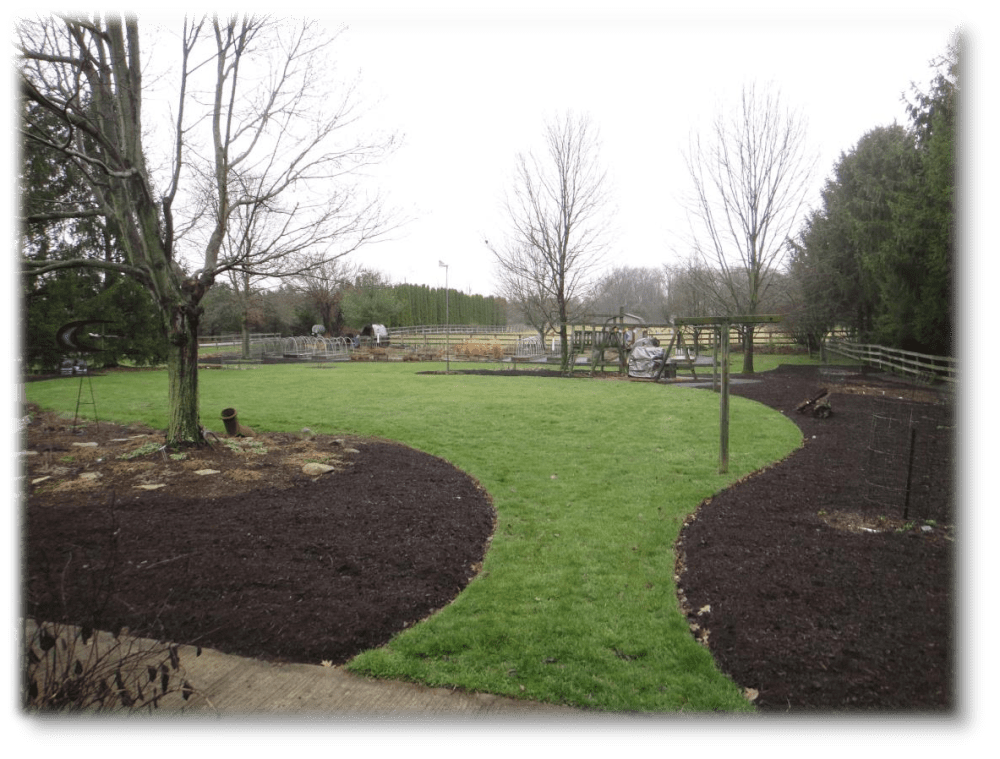
Act III is the backyard border on the west side of the property. For a long time we struggled with how to design a master plan to connect isolated landscape beds in our backyard into a coherent whole. We needed a plan so we had a landscape designer come out and look at it with us. She had some good ideas and provided a simple drawing, basically a narrow border. It gave us confidence and by now we had some experience so it was time to bring it all together! Notice the bed under the maple tree in the foreground because it gets transformed too.
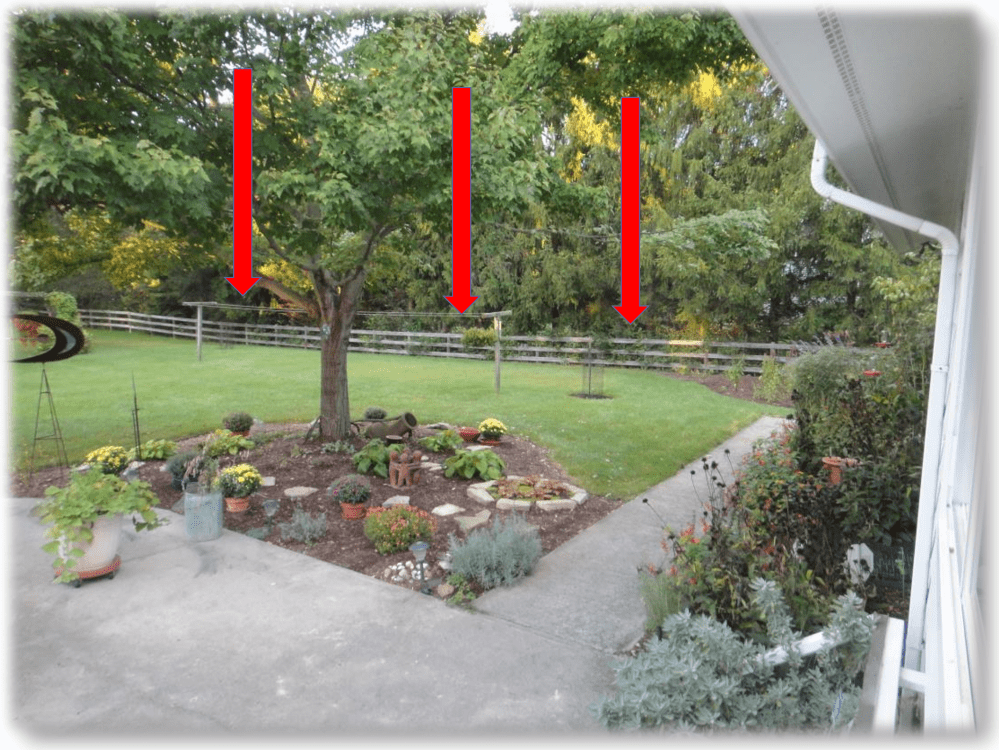
In 2017 we had a very mild winter and were able to work in the yard many evenings and on weekends in February and March. In the photo you can see the fence line that was mostly turf. When we got out the garden hoses to determine the shape of a new bed, the narrow border didn’t suit the space so we brought the hose out further and further and further. Now the border starts out as 27’ wide and matches the side yard, or West Wing, which we just looked at.

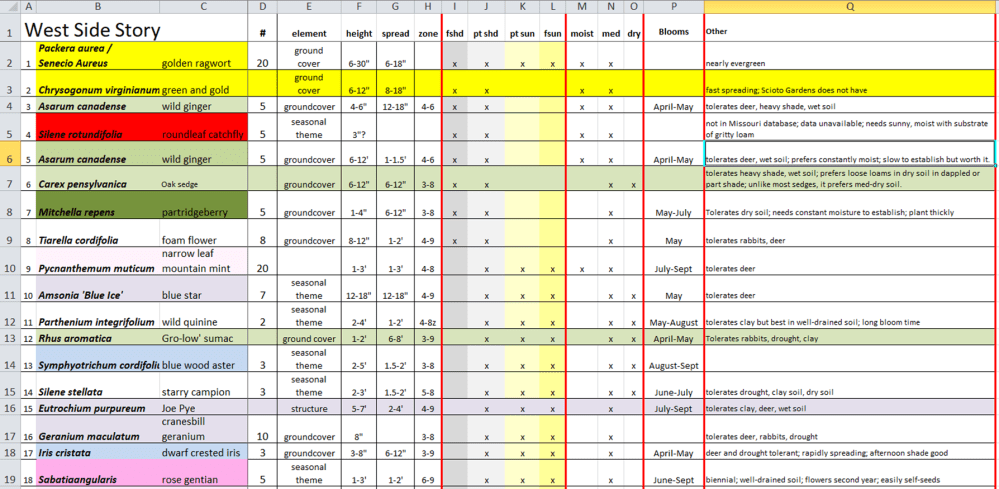
Randy dug the edge around the entire border once we determined the outline.
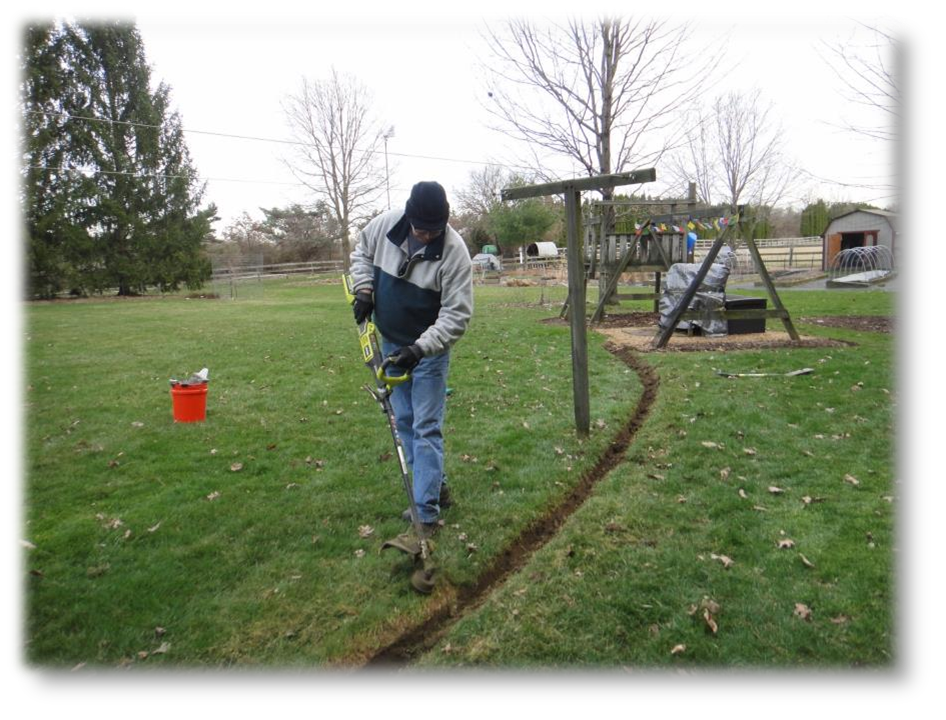
For the first time, we made a scaled drawing since it was to be the final design for the backyard and there would be considerable investment. This drawing includes trees and shrubs only. The stars are existing trees: Red Oak and Red Maple which are probably 35 years old, and Beech, Winterberry, and Serviceberry, all of which were young trees or shrubs. All other circles represent tree or shrub seedlings we would purchase through the county soil and water district plant sale.
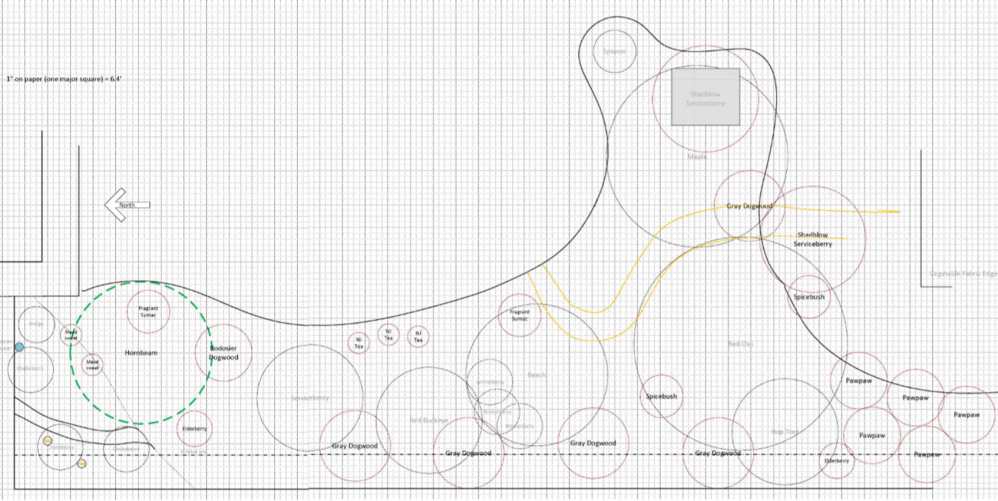
We also created a list of perennials we hoped to use. We pored over resources to decide on plants and ended up with 32 species. The chart shows flower color, design function such as whether the plant was a groundcover or more structural,
and the growing conditions preferred, height and spread, and so forth.
We made many dumpster diving trips for cardboard!!

Randy mowed low, then every inch of the new border was covered in cardboard, secured with landscape staples, and covered in mulch. Mulch helped the look of it and held the cardboard in place until later in spring, when we could plant. This is still February/March.

We had 40 cubic yards of mulch delivered, some of which was spread on existing beds. Now we have a continuous border along the fence, branching out to the left, around the swing set which I call my open air potting shed, and beyond. Note that we expanded the bed on the left, under this maple, to provide some balance.
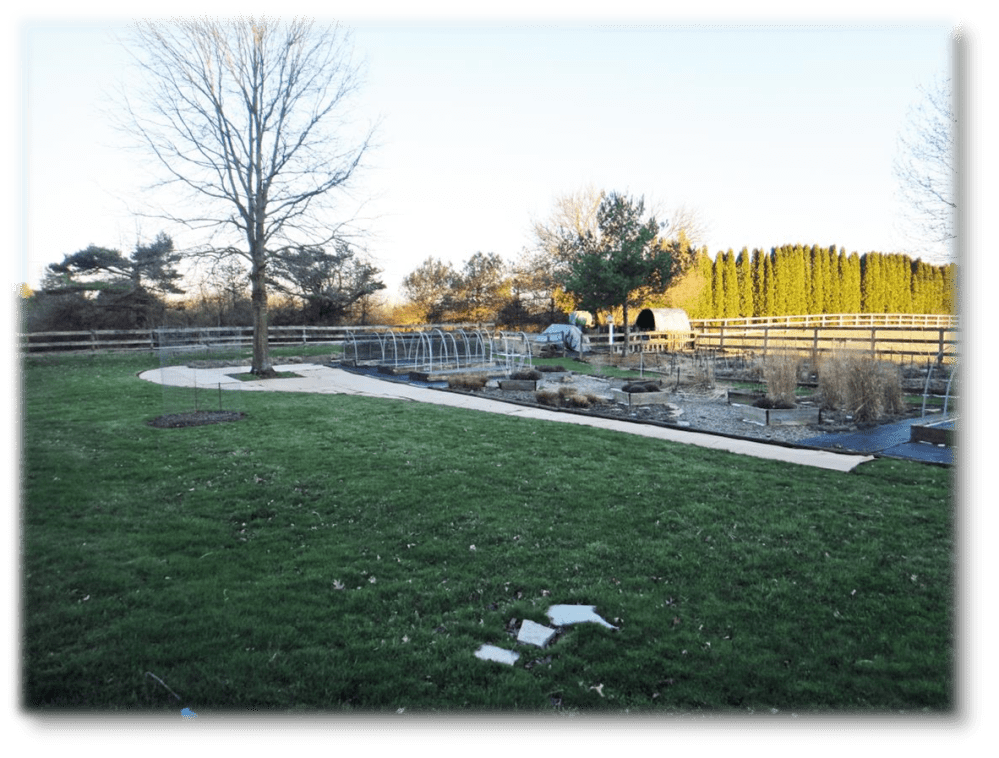
We also added what’s actually a curved border in front of the raised bed area further back to the south, and extended it to include a mature pin oak. The Pin Oak benefited hugely by getting the mower off it’s roots!! The pin oak is now underplanted with columbine, anise hyssop, Jacob Cline bee balm, native dwarf bush honeysuckle, golden alexander, wild geranium, mountain mint, and more.
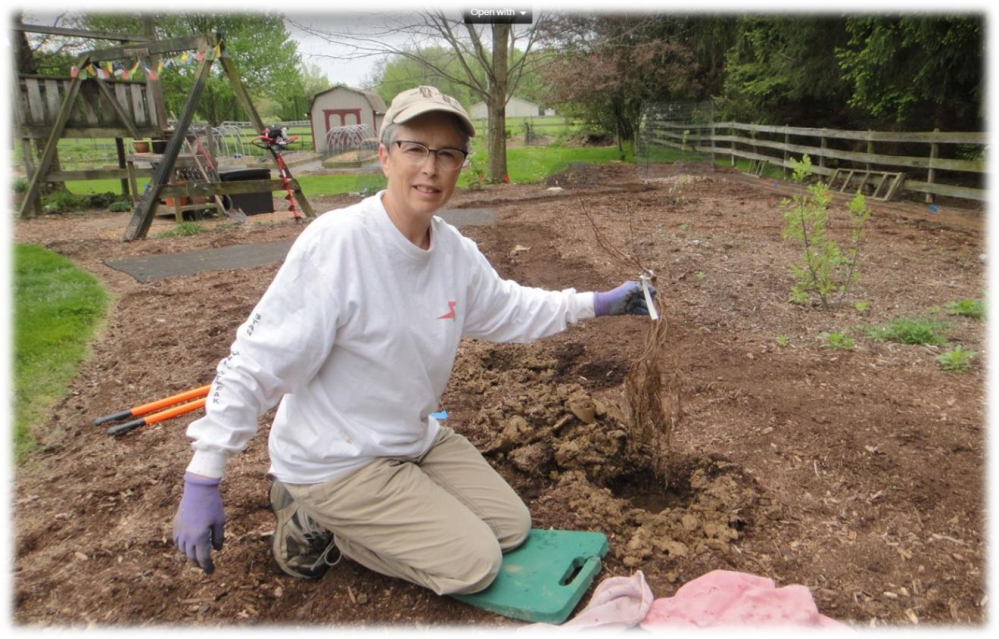
Next up was planting! Here’s one of the bare root plants going into the ground. Since we would be doing so much planting, Randy used an auger for the largest holes. For perennial pots larger than plugs, I would push away the mulch, cut out a circle from the cardboard if it hadn’t already deteriorated, Randy would dig a hole, and I would drop in the plant and backfill. Randy broke up the clay from the hole with a cultivator and we mixed in a bit of compost from our compost bin. We backfilled the holes with this so the plant roots get a good start in something a little looser than the heavy clay. We did not add any fertilizer or other amendments.
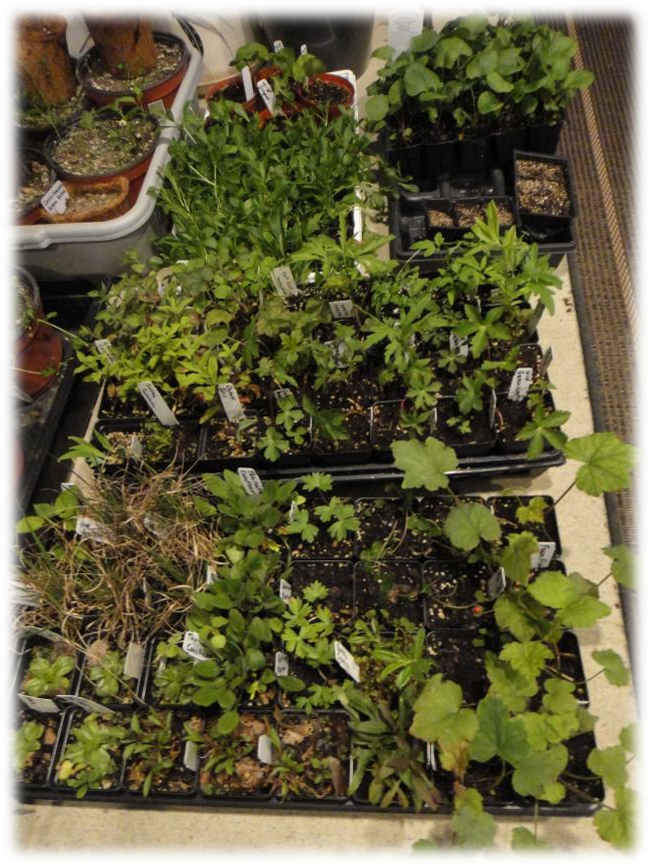
For the smallest plant plugs, we could slit the cardboard with a utility knife, then use a t-post to open a small hole in the clay and drop in the plug. It was a rough beginning for these small plants, and it’s probably a questionable garden practice, but most survived and it made planting go much faster.
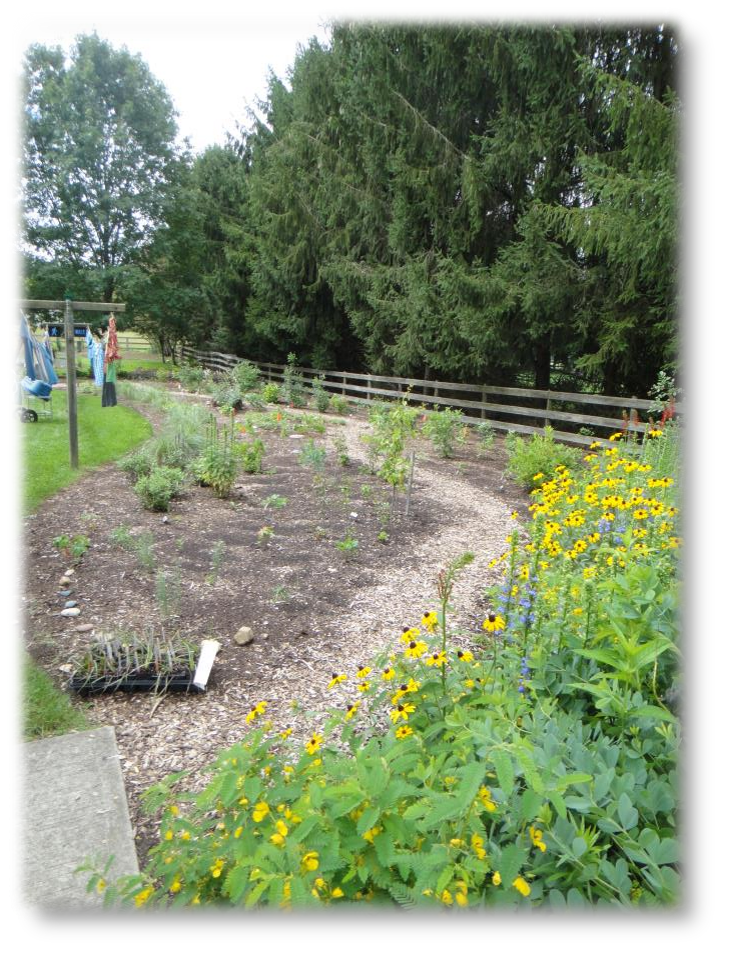
Here is the border midway through planting. The blooming plants in the right hand corner were already established and were not part of the new project. American Hornbeam, Fragrant sumac, Elderberry, Gray dogwood, Red buckeye, Spicebush, Pawpaw, and New Jersey Tea
are some of the trees and shrubs that are now thriving in this border. Perennials were purchased locally, from Bob Harter, Scioto Gardens, and Natives in Harmony
The project includes a small woodland garden under this red oak. Later we extended the border all the way to the back corner where we planted redbud,
American hazelnut, wild quinine, false sunflower, and ‘grow low’ sumac. Altogether we planted about 150 native shrubs and perennials in this border that spring.

Here is a before photo from 2017 and a couple of views from 2019 just two years later.


 Catchfly Commons