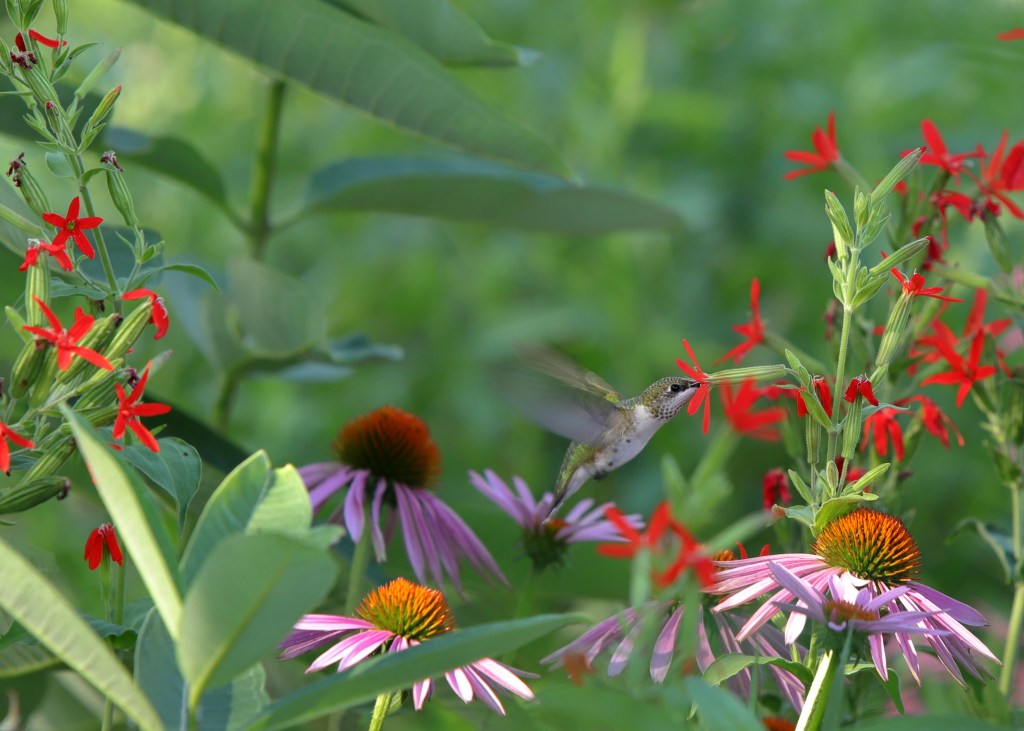
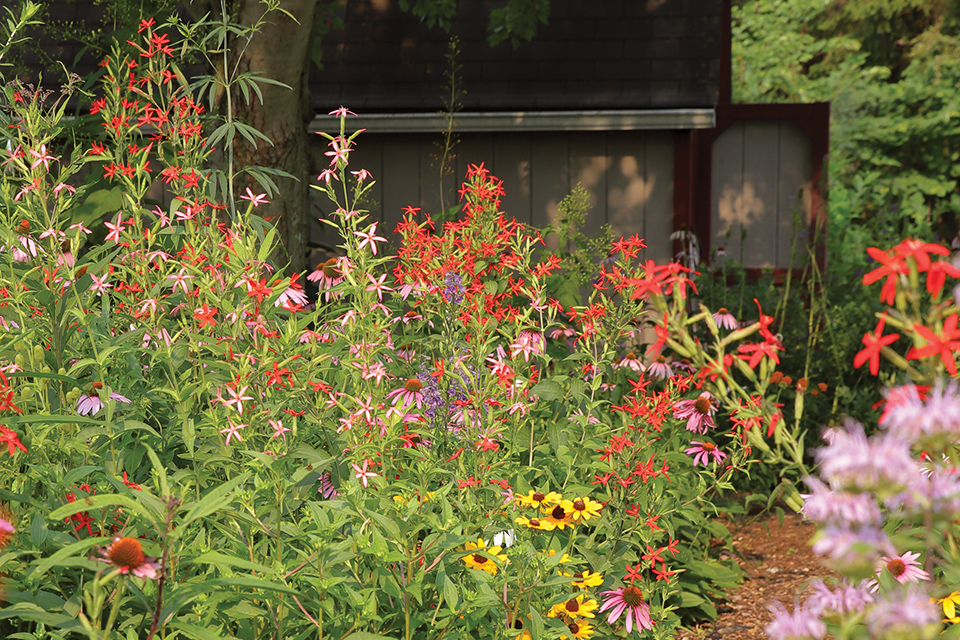
Catchfly Commons is the name Terri and Randy Litchfield gave their home landscape in 2023 after gardening there for over twenty years. The garden is an interconnected place of native plants, creatures, land, and watershed. It is also an informal gathering place and demonstration garden for people interested in biodiverse landscapes. It is a commons for nature and humans. Royal Catchfly (Silene regia), which is listed as threatened in Ohio, is a distinctive plant thriving in many areas of the garden. It symbolizes beauty and resilience in this place, Catchfly Commons.
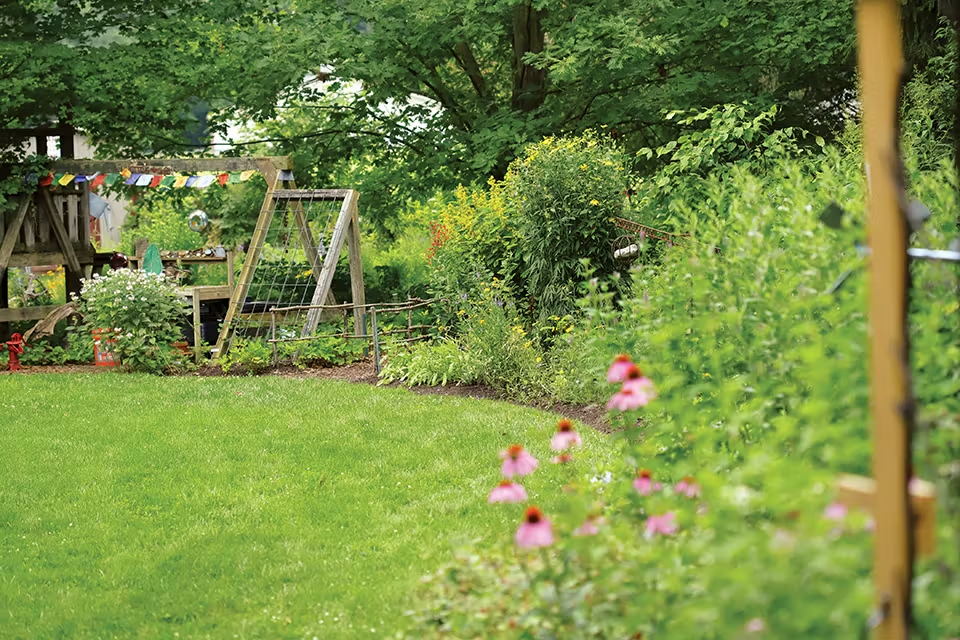
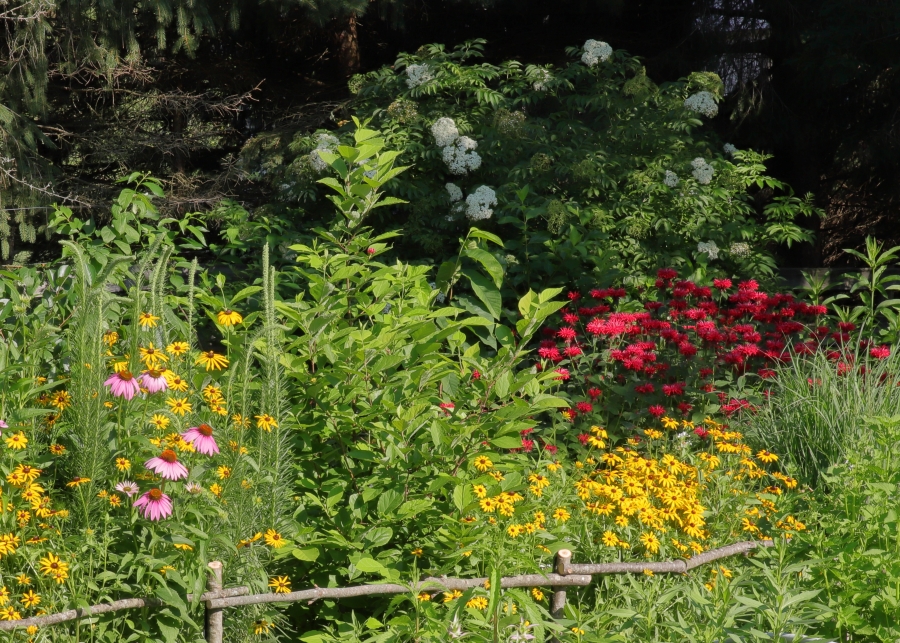
Once a master plan joining separate (and somewhat ad hoc) landscape beds was implemented, the resulting garden serves as a place to observe wildlife and the beauty of native plants. It has also become a demonstration garden, a way for gardeners to share ideas on using native plants in a home landscape.
The garden was featured in the March/April 2023 edition of Ohio Magazine (“How to Plant a Native Ohio Garden”). It received first place for Native Plant Garden in the 2018 Columbus Dispatch Backyard Garden Awards. The landscape is a certified wildlife habitat with the National Wildlife Federation and is registered with Home Grown National Parks.
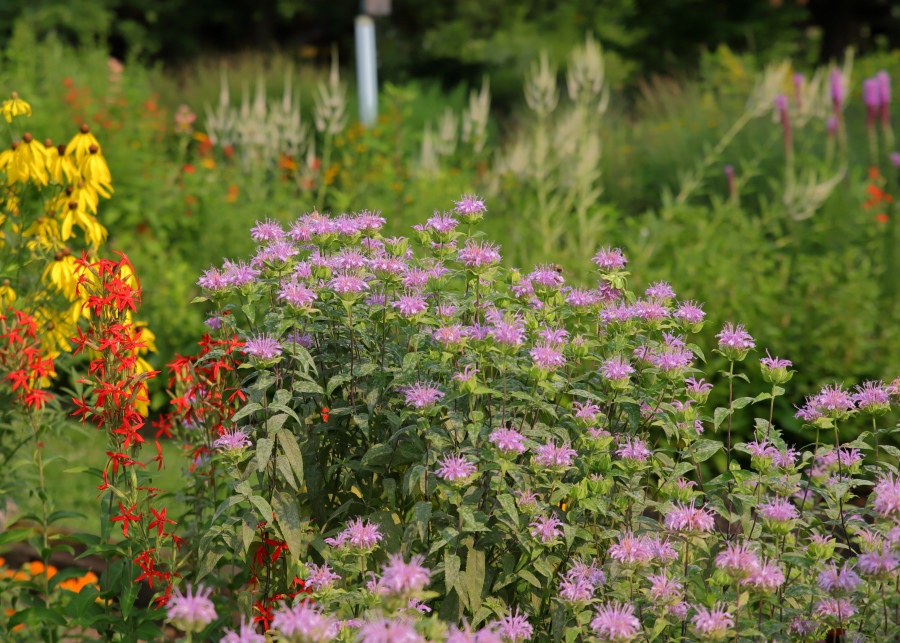

Brief Description
- 1.3 acre property in Delaware, OH; variety of sun and soil moisture conditions
- 275 native plant species (perennials, grasses, trees, shrubs, vines)
- 26 species serving as groundcovers, from ground-hugging to 5’
- Front yard border (in process)
- 200’ back border ranging in width from 10’ to 30’
- 9 raised beds: vegetables, milkweeds, native plant nursery
- Prairie Garden
- Shade Gardens: Red Oak, Maple, Spruce, Pin Oak, White Pine (in early planning stage)
- Swale Garden – wet in spring, dry in summer
- Side Yard Garden – “West Wing,” replaced turf and invasive species
- Documented wildlife in the garden includes (see Observation List and the Gallery pages):
- 64 species of adult butterflies and moths
- 27 species of caterpillars
- 19 species of bees
- 14 species of wasps/hornets
- 10 species of dragonflies and damselflies
- 25 species of birds have been observed on the property
Plants
Plant List by Common Name (pdf)
Plant List by Botanical Name (pdf)
Background
The original landscape was turf with a few beds and established trees when the Litchfields purchased the property in 2001. Sustainability and simple living programs raised awareness of the importance of native plants which led to the creation of a prairie plant garden and raised beds for vegetables. In an impromptu fashion, beds were gradually expanded and added to make room for new plants of interest and to reduce lawn.
Three factors fostered the evolution of a unifying purpose and design for the landscape. First, Terri and then Randy became OSU Extension Master Gardener Volunteers and the program developed their general gardening skills. Second, Doug Tallamy’s approach advocating gardening for eco-function and biodiversity (Bringing Nature Home) provided a sense of intentionality and purpose. Third, involvement with research, conferences, and mentors created a knowledge base about native plants, biodiversity, and design. A conversation with a landscape design consultant helped the Litchfields create a master plan for the property.
In 2016, the entire west side yard was converted to native plantings. In 2017, the master plan was implemented via a large border spanning the entire west side of the backyard. At the same time, a native plant border surrounding vegetable beds and native plant nursery beds was added. Catchfly Commons has converted over 9,000 square feet of lawn
Visit An Evolving Landscape page to see how the property has evolved since 2001 and Backyard Conversion page to see how changes were done.
 Catchfly Commons