This summer we have frequently seen common wood-nymph butterflies in the landscape. Until I was able to get a positive identification, I wondered if they might be Carolina satyr butterflies (which turns out to be a wood-nymph cousin). Unfortunately, the frequent sightings have not yielded many photos because they are constantly moving (unless of course I don’t have my camera). Thus far I only have this one photo of a battered individual.
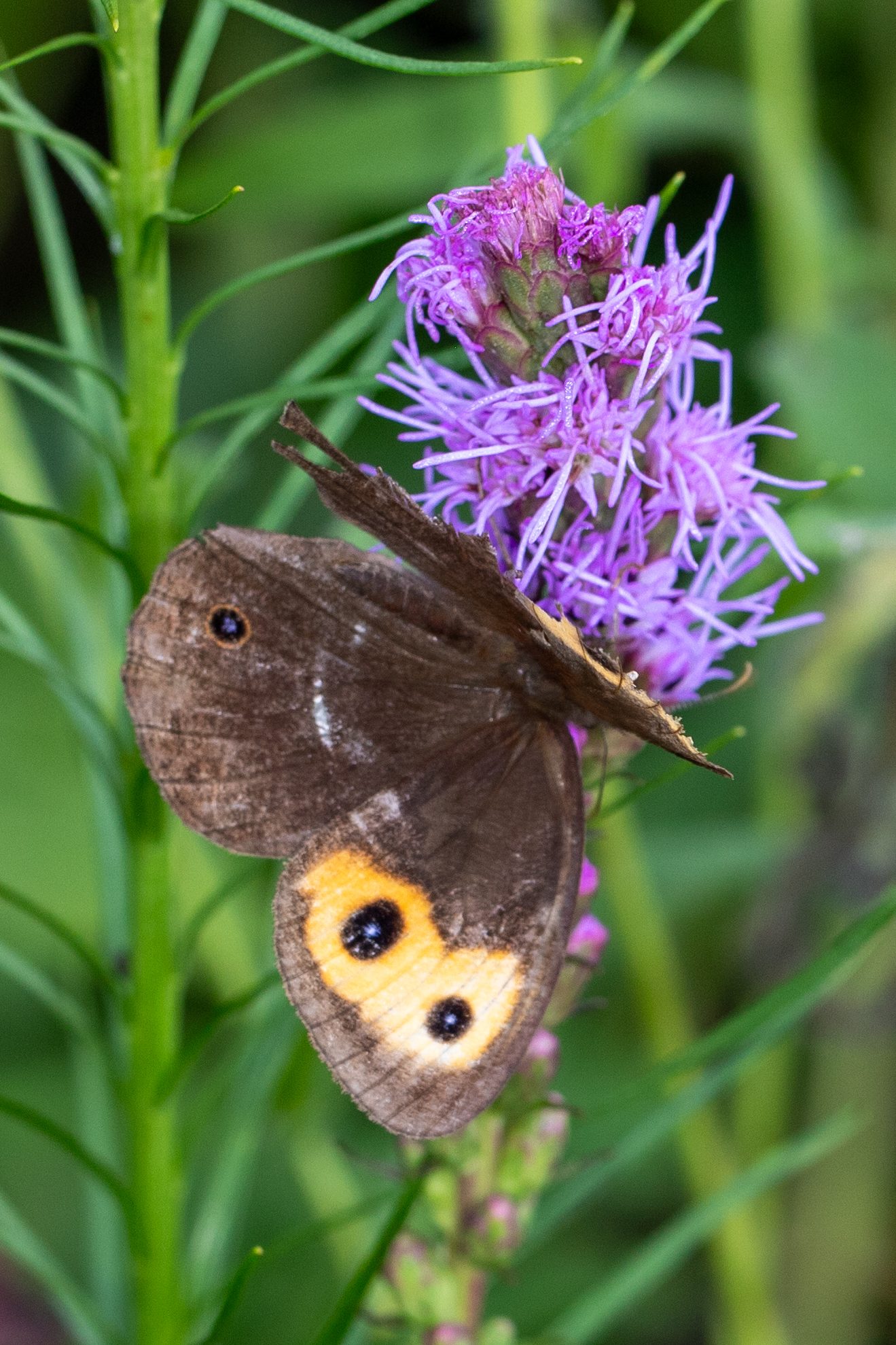
Common wood-nymphs (Cercyonis pegala) are in the brush-footed butterflies family (Nymphalidae) and the subfamily Satyrinae. Their appearance varies a good bit by area. They have one brood a year between May and October. The host plants are grasses, one of which is little bluestem. Eggs are laid in late summer and hatched caterpillars hibernate till spring.
As with other species in the Nymphalidae family, flower nectar is not the primary food source for common wood-nymphs. Some sources put wood sap at the top of their food preferences but other sources, such as Butterflies and Moths of North America (BAMONA), put rotting fruit ahead of flower nectar. (1)
Learning about common wood-nymphs got us curious about other butterflies that either prefer non-nectar nutrients or find supplements to their nectar diet.
Non-nectar Food Sources
Non-nectar food sources for butterflies include such things as:
- Tree sap
- Rotting fruit
- Dung
- Carrion (decaying animal flesh)
- Pollen
Non-nectar Supplements

Salt and other nutrients help some butterfly species in mating. Puddling is when butterflies gather on wet mud or sand to get these supplements. “Typically, more males than females puddle. Males pass the nutrients on with their sperm and these nutrients are used by the females for reproduction. Nutrients gained from puddling also help in producing pheromone. This is the chemical sexual attractant released by males to attract females to mate.” (2)
Non-nectar dietary supplements for butterflies include such things as:
- Mud
- Wet sand
- Wet mulch
- Sweat
- Tears
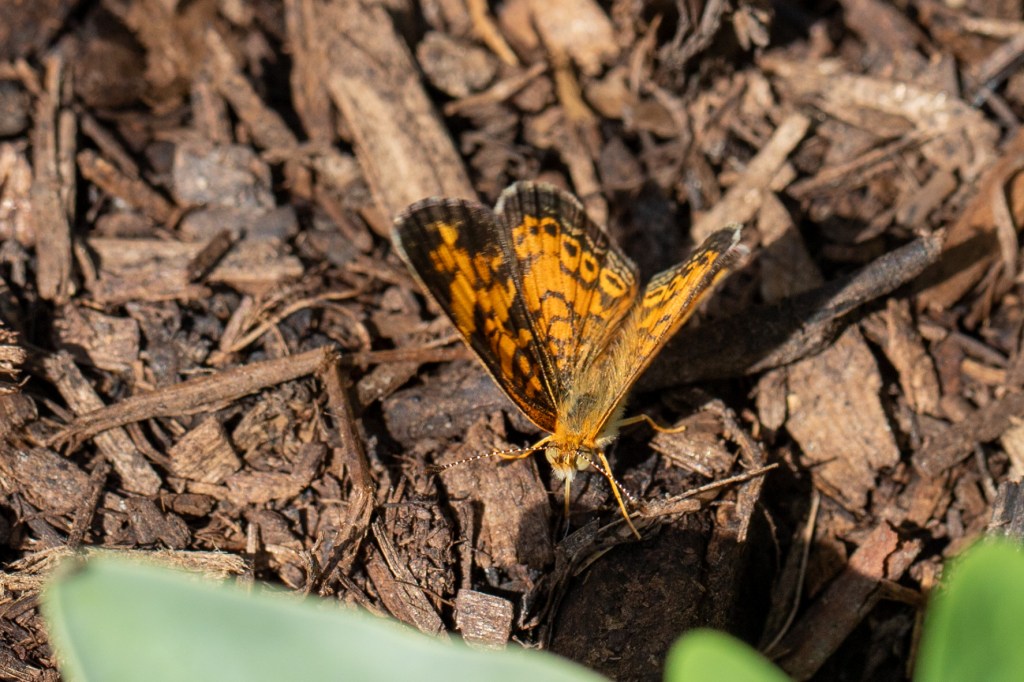
Other Butterflies with Non-nectar Food Sources:
Brush-footed Butterflies (Family Nymphalidae)
Thus far in my preliminary research, it looks like the brush-footed butterflies (family Nymphalidae) is the primary family with species that consume sources other than nectar. This is an excessively big family with several sub-families. According to BAMONA, adult brush-footed butterfly “feeding behavior depends on the species, where some groups primarily seek flower nectar while others only feed on sap flows, rotting fruit, dung, or animal carcasses.” (3)
Among the species that I recognized in the brush-footed family; I found these non-nectar adult food references on their respective BAMONA page:
Viceroy (Limenitis Archippus): “Early in the season when few flowers are available Viceroys feed on aphid honeydew, carrion, dung, and decaying fungi.”
Red-spotted purple (Limenitis arthemis): “Sap flows, rotting fruit, carrion, dung, and occasionally nectar from small white flowers including spiraea, privet, and viburnum. White Admirals also sip aphid honeydew.”

Hackberry emperor (Asterocampa celtis): “Sap, rotting fruit, dung, carrion. Will take moisture at wet spots along roads and streams.”
Question mark (Polygonia interrogationis): “Rotting fruit, tree sap, dung, carrion.”
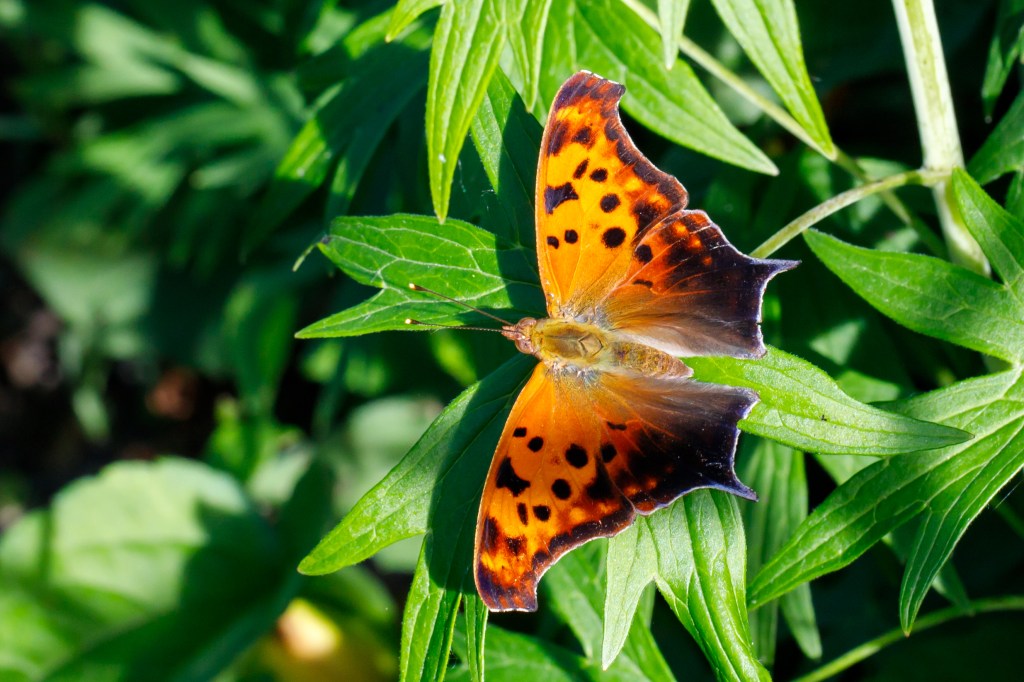
Eastern comma (Polygonia comma): “Rotting fruit and tree sap.”
Mourning cloak (Nymphalis antiopa): “Mourning Cloaks prefer tree sap, especially that of oaks. They walk down the trunk to the sap and feed head downward. They will also feed on rotting fruit, and only occasionally on flower nectar.”
Red admiral (Vanessa Atalanta): “Red Admirals prefer sap flows on trees, fermenting fruit, and bird droppings; visiting flowers only when these are not available.”

Northern pearly-eye (Enodia anthedon): “Dung, fungi, carrion, and sap from willows, poplars, and birch.”
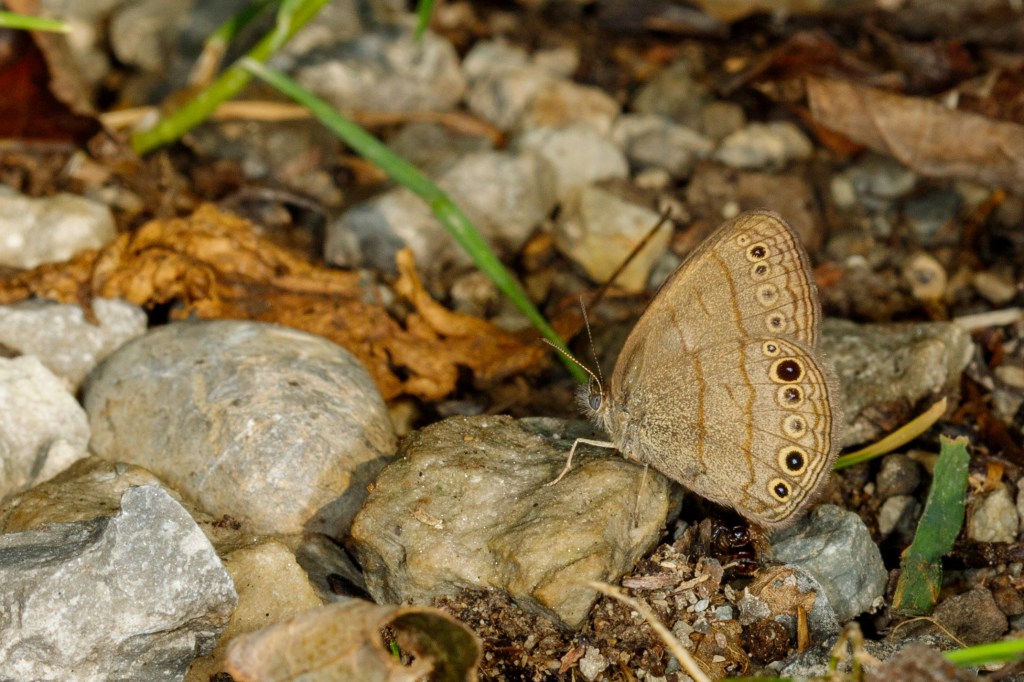
Carolina satyr (Hermeuptychia sosybius): “Sap and rotting fruit.”
Additional Resources
If you are interested in providing more nutritional resources for butterflies, this seems like a helpful resource:
“Supplementary Feeding for Butterflies,” Compiled by Matt Morris- Landscape Technician, City of Austin, Parks & Recreation, Zilker Botanical Garden (PDF)
References
(1) “Common Wood-Nymph (Cercyonis pegala),” Butterflies and Moths of North America, https://www.butterfliesandmoths.org/species/Cercyonis-pegala, accessed 7/20/2024.
(2) “Butterfly Gardening,” Vera Krischik and Laurie Schneider https://ncipmhort.cfans.umn.edu/sites/ncipmhort.cfans.umn.edu/files/2022-04/Butterfly_Gardening_ASHS_2020.pdf, 2020.
(3) “Family Nymphalidae (Brush-footed Butterflies),” Butterflies and Moths of North America, https://www.butterfliesandmoths.org/taxonomy/Nymphalidae, accessed 7/20/2024.
Photos by Randy Litchfield unless otherwise noted
© Randy Litchfield, some rights reserved (CC-BY-NC)
 Catchfly Commons