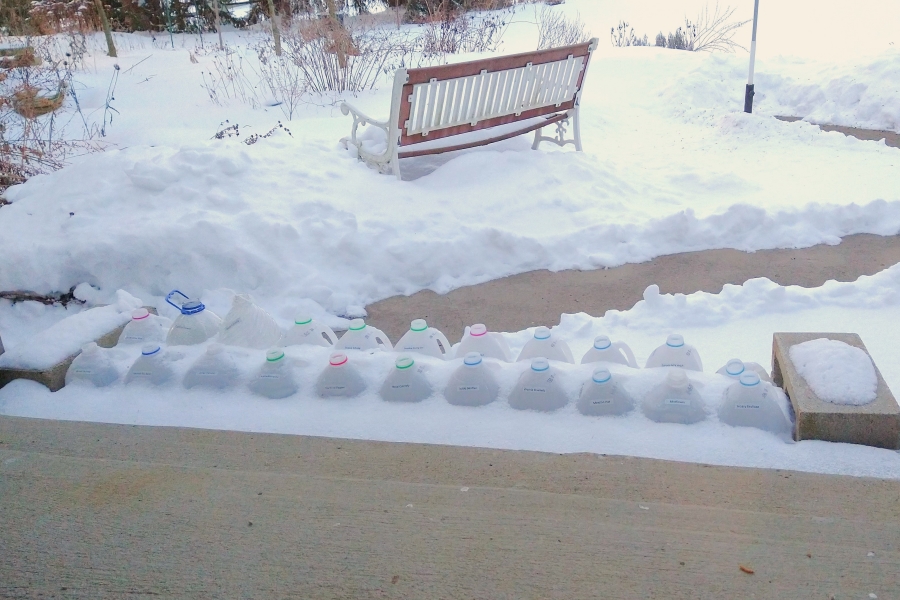
It’s time to think through and do some initial preparation for winter sowing. “Winter sowing” most commonly refers to starting seeds in a one-gallon plastic container such as a milk jug or water jug. Once seeds are planted in the prepared jug, the jug stays outside through the winter with very little to no intervention by the gardener. This has become my preferred method of seed starting. While I’ve sown seed in raised beds in the fall or early winter months and have seeded trays in the basement under grow lights, winter sowing in milk jugs has had a higher success rate. Seeds sown in the raised beds have uneven moisture over the winter and are sometimes eaten by birds, washed out of place by rain, or carried away by ants. Seeds sown under grow lights must be timed carefully so they don’t become leggy before they can be planted outside.
Why plant in the winter? Seeds of most native perennials require a period of cold temperatures. This is called stratification. After several or even many weeks of winter weather, when temperatures begin creeping up, it is safe for seeds to begin their growth. If these seeds germinated in the fall (or whenever they fell from the parent plant) and began growing immediately, the seedlings would have to face the winter season at a vulnerable stage. Native plants have evolved in our climate over many centuries to survive our sometimes harsh winters. A dormant period protects the seeds and increases the chances that they will germinate as spring approaches.
Winter Sowing is a way to give seeds the cold weather they require while protecting them from birds and insects, driving rains, too much or too little water, and too much or too little light.
Late December and very early January are good times for winter sowing here in central Ohio. If it’s done any later, warm spells in mid-winter can interrupt stratification and defeat the purpose. Although the majority of regionally native plant seeds require stratification, not all do. Purchased seed should indicate if treatment is required. Seeds not requiring any special treatment can be sown in spring after soil temperatures warm. Winter sowing is especially useful for seeds that require stratification. The other way to provide cold moist stratification is to mix seed with damp soil or peat and refrigerate for the number of days (or months) the species requires. This is effective but it takes refrigerator space and the timing can be off. If seeds begin germinating in the refrigerator, they must be planted immediately and may need to grow indoors. More attention is required.
How do I prepare for propagating native plants by winter sowing? Right now there are just a couple of things I need to do.
- Collect gallon milk/water jugs and rinse milk jugs thoroughly, then let them air dry (no lids needed)
- Decide on species to winter sow and obtain seeds. This is also a good time to obtain a soilless planting medium. I avoid seed starting medium because it dries too quickly and provides no nourishment once seeds germinate.
- Review the process to be ready to sow in late December or very early January.

I like to try new species that sound interesting, benefit insects and specialist insects, or have attractive blooms and/or foliage. Or, perhaps seeds from plants we have in our landscape which we want more of but were unable to collect seeds from. November is a good time to order seeds. I will be winter sowing downy woodmint, tall bellflower, large-flowered beardtongue, and small skullcap, among others. These happen to be plants growing in our landscape already but which I’d like more (a lot more!) of.
A December post will describe the process in more detail, but for now I’ll be asking friends and family for those clean one gallon jugs and reviewing my seed collection.
The Delaware County Master Gardener Association (DCMGA) website has good instructions on the process. Visit this webpage then scroll down to “Propagating Native Plants.”
The recorded webinar from Purdue University featuring horticulturalist Dolly Lerner is excellent. Navigate to it from DCMGA’s webpage or use this direct link. Jump ahead to minute 5:30 for the beginning of her presentation.
A pdf summary of instructions is here . Do not use the last alternative of cutting a flap in the side of the jug. This may allow the soil to dry out too fast.
Winter sowing is a great way to plan for the next growing season while temperatures keep us from spending time in our gardens. Just as we enjoy perusing seed catalogs in winter, winter sowing can give us a great deal of satisfaction. It lets us get our hands in the soil (actually a soilless medium) and enjoy the tactile process of sowing seeds. It may be below freezing outside, but the seed packet photos and experience of seeding can become a valued early winter tradition in our gardening lives.
 Catchfly Commons