This week we’re covering additional shade-loving, low-growing plants which provide the functions of groundcovers as described in Part I.
Here are five more short native groundcovers that do well in shade and that grow here at Catchfly Commons:
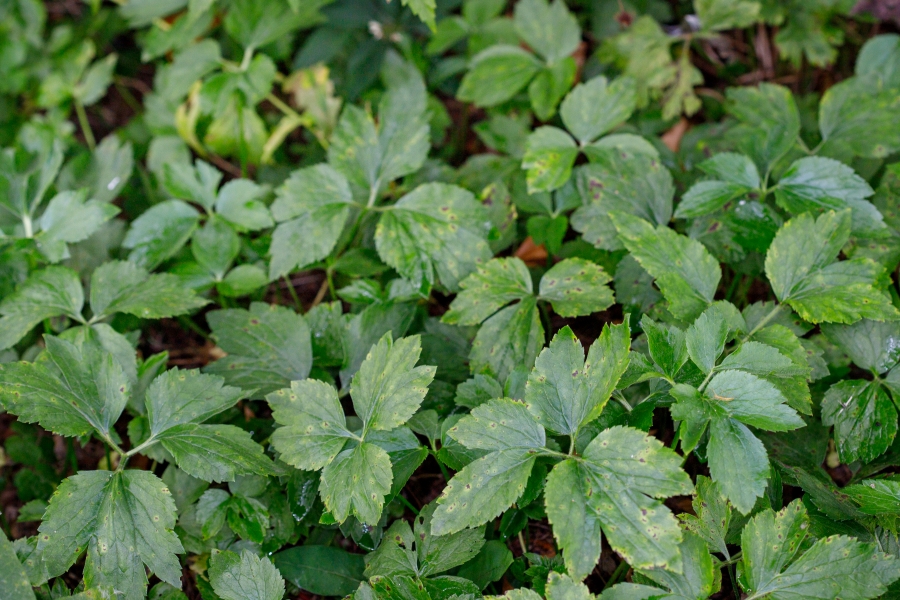
Pachysandra procumbens
Allegheny Spurge
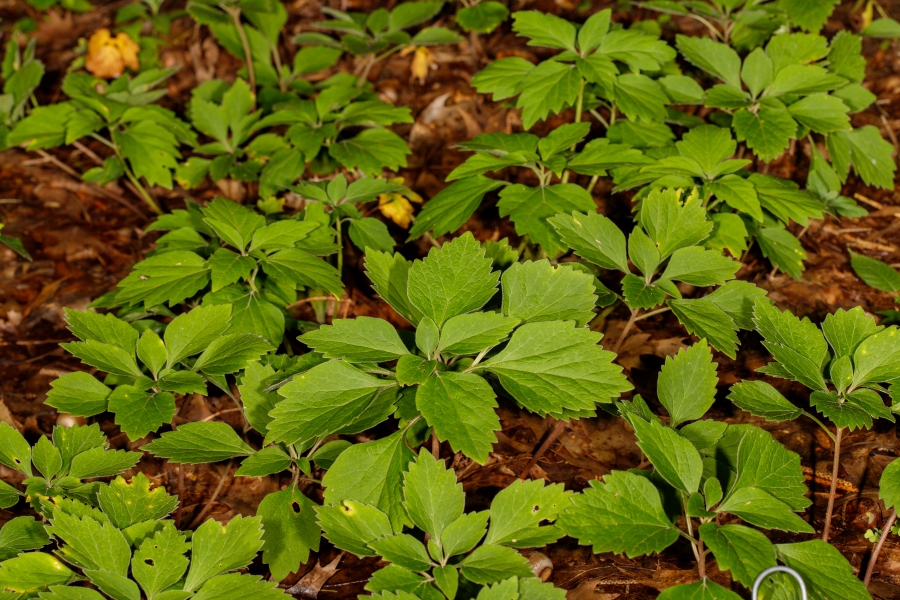
Native pachysandra is an important early spring source of pollen for native bees. To many gardeners, it is more attractive than the Japanese pachysandra which is potentially invasive. Allegheny Spurge forms clumps and spreads slowly with long rhizomes. A regionally native plant, it’s a member of the boxwood family. Its foliage is semi-evergreen or evergreen in deep shade with adequate moisture. Flowers appear in spring and then the new foliage appears, displacing the prior year’s leaves.
Parthenocissus quinquefolia
Virginia Creeper
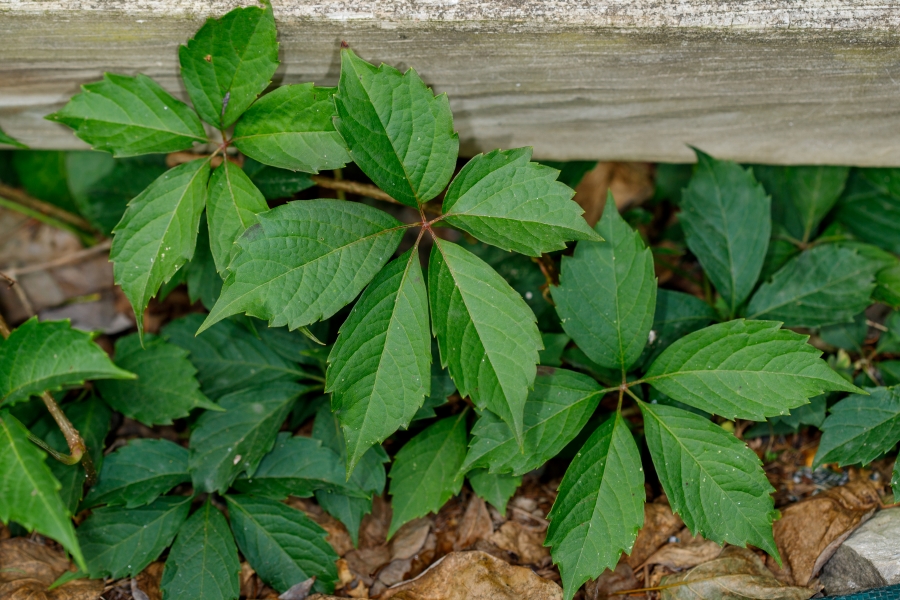
This groundcover is a woody vine and suitable for large spaces as it grows at a steady pace and can cover other plants and surfaces. Despite its aggressive nature, it comes recommended because of the ecoservices it provides. Birds eat the berries, and nectar and pollen feed various bees, including leaf-cutting bees which may use leaflets as construction material for their larval nests. The larvae of several moths, especially sphinx moths, feed on Virginia Creeper. This groundcover has brilliant fall color.
Phlox divaricata
Wild Blue Phlox or Woodland Phlox
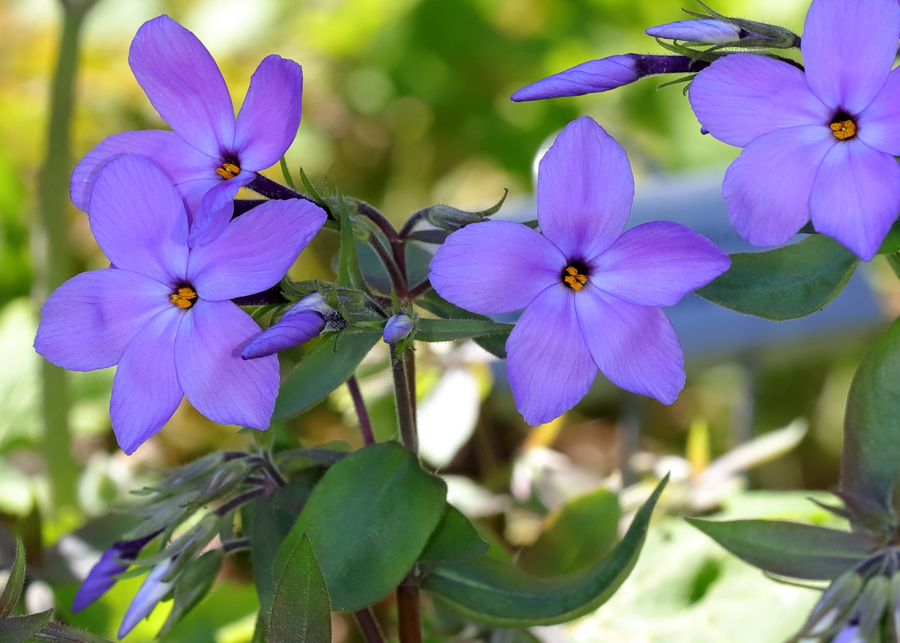
The flowers of woodland phlox attract long-tongued bees, bee flies, swallowtails, skippers, and hummingbird, clearwing, and sphinx moths. It is rhizomatous and will spread slowly but steadily. While deer resistant, rabbits may feed on this plant. Phlox has five petals so is easily distinguished from invasive dame’s rocket which has four petals. The foliage of woodland phlox hugs the ground while bloom stems reach about 12”.
Ranunculus hisbidus
Hispid Buttercup
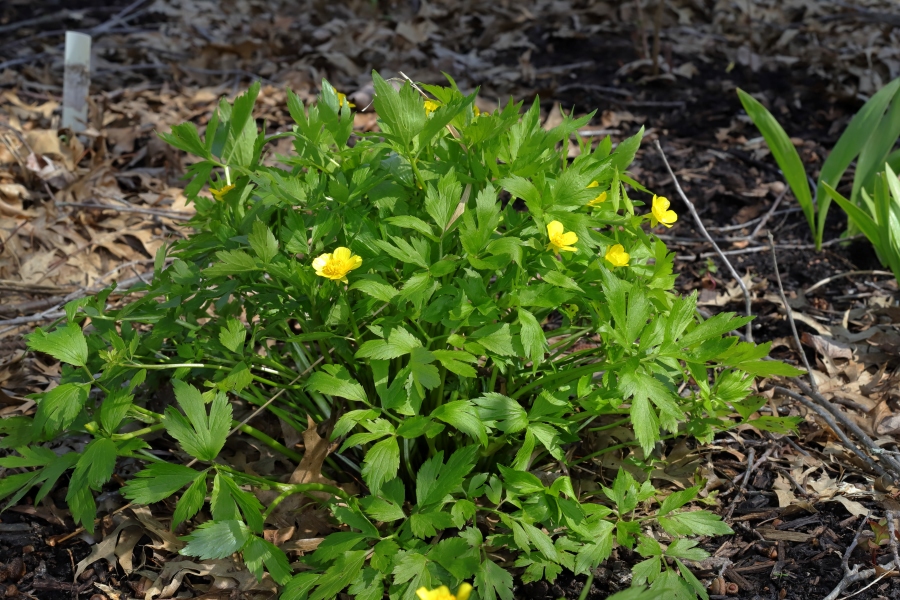
This buttercup prefers filtered sunlight in spring and light shade in the warm summer months. The petioles may be longer than the leaves. This explains why it appears that it has vines and is clambering over the patch to find some soil in which to root. No, what appeared to be vine-like growth was instead the long leaf stems, much longer in fact than the leaves. It grows to about 1 foot in height and although the main bloom is in mid-spring, it may continue to bloom sporadically throughout the summer. It makes a dense groundcover, suppressing all but occasional robust weeds.
Sedum ternatum
Wild Stonecrop
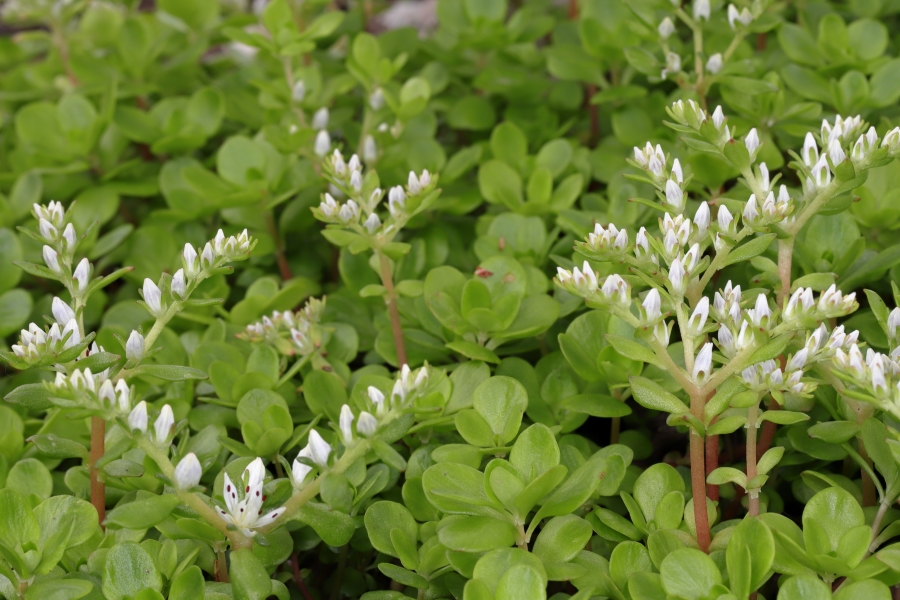
Wild Stonecrop is native to much of the eastern U.S. In Ohio it can be seen in many of the outstanding state nature preserves managed by ODNR. In such natural sites, it can grow in challenging spots such as in rocky outcrops, as well as on the forest floor and right up against tree root flares. It grows to 8 inches, and that’s if you include the starry-plumed bloom stalks. Individual stems of sedum ternatum can be planted in a bed and with enough organic material in the soil, it will quickly spread into an attractive mat. It can be distinguished from other sedums by leaf arrangement in whorls of three.
This and a previous post suggested ten low-growing native groundcovers, the kind gardeners most typically think of when considering groundcovers. Before we leave the subject, we’ll highlight some taller native groundcover species.
What are your favorite native groundcovers?
Photos by Randy Litchfield unless otherwise noted
© Randy Litchfield, some rights reserved (CC-BY-NC)
 Catchfly Commons