Grasses are important plants to include in native landscape plantings. They can provide structure in a design and can provide beauty with their foliage and blooms. Functionally, grasses can support other plants, fill gaps between plants thus suppressing “weeds,” host Lepidoptera, and provide wildlife shelter. (1)
Native grasses are either “warm-season” or “cool season.” Most native grasses are “warm-season” grasses that tolerate summer heat and flower late summer and fall. (1) Some Ohio warm season grasses include: Big Bluestem, Switchgrass, Indiangrass, Little bluestem, Side-oats Gramma, Prairie Dropseed, Purple Love Grass, and Prairie Cordgrass. Cool-season grasses grow and bloom early then go dormant in summer. Examples of cool season grasses are Canada Wild Rye and June Grass.
Using Native Grasses
If your landscape design is intended to resemble a prairie, grasses are central. According to the University of Minnesota Extension, “[p]rairies consist of 80 percent grasses and sedges and 20 percent wildflowers or forbs.” (1) In a prairie-like design, forbes (flowering plants) punctuate a mostly grass planting. Indian Grass and Big Bluestem are typically associated with tall grass prairies. But depending on site conditions, prairies may have other grasses like Little Bluestem, Switchgrass, Prairie Cordgrass and Prairie Dropseed. (2)
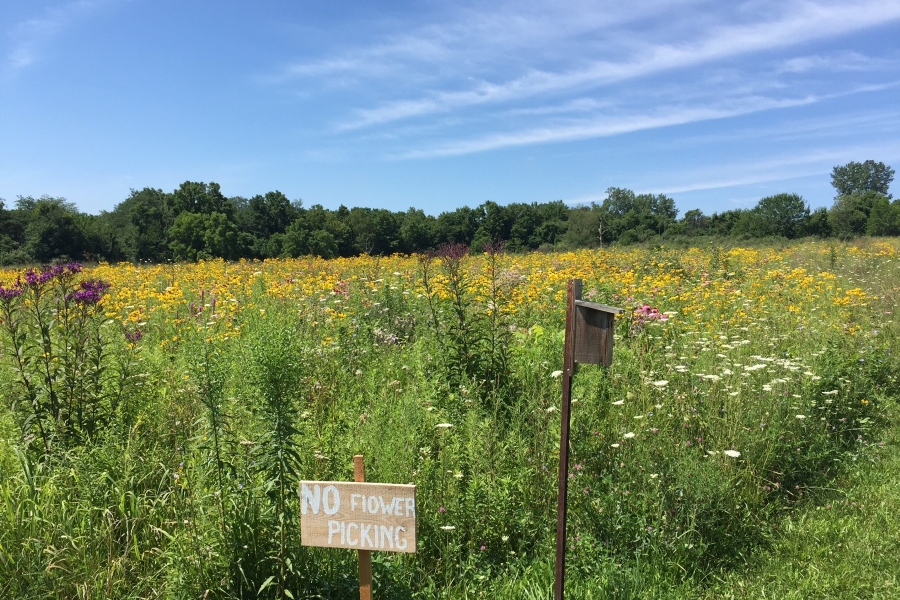
If your design is based more on garden or landscape beds, flowering plants may be more predominant than grasses. This is the situation at Catchfly Commons. In such designs, grasses provide a variety of functions. Tall grasses such as switch grass, Indian grass, and big bluestem can offer vertical layering, structure, and screening. Medium sized grasses such as little bluestem and prairie dropseed can create accent, contrast, and texture within a planting. Smaller grasses and those with airy blooms such as purple love grass, side oats gramma, and June grass can provide nice edges to beds. Regardless of height, grasses also offer winter interest and habitat.
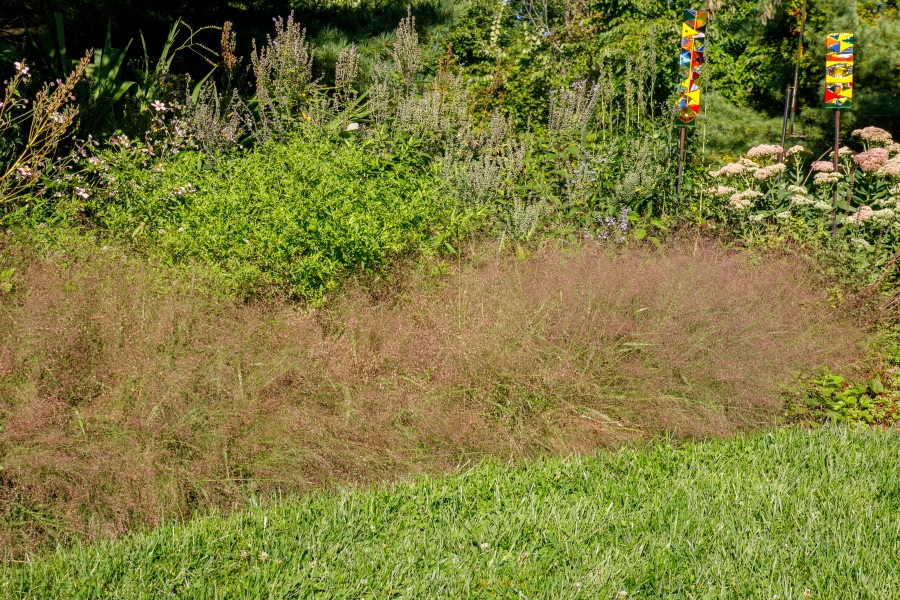
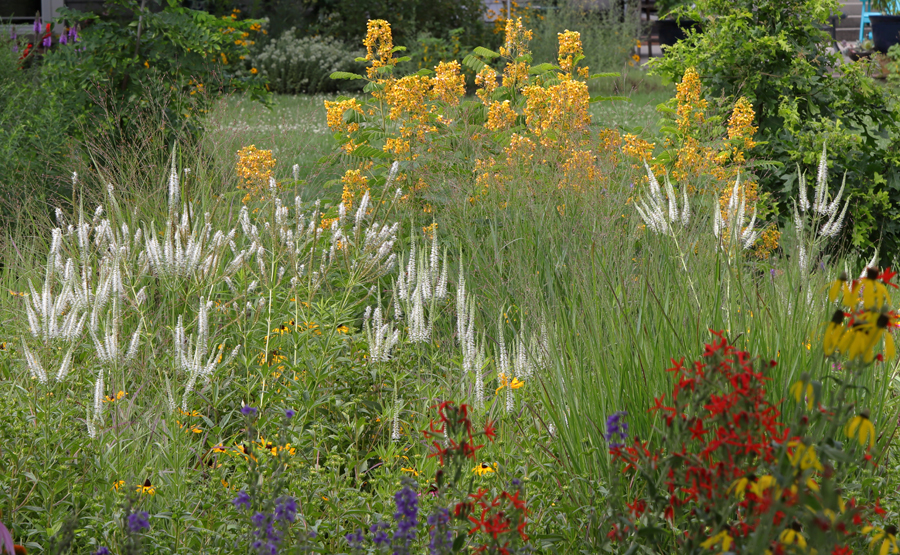
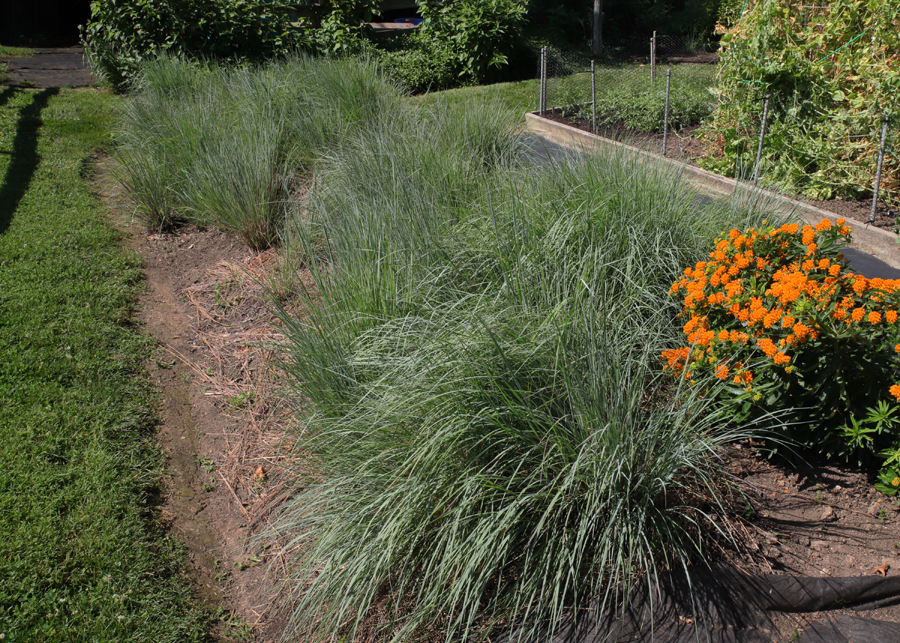

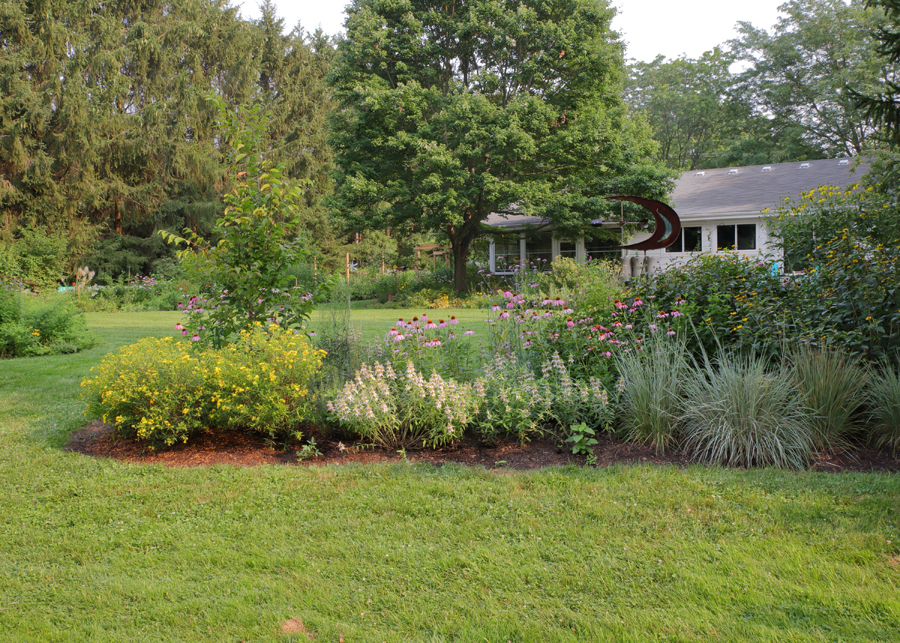
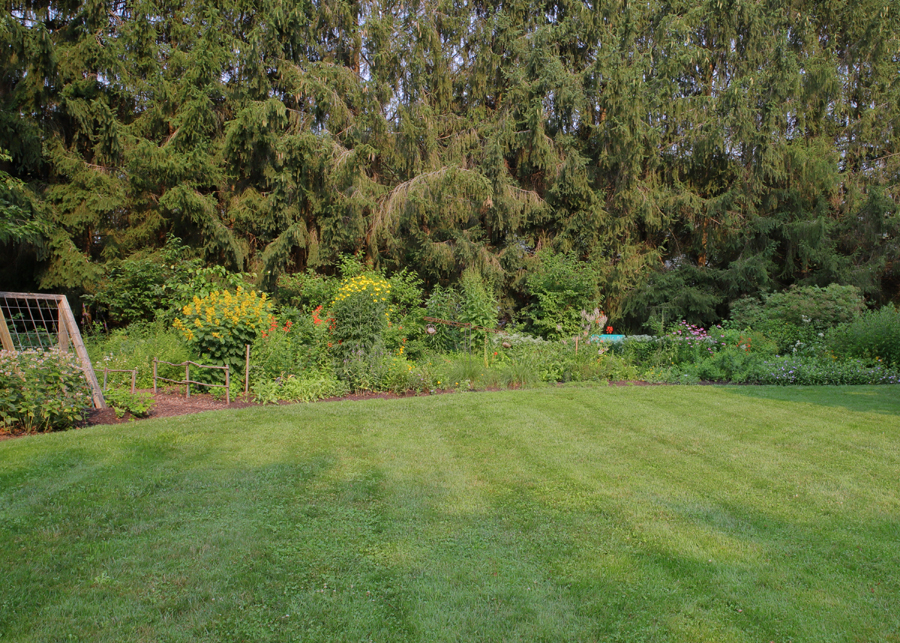
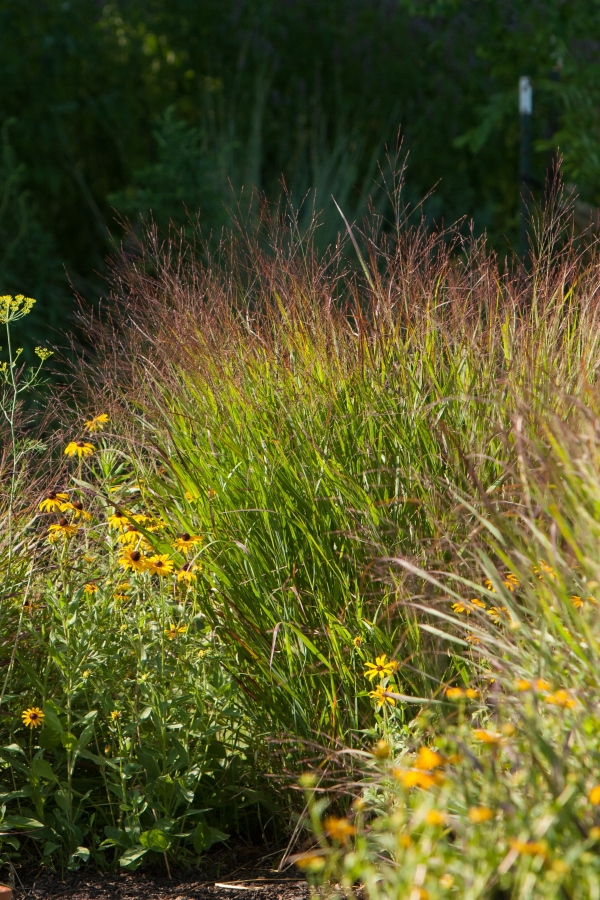
Regardless of design approach, be intentional about helping tall grasses to not flop (I speak from experience!) Factors include root competition, plants supporting each other, plant selection, and soil richness. In his book Prairie Up and in his blog, Benjamin Vogt advocates for dense installation of prairie plants. (3) He notes that root competition is the natural condition in prairies. Such competition keeps plants from getting over-sized and prone to flopping. Vogt thinks this is more important than plants propping up each other, but mutual support can help. In some instances, a particular “selection” of a native species may have the characteristic of standing on its own very well. A selection is a naturally occurring variation in a species and it is propagated by cuttings to preserve the trait (at the cost of genetic diversity). An example in our landscape is ‘Shenandoah’ Switch Grass. I have also heard that prairie plants may be prone to flopping if the soil is too rich in nitrogen.
Grasses as Host and Hangout
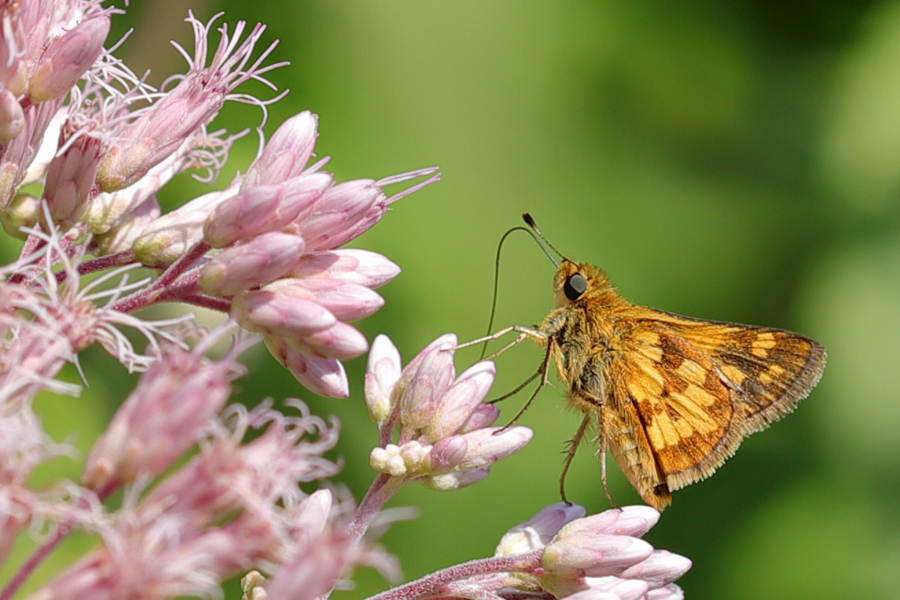
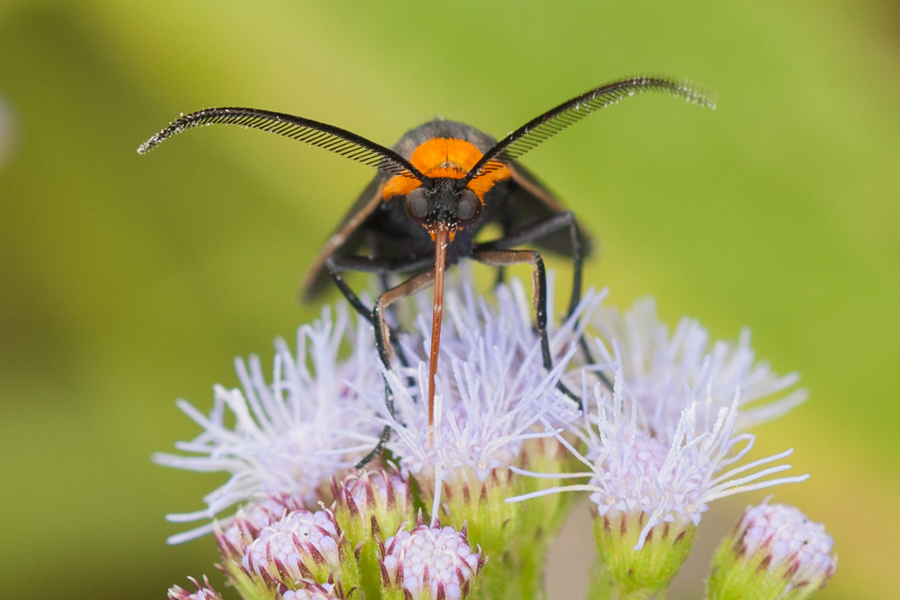
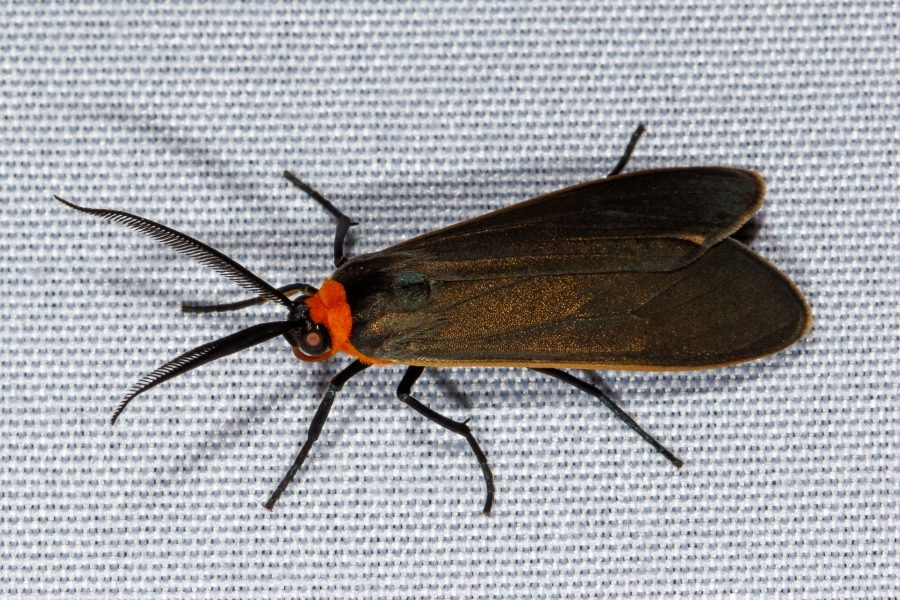
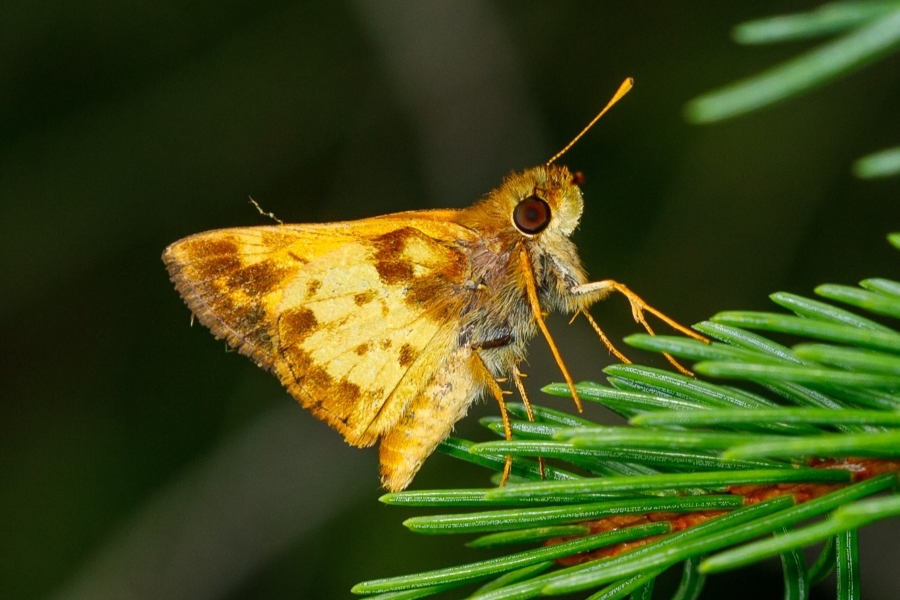
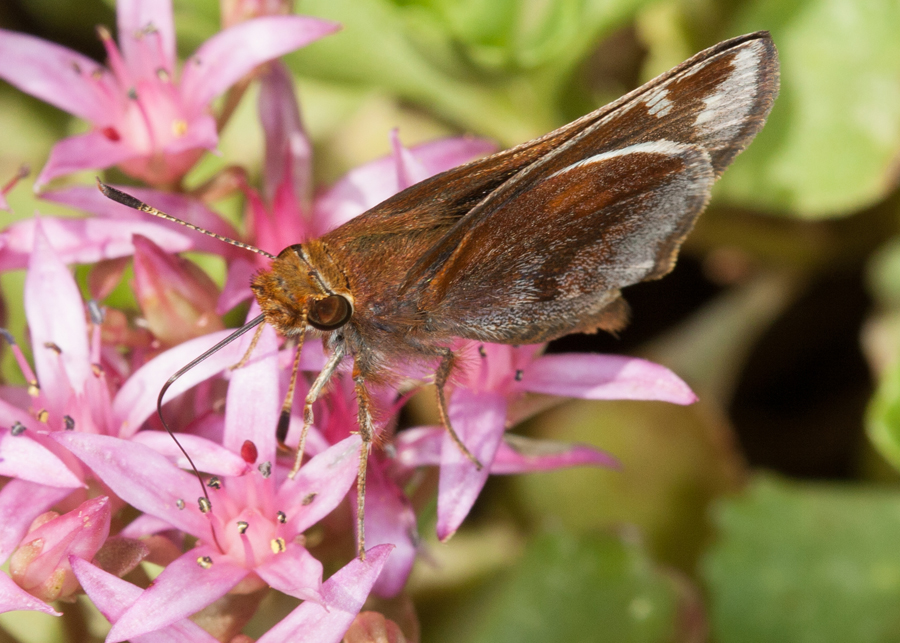
Grasses are host plants for a variety of skipper species (small butterflies). In their book Gardening for Moths, McCormac and Gottfried note there are 30 skipper species in our region and they give particular note to Peck’s and Zabulon Skippers (p. 121). (4) They also list a wide variety of moths that use grasses as hosts, two of which are the Virginia Ctenucha and Yellow-collared Scape moth. Various Lepidoptera websites indicate that the Common Wood Nymph butterfly is a grass generalist.
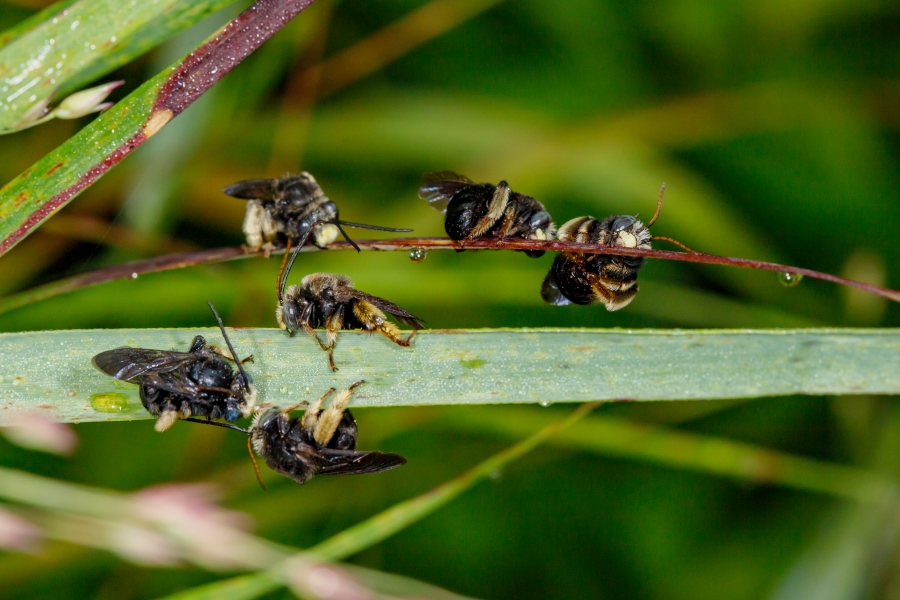
Some male Longhorn Bees have a habit of hanging out together overnight and in our landscape that usually happens on switchgrass.
Grasses in Catchfly Commons
Links go to plant profiles on Illinois Wildflowers.
Andropogon gerardii
Big Bluestem

Bouteloua curtipendula
Sideoats Grama
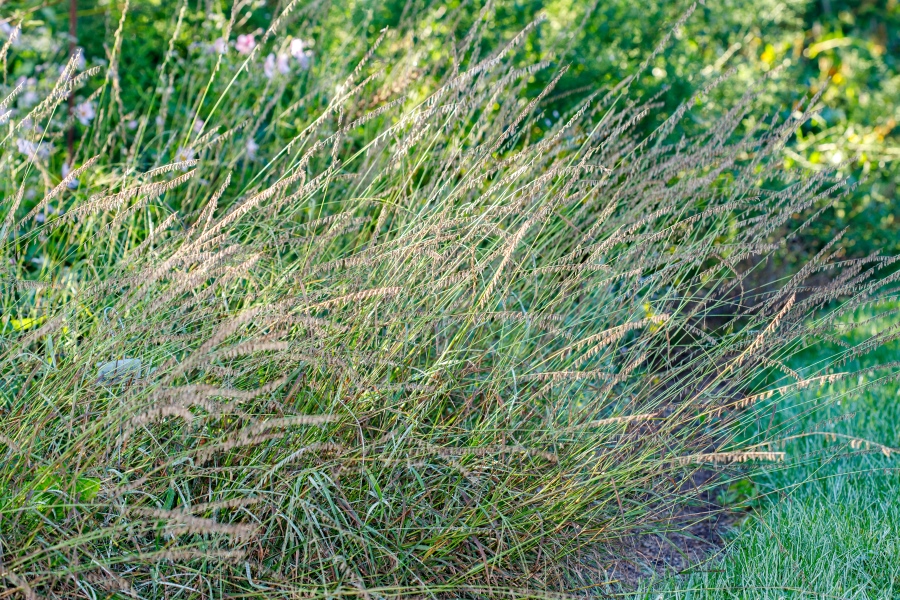
Elymus canadensis
Canada Wild Rye
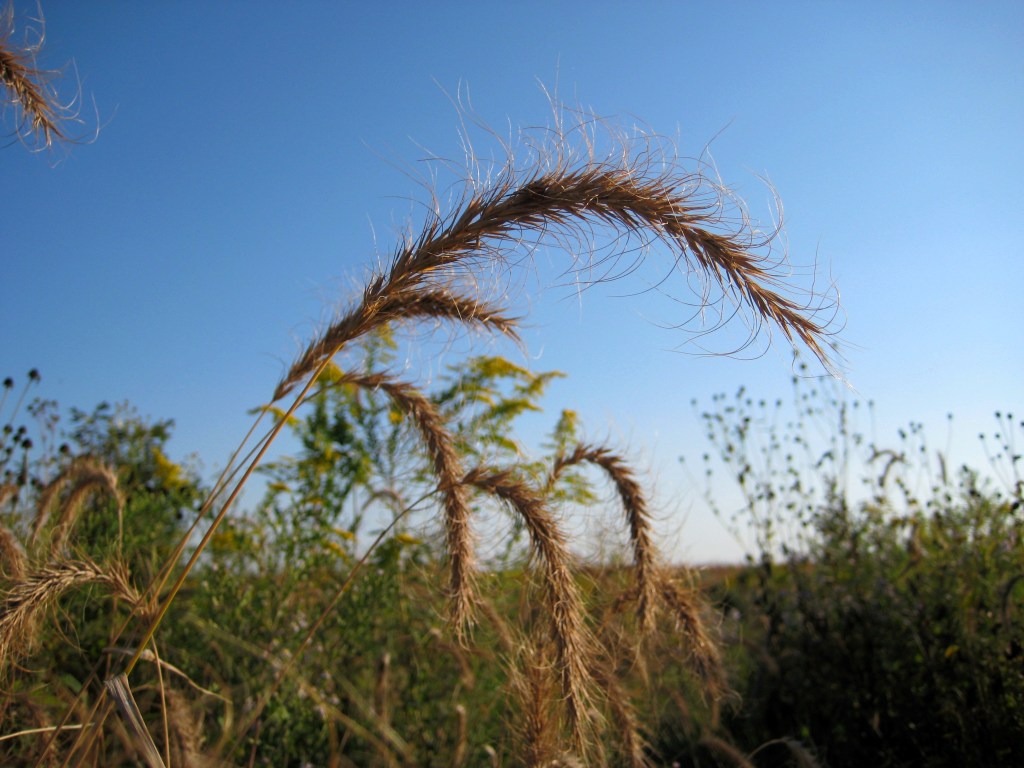
Crazytwoknobs, CC BY 3.0, via Wikimedia Commons
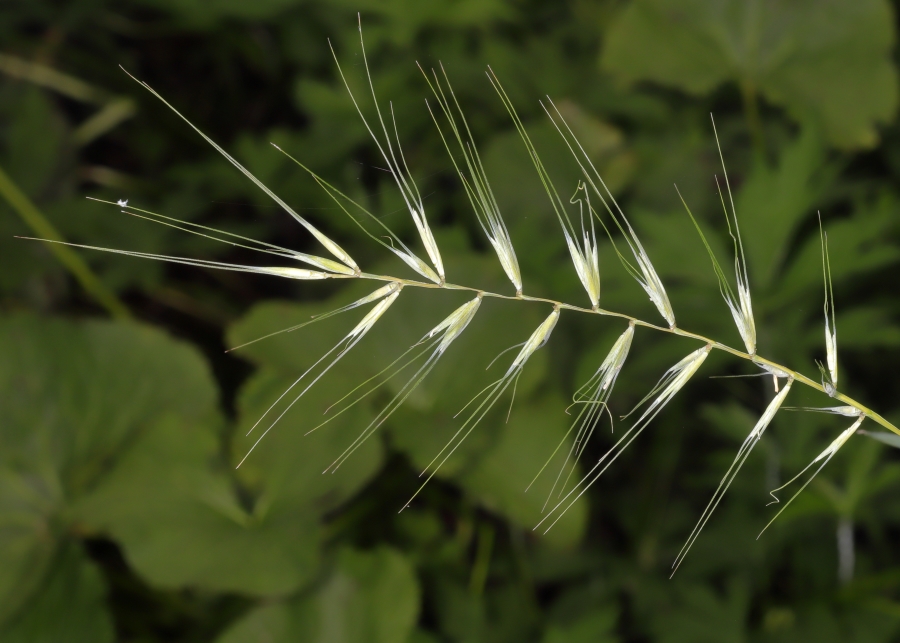
Elymus hystrix
Bottle Brush Grass
An option for shadier spots.
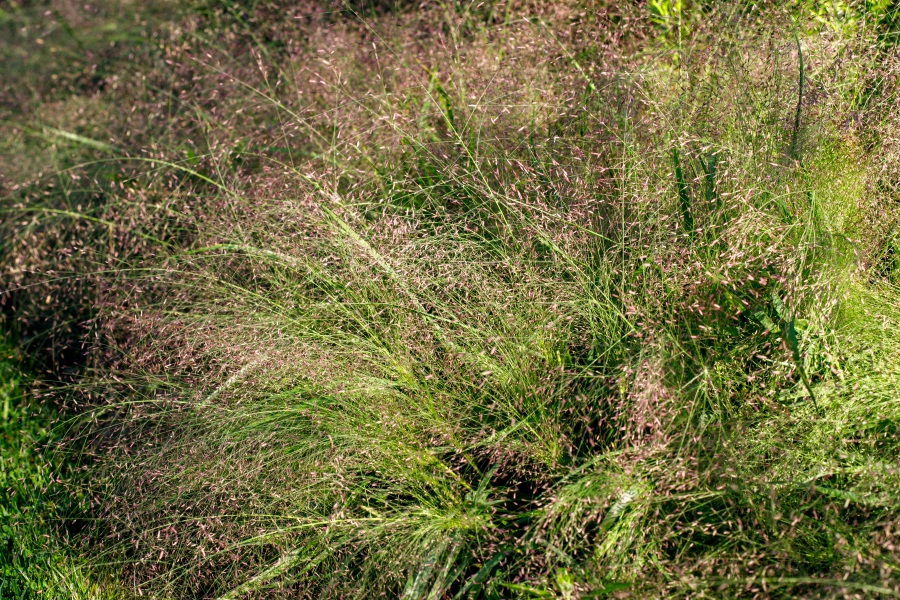
Eragrostis spectabilis
Purple Love Grass
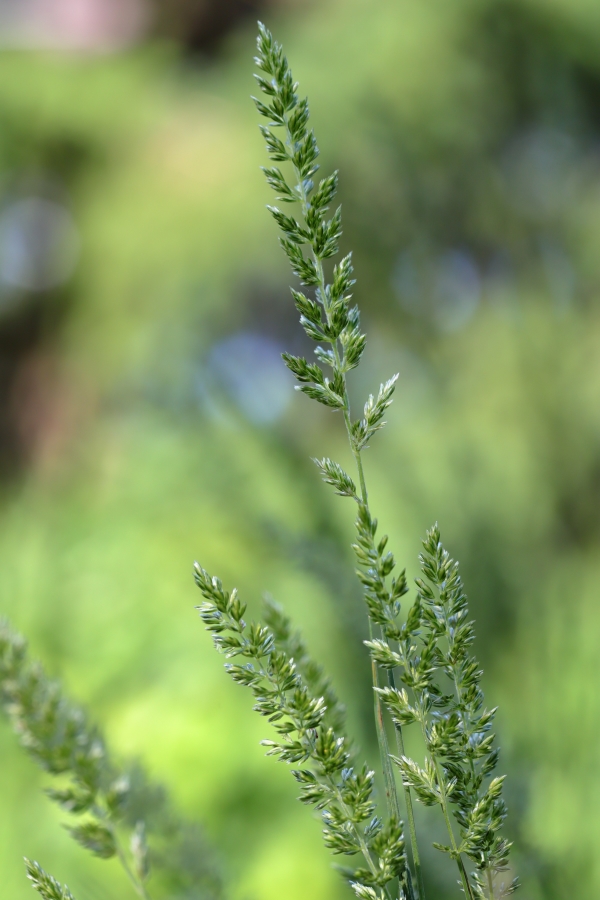
Koeleria macrantha
June Grass
Panicum virgatum
Switch Grass ‘Shenandoah’
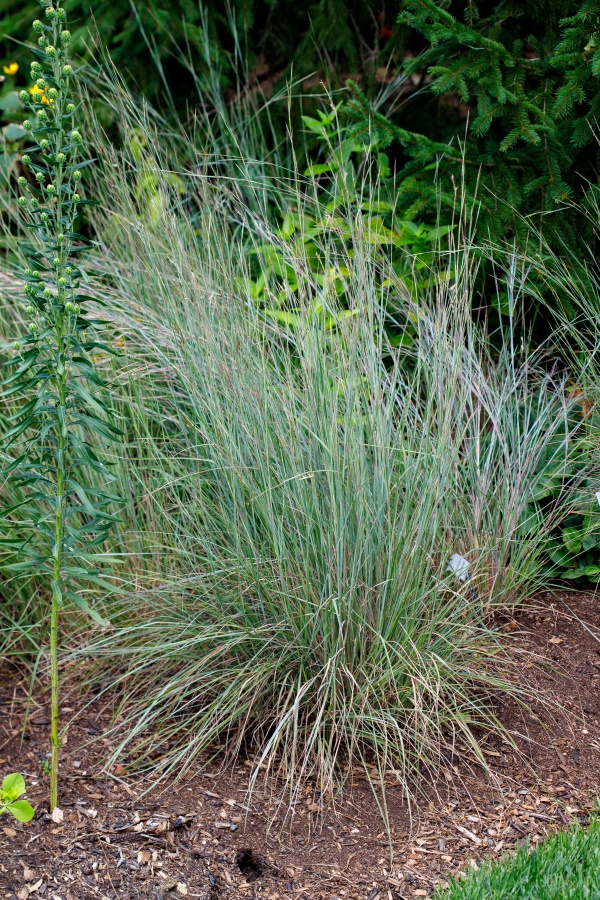
Schizachyrium scoparium
Little Bluestem
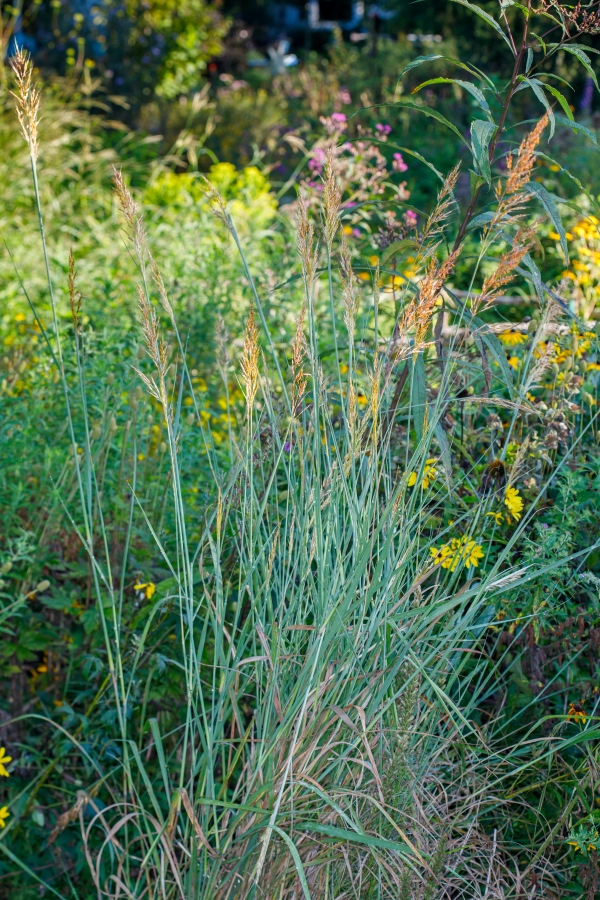
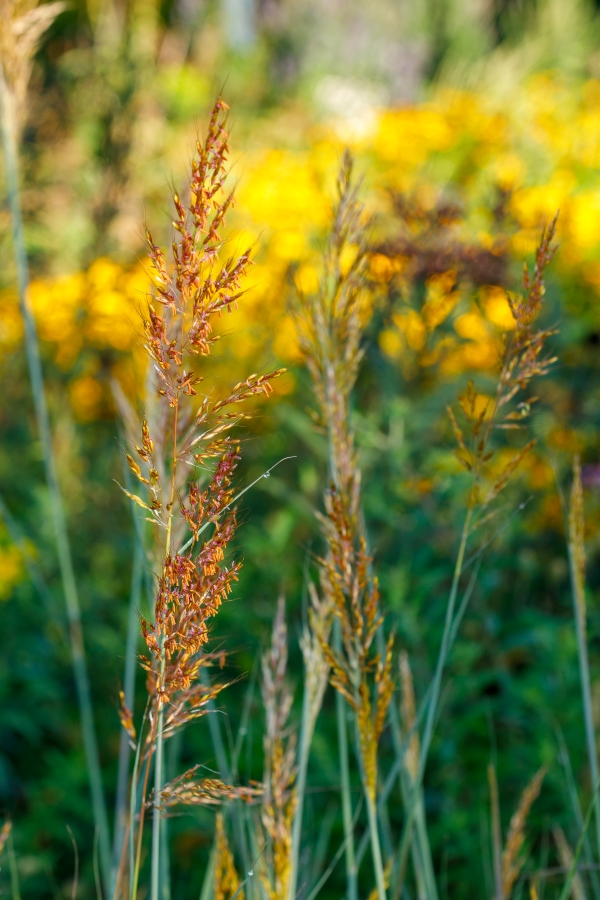
Sorghastrum nutans
Indian Grass
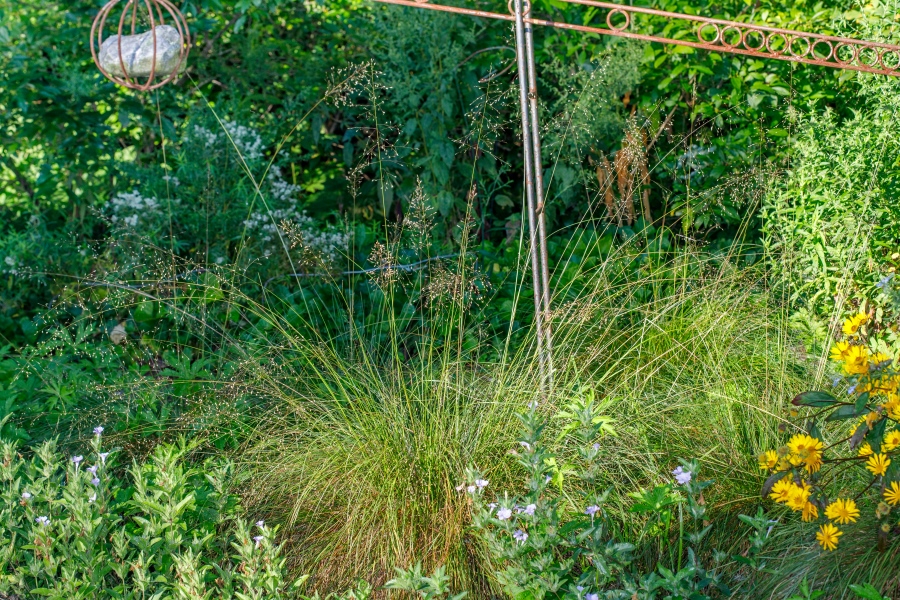
Sporobolus heterolepis
Prairie Dropseed
There are a couple of grasses that we intentionally do not have at Catchfly Commons. While Cordgrass is an important grass, the leaf margins are coarse and if one slides a hand over leaves from bottom to top it can cut the skin. The beauty of Northern Sea Oats has tempted me numerous times to get it, but it is also extremely aggressive and can become a problem. Terri wisely tells me to “just say no” to the temptation!
Photos by Randy Litchfield unless otherwise noted
© Randy Litchfield, some rights reserved (CC-BY-NC)
1“Planting and Maintaining a Prairie Garden,” University of Minnesota Extension (https://extension.umn.edu/planting-and-growing-guides/planting-and-maintaining-prairie-garden#selecting-plants-1644212) Accessed 9.12.23
2“Exploring Ohio’s Prairies,” Natural Areas Newsletter (summer 2021), Ohio Department of Natural Resources (https://ohiodnr.gov/discover-and-learn/safety-conservation/about-ODNR/nature-preserves/newsletter/Summer+2021/exploring-ohios-prairies) Accessed 9.18.23
3Vogt Benjamin. 2023. Prairie Up : An Introduction to Natural Garden Design. Champaign IL: 3 Fields Books an imprint of the University of Illinois Press.
4McCormac Jim and Chelsea Gottfried. 2023. Gardening for Moths : A Regional Guide. Athens Ohio: Ohio University Press. (p. 121)
 Catchfly Commons
