If necessity is the mother of invention, then the need to survive takes creativity to new heights. That creativity can result in amazing ways to hide from predators or help predators sneak up on prey. Either way, deception is the name of the game in the garden.
Well, actually mimicry may be the name of the game. I have been able to observe and photograph four examples of mimicry in Catchfly Commons: mimesis, Batesian, Müllerian, and automimicry.
Mimesis and Camouflage
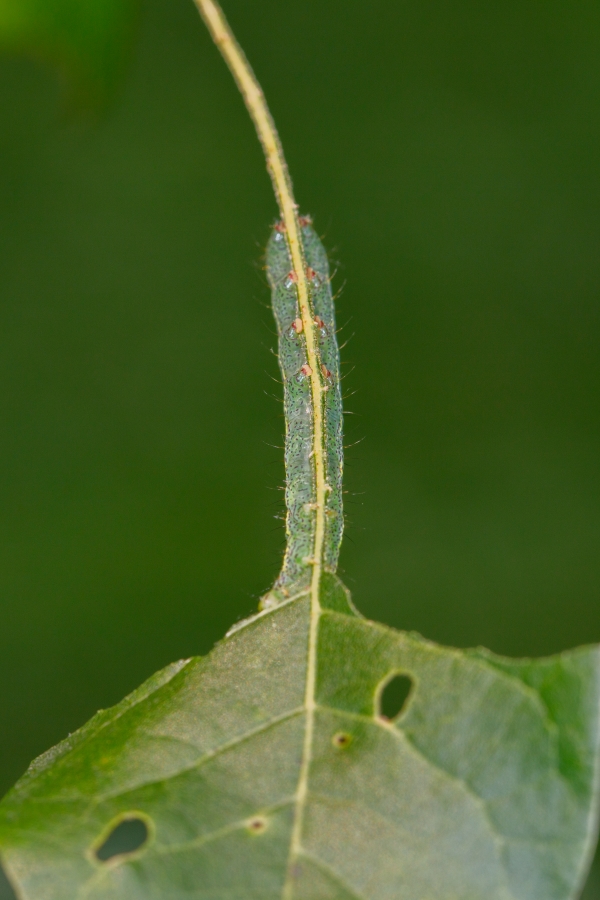
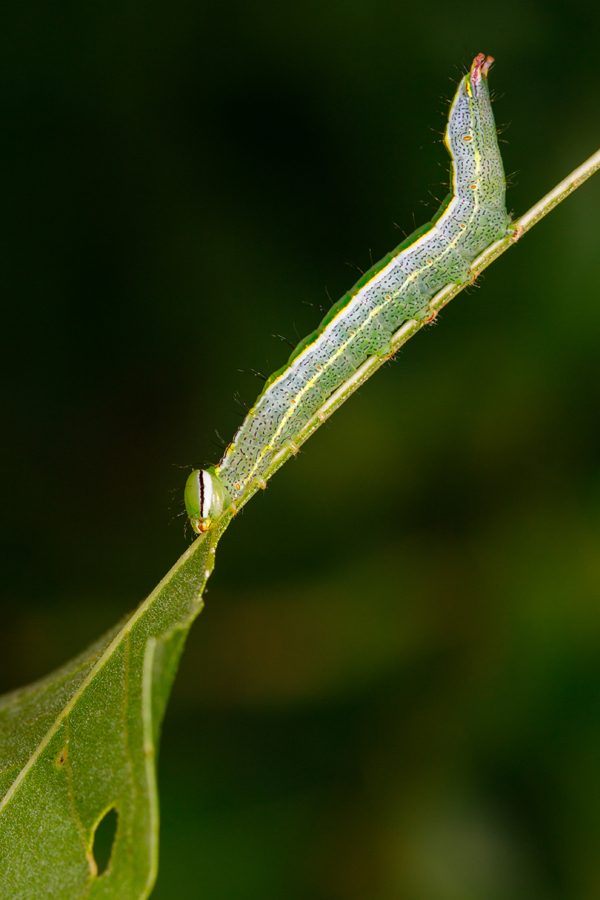
Mimesis is when an organism “looks like a nonliving thing.”1 Not being seen is a good first step in surviving… and not being in photographs!
Bent-ling Gray Moth caterpillar on False White Indigo mimicking a stem.

Red-fringed Emerald Moth caterpillar mimicking dead leaf edge.
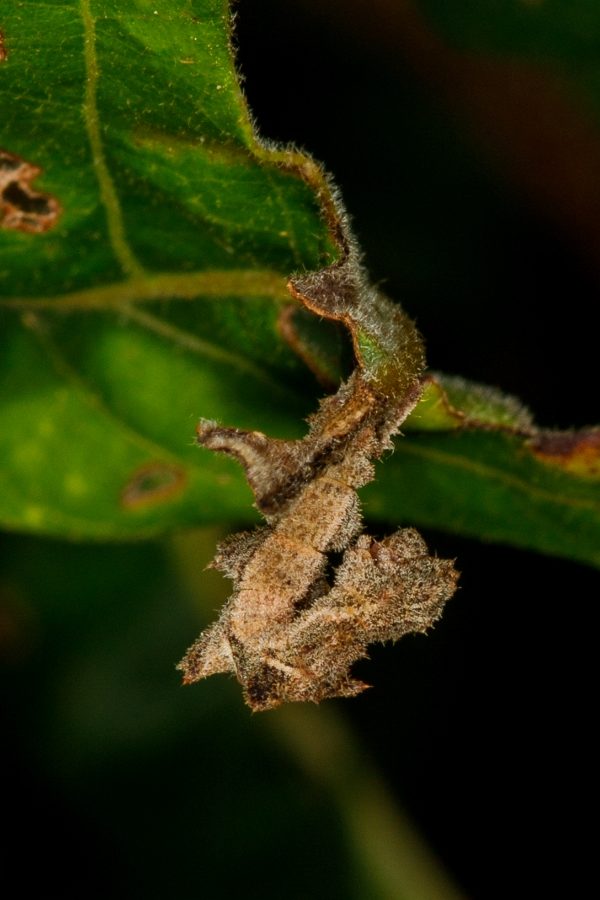
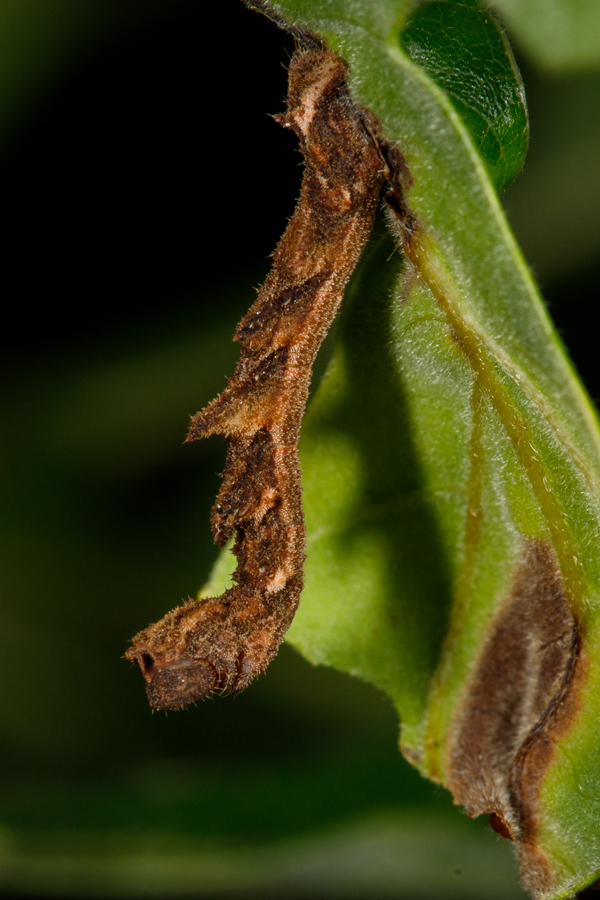
Greater Oak Dagger Moth caterpillar mimicking bark,

Variable Oakleaf Moth caterpillar mimicking the stem of the leaf it just ate.
Giant Swallowtail Butterfly caterpillar mimicking a bird dropping.
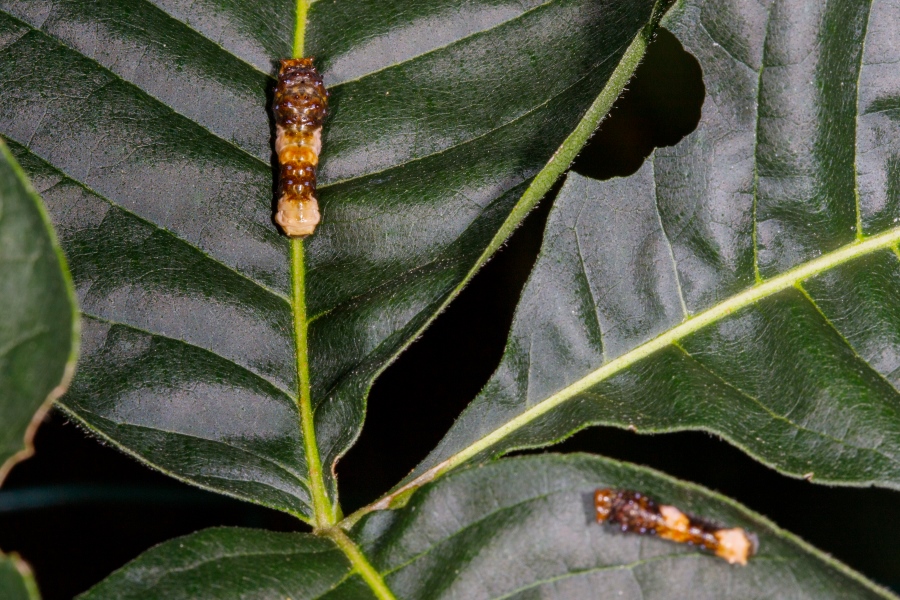
Walking Stick mimicking a stick (for hunting purposes).

Batesian Mimicry
In Batesian mimicry, something harmless or defenseless mimics something dangerous.2 If you are going to be seen, might as well look like something others don’t want to mess with! Some flies mimic the appearance of bees and wasps.
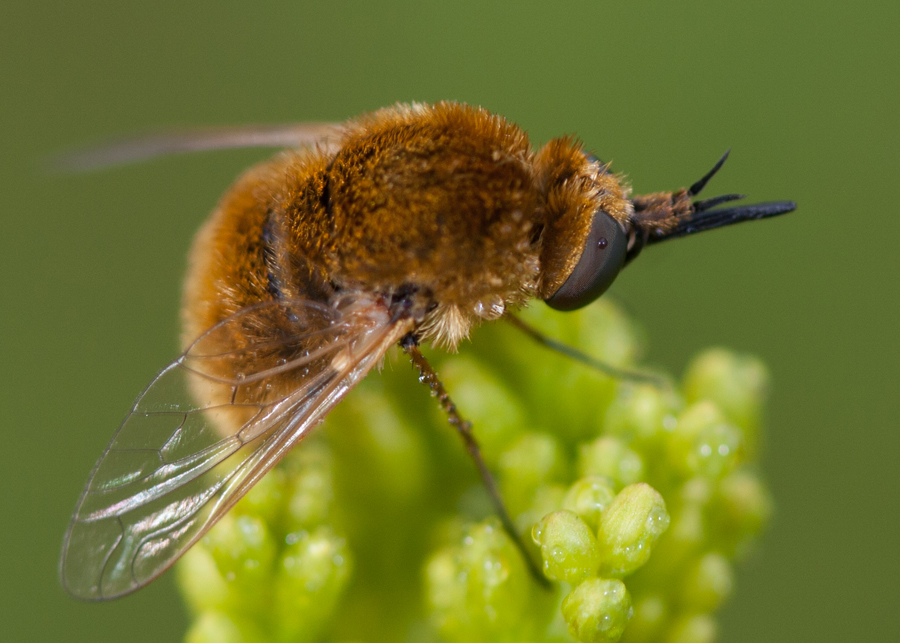
Greater Bee Fly mimicking a bumble bee.
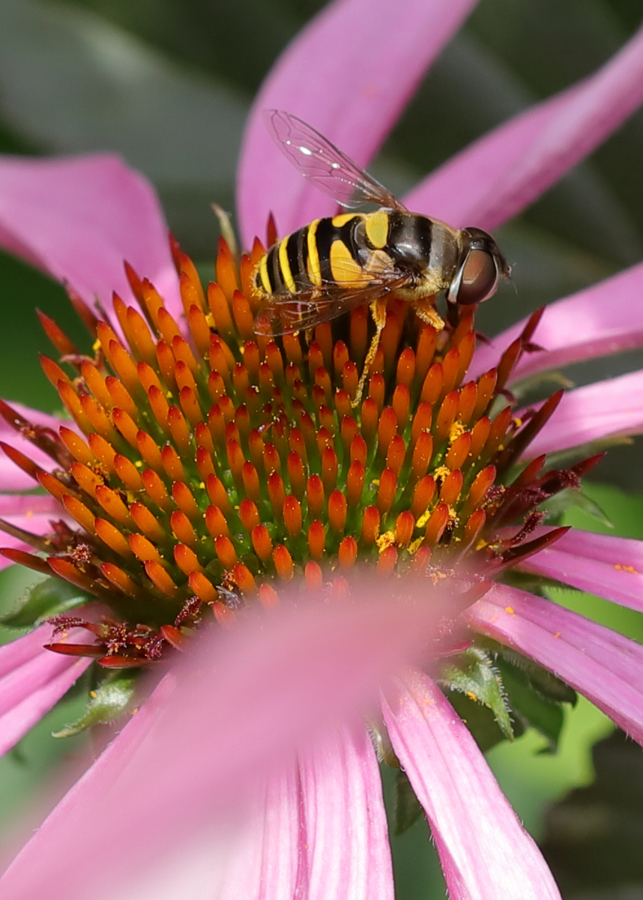
Banded Hover Fly mimicking a bee.
Yellow Jacket Fly mimicking a wasp.
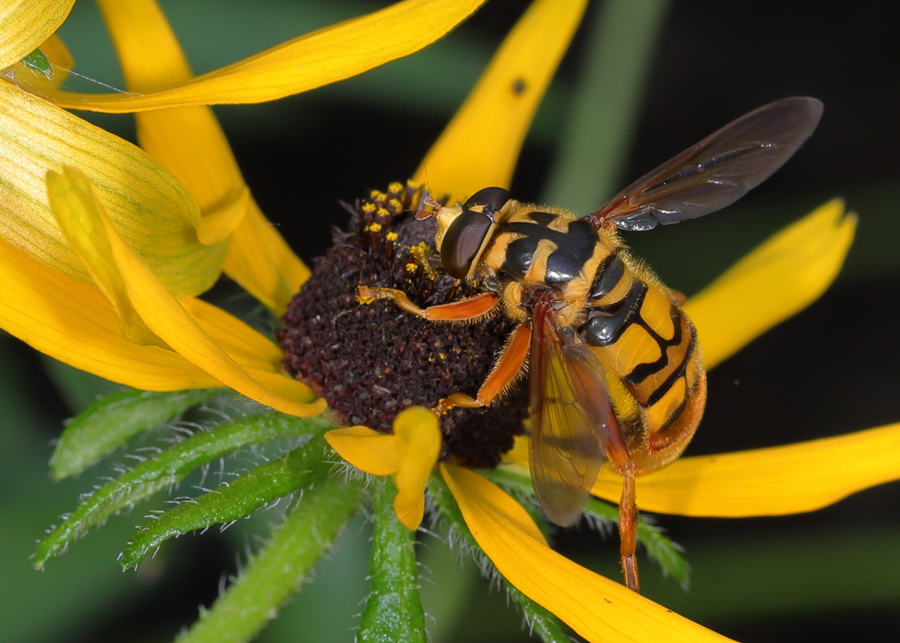
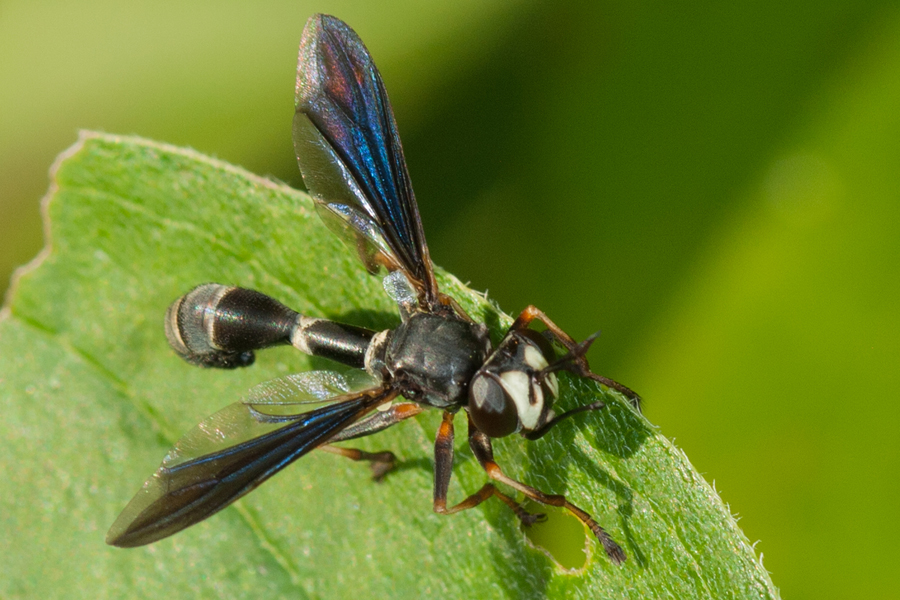
Common Eastern Physocephala Fly mimicking a wasp.
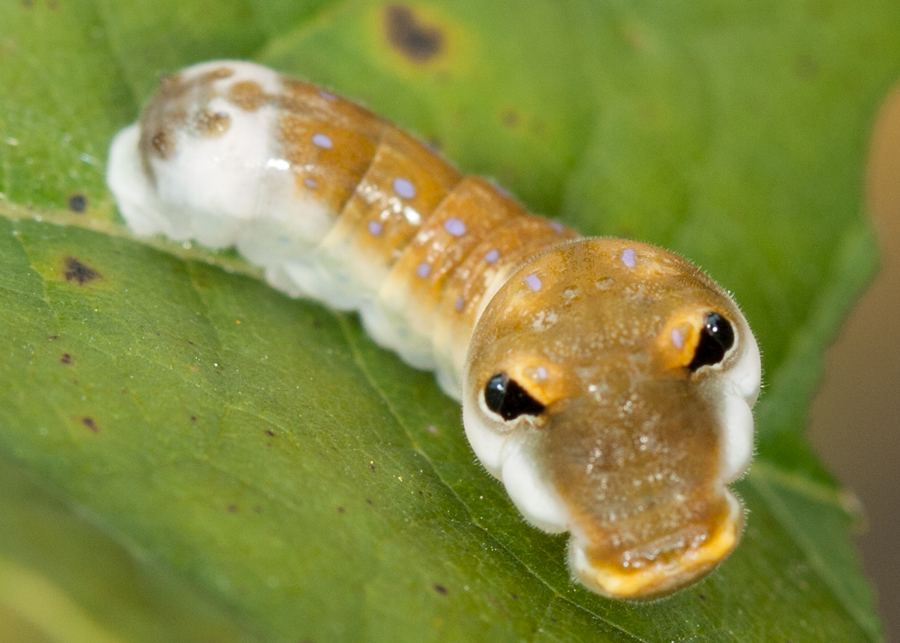
Spicebush Swallowtail Butterfly caterpillar mimicking a snake. It is one of several caterpillars that use color patches on their skin to create the appearance of large menacing eyes. The head is actually the small end nearest the viewer.
Müllerian Mimicry
“The model and the mimic in Müllerian mimicry are both harmful, and it is often difficult to tell which one is the mimic and which one is the model. They both use the same method to make themselves known as harmful in order to avoid potentially deadly encounters. This system confuses predators while benefitting both mimic and model.”3 Monarch and Viceroy butterflies are often cited as examples of this kind mimic, but I have not seen a Viceroy Butterfly here.
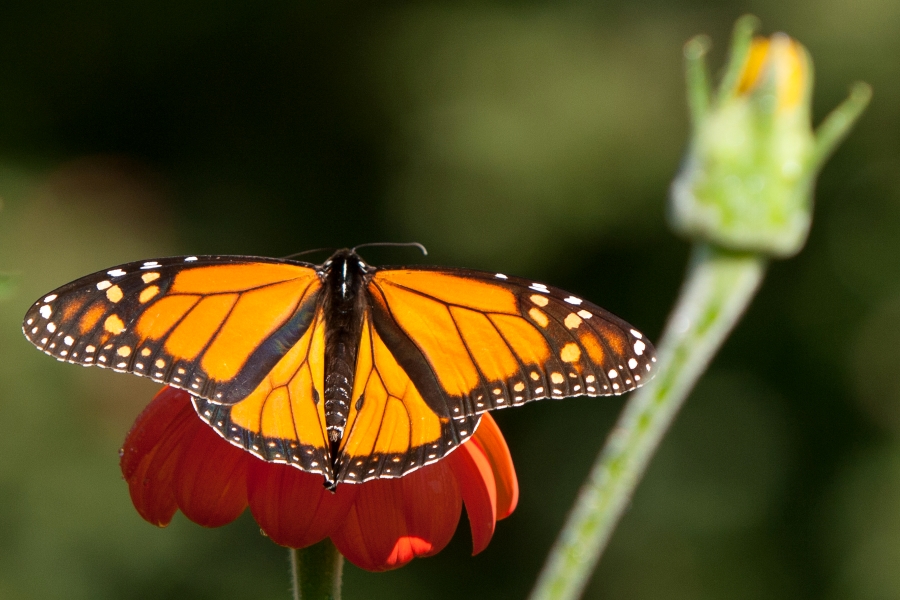
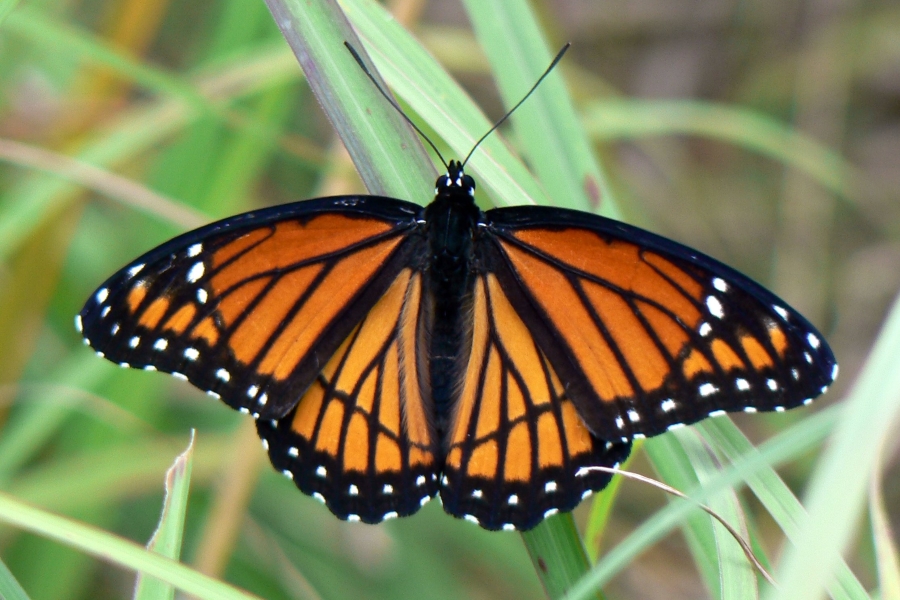
Benny Mazur,CC BY 2.0, via Wikimedia Commons
Automimicry
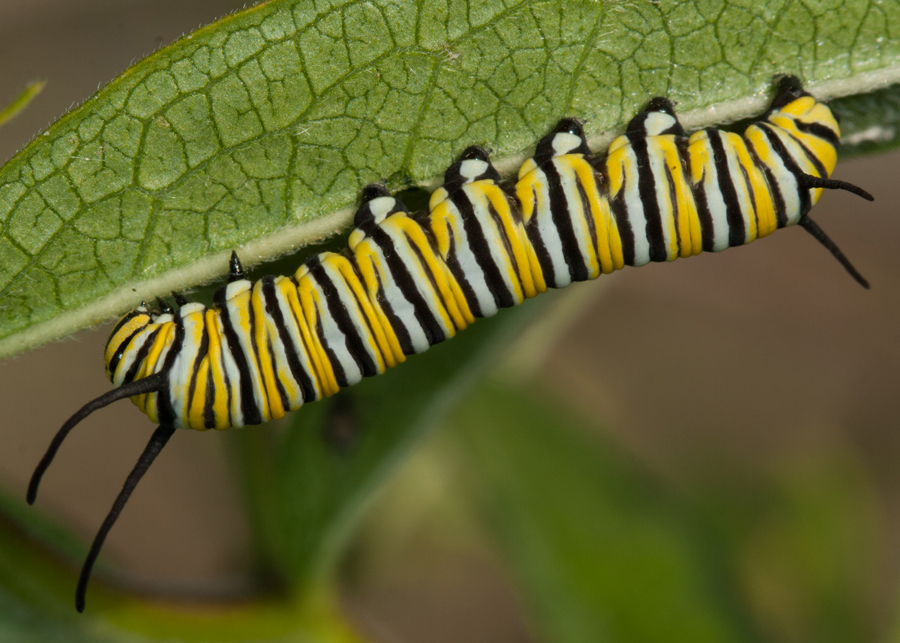
“Automimicry occurs when one part of an organism’s body resembles another part of its body.”4 The tentacles on the head of the Monarch Butterfly caterpillar (left) function as sensors while those at the end (right) provide confusion to predators about which end is the head.
1-4 “Adaptations: Mimicry,” Kids for Conservation Archive November 2020, Illinois Department of Natural Resources, https://dnr.illinois.gov/outreach/kidsconservation/archive/2020/archivenov2020.html (accessed 8.16.2023)
Photos by Randy Litchfield
© Randy Litchfield, some rights reserved (CC-BY-NC)
 Catchfly Commons

Really good article/blog post! Learned new things!