A walk on winding paths through landscape beds takes us away from the hustle and bustle of everyday life. With native plants growing on either side of a wood chip path, we can appreciate what these plants add to the landscape.
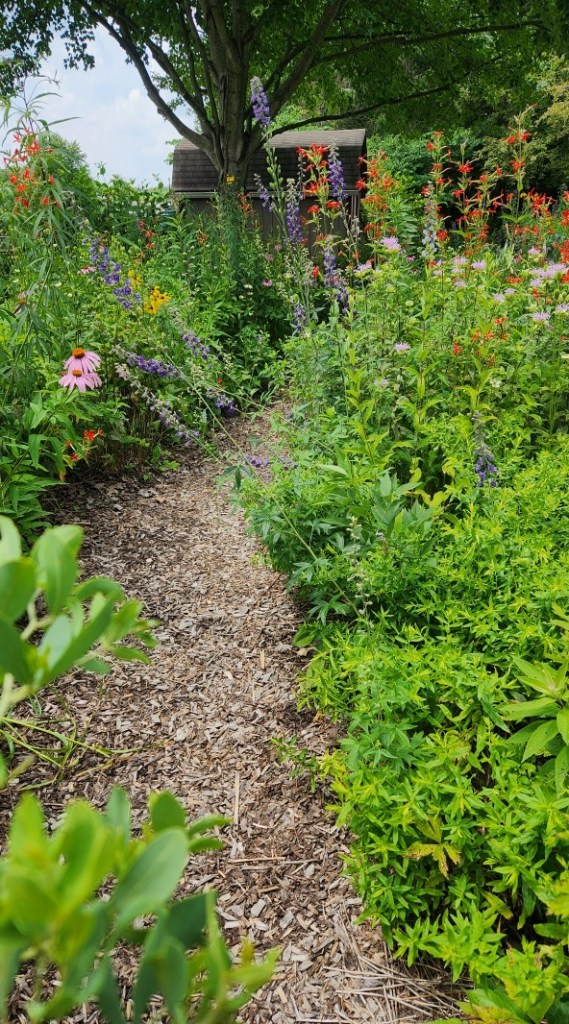
I usually enjoy weeding, with one exception. I detest weeding paths. I want to be close to our plants, so weeding around them in garden beds or raised beds is pleasant. We can observe plant development and insect activity. Paths, however, are a different story. Keeping paths clear of weeds can be tedious and is an aggravation.
We installed commercial landscape fabric around and between the nine raised beds containing vegetables and native plants. This long-lasting solution has served us well and only after twelve years has some of it required replacing. The few weeds that appear where the bed frame meets the landscape fabric are typically easy to remove by hand.
The wood chip paths however… As the woodchips break down, seeds (both weed seed and seed from our native plants) find this to be a great medium for germination. The best defense, given that we avoid using herbicide, is to scratch out the small seedlings in these paths every week or two using a long handled weeding tool. After hand weeding for years, this method is quick, and all the woodchip paths can be weeded in less than an hour. The downside is that the weed seedlings, although no longer growing, add to the organic material in the path. Every few years the chips and organic material will go into the compost bin and new chips will go down. Still, the woodchips we use (marketed for playgrounds) are what we prefer underfoot as we wander through the garden.
Unless otherwise credited, photos by Terri Litchfield
 Catchfly Commons